THE ADVENTURE COLLECTIVE® · Independent discovery and booking for outdoor travel

Get an achievable adrenaline hit on a half-day quad tour from Agadir—two hours of riding through argan forests, dunes, and coastal tracks with a stop for traditional Moroccan tea. Automatic quads and guided instruction mean no prior experience is required.
Get an achievable adrenaline hit on a half-day quad tour from Agadir—two hours of riding through argan forests, dunes, and coastal tracks with a stop for traditional Moroccan tea. Automatic quads and guided instruction mean no prior experience is required.
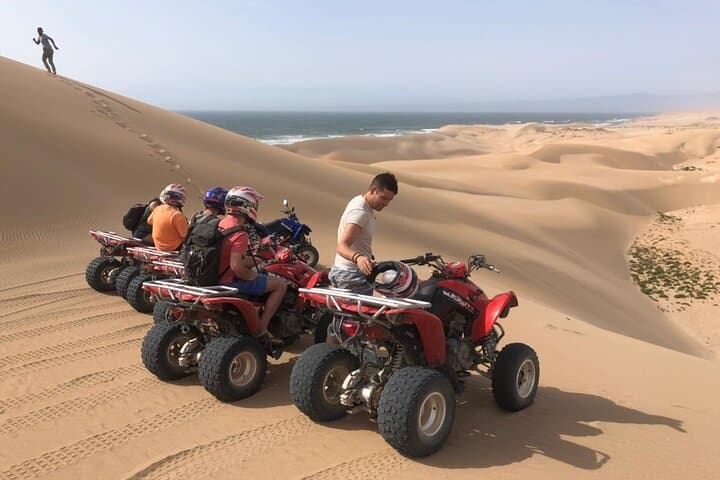
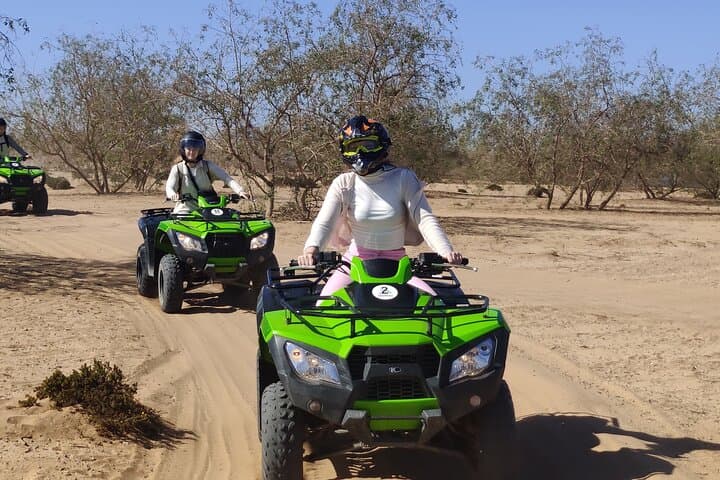
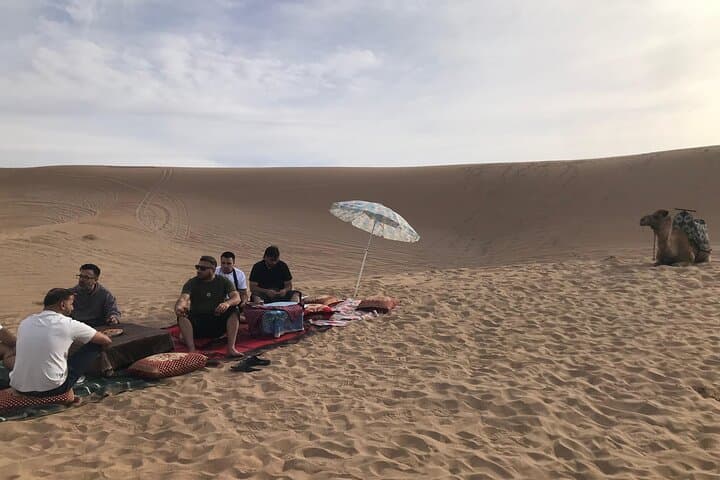
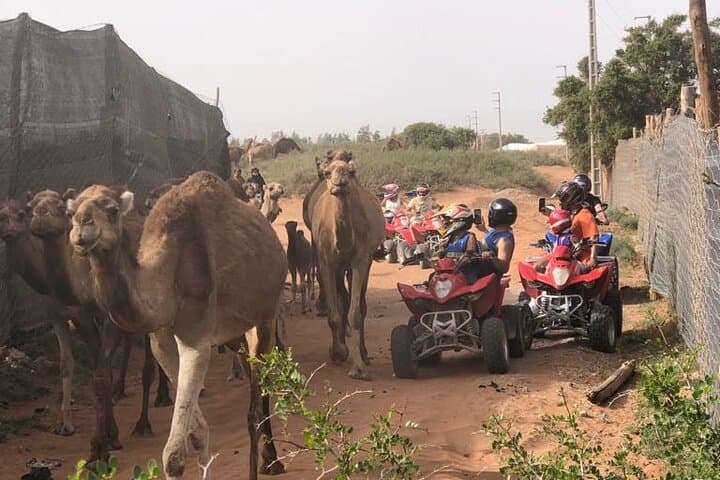
The engine hums, and within minutes the Atlantic wind moves through eucalyptus and argan branches as the trail opens to rippled sand. Riders leave Agadir’s hotel strip and thread between low Berber villages, goats perched in argan trees, and wide swaths of sand before skirting one of southern Morocco’s long beaches. The ride alternates between winding dirt tracks and open dune runs, each corner offering a clearer view of the coastline or of the small tea house where guides pause for mint tea.
Verified experiences and guided adventures in the surrounding area.
Operated by QuadRanada · Agadir, Souss-Massa
The engine hums, and within minutes the Atlantic wind moves through eucalyptus and argan branches as the trail opens to rippled sand. Riders leave Agadir’s hotel strip and thread between low Berber villages, goats perched in argan trees, and wide swaths of sand before skirting one of southern Morocco’s long beaches. The ride alternates between winding dirt tracks and open dune runs, each corner offering a clearer view of the coastline or of the small tea house where guides pause for mint tea.
This region sits on the Souss-Massa plain where coastal sediment and wind-created dunes meet cultivated land. The argan tree, endemic to southwestern Morocco and part of a protected biosphere, shapes local livelihoods; many stops include brief visits with village cooperatives and glimpses into Berber rural life. The nearby coastline has been a working port and fishing hub for centuries, and Agadir’s modern layout rises from the rebuilding after the 1960 earthquake.
Riders should expect a 3-hour excursion—about 30 minutes’ transport each way and roughly two hours on quads—covering 30–50 km depending on the circuit. Machines are automatic and brief instruction is provided, so no prior ATV experience is required. Practical tips: wear closed-toe shoes and eye protection, bring water and sunscreen, and follow your guide’s speed limits on dunes to protect vegetation. Morning departures avoid the hottest hours and deliver the best light for photos. For an attainable adrenaline burst with cultural context, this half-day blends manageable technical riding with scenic variety and straightforward logistics.
moderate.
2–3 hours.
Low-to-moderate: suitable for most people with basic mobility; requires balance for short periods and ability to mount a quad.
No—brief driving instruction and a safety run are provided; machines are automatic and guided for novices.
Most tours include private transport from central Agadir hotels; confirm your pickup point at booking.
Age and seating rules vary—child seats may be available but check the operator’s minimum age and safety policies before booking.
The operator’s cancellation policy allows a full refund if you cancel at least 24 hours before the tour; operators may alter routes for safety in poor conditions.
Agadir’s coastal plain has been shaped by fishing and trade; the modern city was largely rebuilt after the 1960 earthquake and the surrounding Berber villages maintain traditional lifestyles.
Argan forests are part of a protected biosphere—stay on tracks, avoid disturbing trees, and support local cooperatives to promote sustainable land use.
QuadRanada operates guided outdoor trips and adventures with an emphasis on safety, stewardship, and memorable experiences.
The engine hums, and within minutes the Atlantic wind moves through eucalyptus and argan branches as the trail opens to rippled sand. Riders leave Agadir’s hotel strip and thread between low Berber villages, goats perched in argan trees, and wide swaths of sand before skirting one of southern Morocco’s long beaches. The ride alternates between winding dirt tracks and open dune runs, each corner offering a clearer view of the coastline or of the small tea house where guides pause for mint tea.
The engine hums, and within minutes the Atlantic wind moves through eucalyptus and argan branches as the trail opens to rippled sand. Riders leave Agadir’s hotel strip and thread between low Berber villages, goats perched in argan trees, and wide swaths of sand before skirting one of southern Morocco’s long beaches. The ride alternates between winding dirt tracks and open dune runs, each corner offering a clearer view of the coastline or of the small tea house where guides pause for mint tea.
This region sits on the Souss-Massa plain where coastal sediment and wind-created dunes meet cultivated land. The argan tree, endemic to southwestern Morocco and part of a protected biosphere, shapes local livelihoods; many stops include brief visits with village cooperatives and glimpses into Berber rural life. The nearby coastline has been a working port and fishing hub for centuries, and Agadir’s modern layout rises from the rebuilding after the 1960 earthquake.
Riders should expect a 3-hour excursion—about 30 minutes’ transport each way and roughly two hours on quads—covering 30–50 km depending on the circuit. Machines are automatic and brief instruction is provided, so no prior ATV experience is required. Practical tips: wear closed-toe shoes and eye protection, bring water and sunscreen, and follow your guide’s speed limits on dunes to protect vegetation. Morning departures avoid the hottest hours and deliver the best light for photos. For an attainable adrenaline burst with cultural context, this half-day blends manageable technical riding with scenic variety and straightforward logistics.