THE ADVENTURE COLLECTIVE® · Independent discovery and booking for outdoor travel

A focused half-day private tour of the Giza Plateau that pairs expert Egyptologist commentary with a 30-minute camel ride and photo stops at the Great Pyramids and Sphinx. Ideal for travelers wanting efficient access, cultural context, and a memorable desert ride.
A focused half-day private tour of the Giza Plateau that pairs expert Egyptologist commentary with a 30-minute camel ride and photo stops at the Great Pyramids and Sphinx. Ideal for travelers wanting efficient access, cultural context, and a memorable desert ride.
Dust lifts off the sunbaked stones of the Giza Plateau as a private minivan drops you at the rim—three pyramids arrayed like pyramid-shaped rulers against the horizon and the Sphinx sitting watch below.
Verified experiences and guided adventures in the surrounding area.
Operated by Deluxe Travel · Giza, Giza
Dust lifts off the sunbaked stones of the Giza Plateau as a private minivan drops you at the rim—three pyramids arrayed like pyramid-shaped rulers against the horizon and the Sphinx sitting watch below.
The Great Pyramid of Khufu, Khafre’s slightly smaller neighbor and Menkaure’s compact monument date to roughly 4,500 years ago; their core is limestone bedrock quarried and fitted with remarkable precision. The Sphinx, carved from the plateau’s softer bedrock, stares eastward and has been reworked and restored across millennia. Cultural touchpoints on this half-day include a papyrus demonstration and commentary from an Egyptologist who frames the monuments in funerary practice, quarrying technology and ancient ritual.
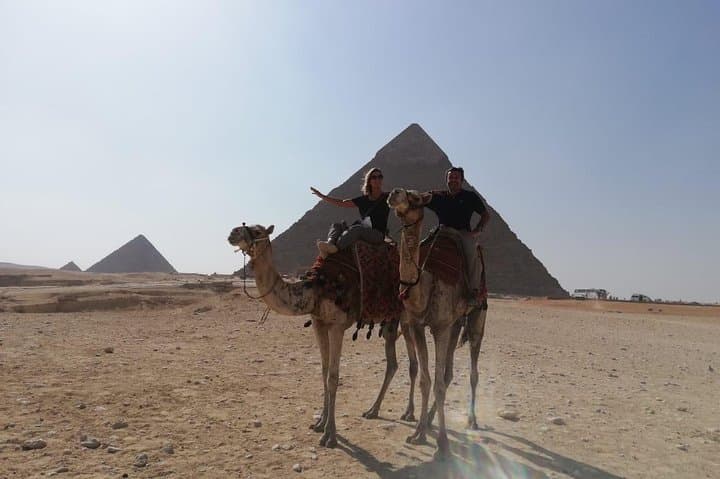
Expect sandy, uneven footing, scattered stone steps and open exposures to sun and wind. The itinerary includes up to 60 minutes at the Sphinx, photo stops on the plateau with all three pyramids in view, and a 30-minute camel ride across the sands—an often slow, steady way to experience the slope and scale of the plateau. Entry into pyramid interiors requires a separate ticket and guides cannot accompany you inside.
Practical guidance: the tour runs about four hours with hotel pickup and private guiding; arrive early or late afternoon to avoid peak heat, bring water and sun protection, and wear sturdy shoes for shifting sand and limestone surfaces. Carry small bills for photos, tips and museum or interior tickets, and follow posted rules to help preserve this fragile archaeological landscape.
moderate.
4 hours.
Moderate — you should be comfortable walking on sand, uneven stone, and standing for photo stops; minimal climbing.
Pyramid interior access requires an additional ticket and is subject to availability; the guide can arrange details but may not accompany you inside.
Camels are generally safe when handled by experienced handlers; children must be accompanied by an adult and handlers control mounting and dismounting.
Yes — the tour lists hotel pickup and drop-off in Cairo as part of the private package, but confirm your pickup point when booking.
Tipping is customary; consider a modest tip for the guide (equivalent to a few USD) and a smaller amount for the camel handler depending on service.
The Giza complex dates to Egypt’s Fourth Dynasty; the three main pyramids honor pharaohs Khufu, Khafre and Menkaure, while the Sphinx likely served a protective or ceremonial role.
Heavy visitation stresses the limestone and surrounding dunes; abide by signage, avoid climbing, and support licensed guides and local conservation initiatives to reduce impact.
Deluxe Travel operates guided outdoor trips and adventures with an emphasis on safety, stewardship, and memorable experiences.

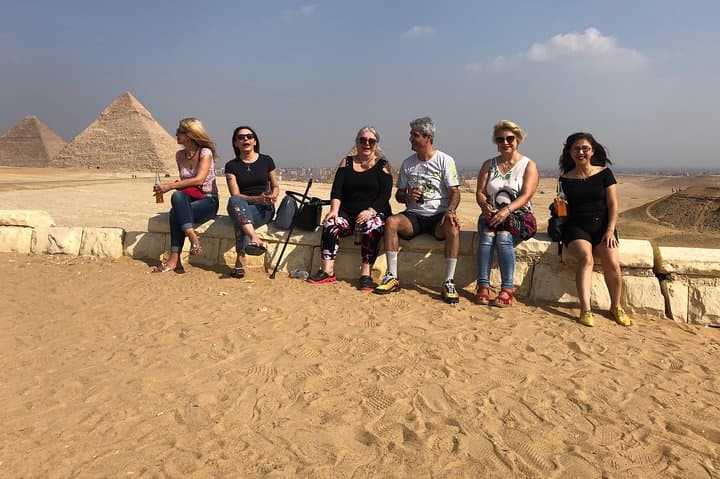

Dust lifts off the sunbaked stones of the Giza Plateau as a private minivan drops you at the rim—three pyramids arrayed like pyramid-shaped rulers against the horizon and the Sphinx sitting watch below.
Dust lifts off the sunbaked stones of the Giza Plateau as a private minivan drops you at the rim—three pyramids arrayed like pyramid-shaped rulers against the horizon and the Sphinx sitting watch below.
The Great Pyramid of Khufu, Khafre’s slightly smaller neighbor and Menkaure’s compact monument date to roughly 4,500 years ago; their core is limestone bedrock quarried and fitted with remarkable precision. The Sphinx, carved from the plateau’s softer bedrock, stares eastward and has been reworked and restored across millennia. Cultural touchpoints on this half-day include a papyrus demonstration and commentary from an Egyptologist who frames the monuments in funerary practice, quarrying technology and ancient ritual.
Expect sandy, uneven footing, scattered stone steps and open exposures to sun and wind. The itinerary includes up to 60 minutes at the Sphinx, photo stops on the plateau with all three pyramids in view, and a 30-minute camel ride across the sands—an often slow, steady way to experience the slope and scale of the plateau. Entry into pyramid interiors requires a separate ticket and guides cannot accompany you inside.
Practical guidance: the tour runs about four hours with hotel pickup and private guiding; arrive early or late afternoon to avoid peak heat, bring water and sun protection, and wear sturdy shoes for shifting sand and limestone surfaces. Carry small bills for photos, tips and museum or interior tickets, and follow posted rules to help preserve this fragile archaeological landscape.