THE ADVENTURE COLLECTIVE® · Independent discovery and booking for outdoor travel

A brisk, four-hour guided loop through Punta del Este’s peninsula, beaches, and Casa Pueblo—ideal for first-time visitors who want coastal views, local history, and photographic stops without the logistics stress.
A brisk, four-hour guided loop through Punta del Este’s peninsula, beaches, and Casa Pueblo—ideal for first-time visitors who want coastal views, local history, and photographic stops without the logistics stress.
You step off the van onto a wind-scoured promontory where Atlantic surf throws silver at the shoreline and the famous hand sculpture keeps one finger pointed toward the sea.
Verified experiences and guided adventures in the surrounding area.
Operated by Tangol · Punta del Este, Maldonado Department
You step off the van onto a wind-scoured promontory where Atlantic surf throws silver at the shoreline and the famous hand sculpture keeps one finger pointed toward the sea.
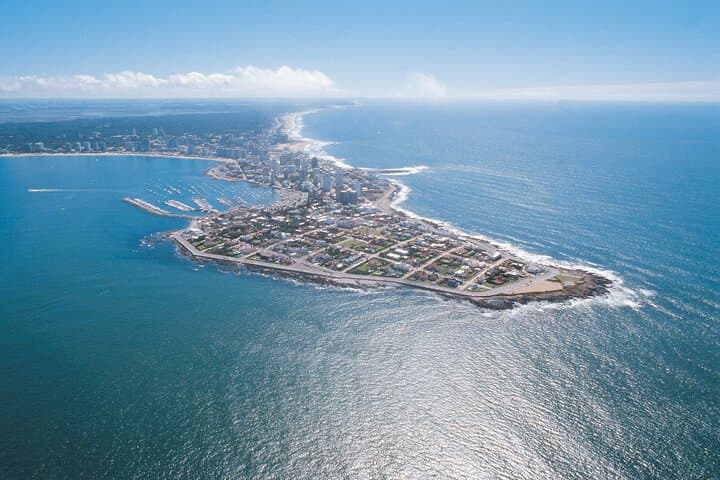
This four-hour guided loop moves fast but deliberately: the peninsula’s lighthouse, the Port’s working boats, and the bracing beaches of Playa Brava and Playa Mansa reveal why Punta del Este became Uruguay’s premier seaside escape in the 20th century. Geologically the coast is a mix of sandy spits and sandstone bluffs shaped by south-flowing currents; culturally it’s equally layered—summer mansions sit beside modest fishermen’s houses, and modern shops line Juan Gorlero Avenue.
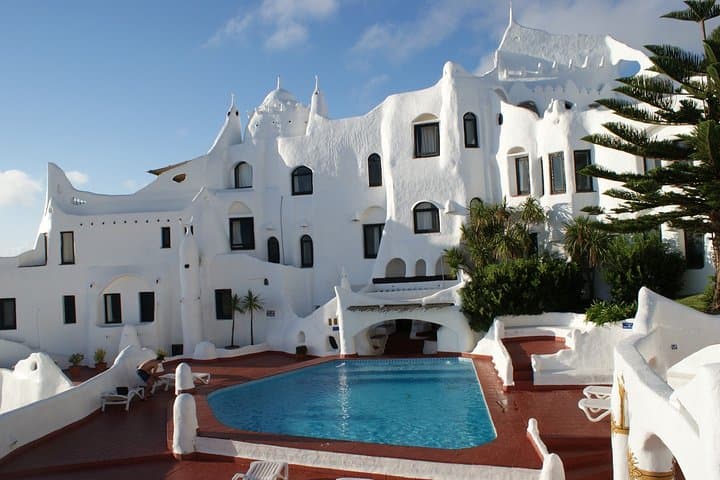
Highlights include a drive through the piniers (scattered maritime pines) and a stop at Punta Ballena to view Casa Pueblo, the white-washed, sculptural house-studio of Carlos Páez Vilaró that doubles as a museum and sunset viewpoint. Your guide will sketch local history—the boom in tourism, yacht culture, and the port’s role in regional fisheries—while pointing out La Barra’s undulating bridge and celebrity homes in Beverly Hills and Rincón del Indio.
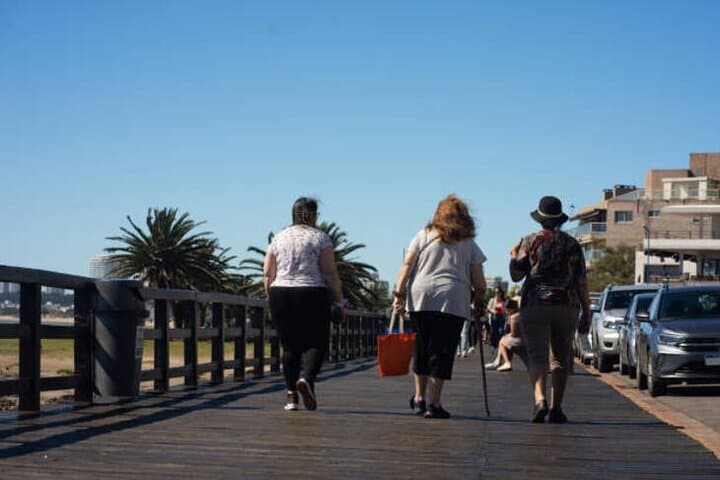
Practical notes: expect several short walks and photo stops rather than long hikes; wear closed-toe shoes for uneven boardwalks, and bring sun protection and a light wind layer. If you want to enter Casa Pueblo or the atelier, budget time and admission separately. Morning tours are cooler and less crowded; late-afternoon runs into the golden light at Punta Ballena. The tour is an efficient introduction for first-time visitors who want coastal scenery, local stories, and a taste of Uruguayan beach-town life.
easy.
4 hours.
Suitable for most fitness levels; involves several short, easy walks and boarding/alighting the vehicle
Yes—round-trip transfers from central Punta del Este hotels are included; if your hotel is outside the pickup zone the operator will confirm a meeting point.
No—admission to Casa Pueblo and the atelier is not included and must be purchased separately if you wish to enter.
Guides typically operate in Spanish and often in English; confirm language availability when booking.
The tour provider flags it as not suitable for cruise passengers—timing and drop-off logistics may not align with cruise schedules.
Punta del Este evolved from a 19th-century fishing village into a glamorous beach resort; Casa Pueblo, built and expanded by artist Carlos Páez Vilaró, is a local cultural landmark.
Respect dune vegetation and marked paths—the fragile coastal dunes host nesting birds and help prevent erosion; carry out all trash and avoid disturbing wildlife.
Tangol operates guided outdoor trips and adventures with an emphasis on safety, stewardship, and memorable experiences.
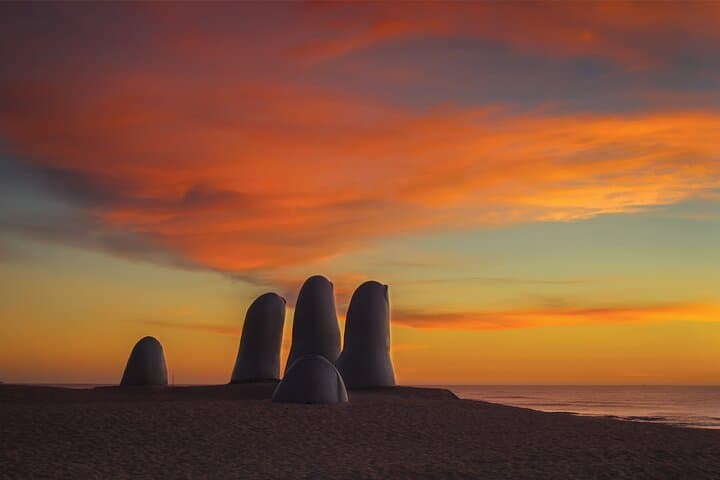
You step off the van onto a wind-scoured promontory where Atlantic surf throws silver at the shoreline and the famous hand sculpture keeps one finger pointed toward the sea.
You step off the van onto a wind-scoured promontory where Atlantic surf throws silver at the shoreline and the famous hand sculpture keeps one finger pointed toward the sea.
This four-hour guided loop moves fast but deliberately: the peninsula’s lighthouse, the Port’s working boats, and the bracing beaches of Playa Brava and Playa Mansa reveal why Punta del Este became Uruguay’s premier seaside escape in the 20th century. Geologically the coast is a mix of sandy spits and sandstone bluffs shaped by south-flowing currents; culturally it’s equally layered—summer mansions sit beside modest fishermen’s houses, and modern shops line Juan Gorlero Avenue.
Highlights include a drive through the piniers (scattered maritime pines) and a stop at Punta Ballena to view Casa Pueblo, the white-washed, sculptural house-studio of Carlos Páez Vilaró that doubles as a museum and sunset viewpoint. Your guide will sketch local history—the boom in tourism, yacht culture, and the port’s role in regional fisheries—while pointing out La Barra’s undulating bridge and celebrity homes in Beverly Hills and Rincón del Indio.
Practical notes: expect several short walks and photo stops rather than long hikes; wear closed-toe shoes for uneven boardwalks, and bring sun protection and a light wind layer. If you want to enter Casa Pueblo or the atelier, budget time and admission separately. Morning tours are cooler and less crowded; late-afternoon runs into the golden light at Punta Ballena. The tour is an efficient introduction for first-time visitors who want coastal scenery, local stories, and a taste of Uruguayan beach-town life.