THE ADVENTURE COLLECTIVE® · Independent discovery and booking for outdoor travel

Drive inland from the Tunisian coast for a private half-day to El Jem’s monumental Roman amphitheatre and its museum. This easy, immersive excursion combines scenic countryside, a dramatic ancient arena, and finely preserved mosaics.
Drive inland from the Tunisian coast for a private half-day to El Jem’s monumental Roman amphitheatre and its museum. This easy, immersive excursion combines scenic countryside, a dramatic ancient arena, and finely preserved mosaics.
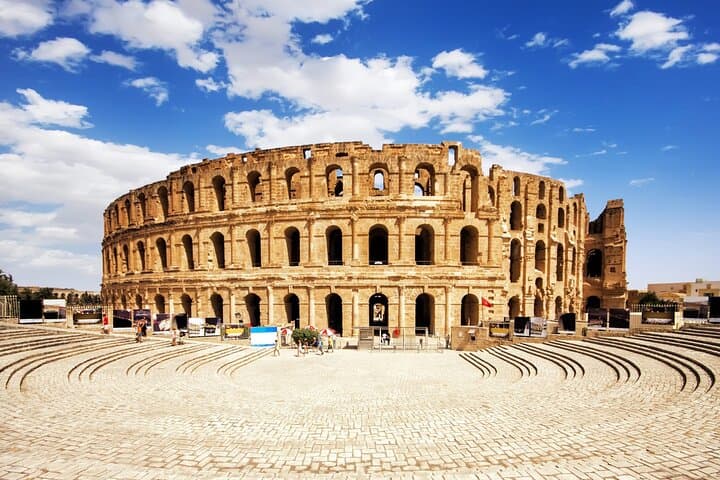
A low, warm light stretches across scrubby fields as an air-conditioned vehicle winds away from the Mediterranean coast toward El Jem. Travelers pass olive groves and small villages; the road opens and the amphitheatre appears like a weathered crown on the plain, its stone tiers holding centuries of sound and silence.
Verified experiences and guided adventures in the surrounding area.
Operated by Ôthentic Travel & Services · El Jem, Mahdia Governorate
A low, warm light stretches across scrubby fields as an air-conditioned vehicle winds away from the Mediterranean coast toward El Jem. Travelers pass olive groves and small villages; the road opens and the amphitheatre appears like a weathered crown on the plain, its stone tiers holding centuries of sound and silence.
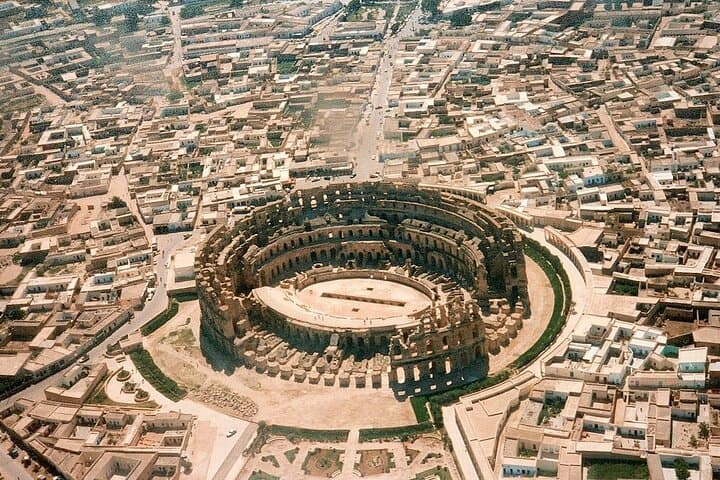
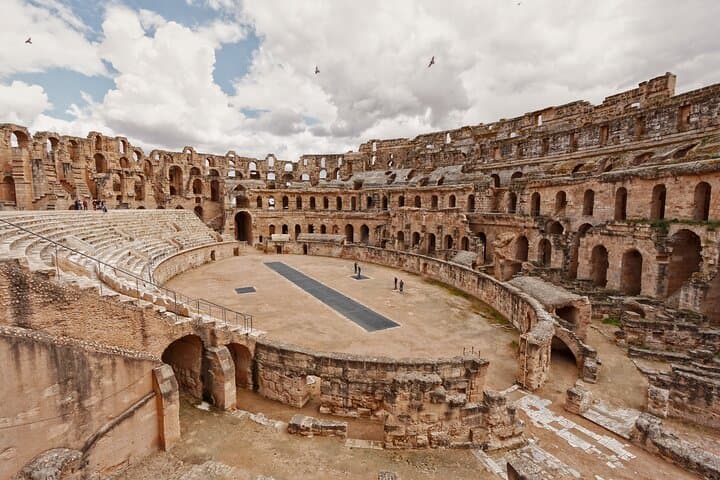
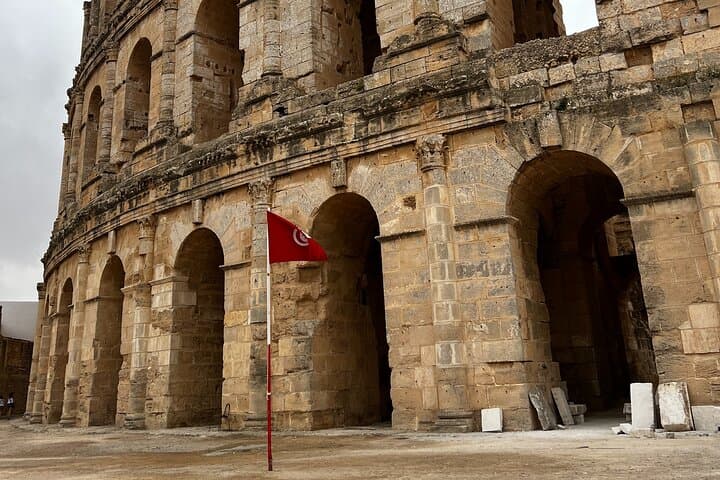
Built for the Roman city of Thysdrus in the 3rd century CE, the El Jem amphitheatre is among the largest and best-preserved Roman arenas outside Italy. Its massive concrete and stone construction speaks to Roman engineering—vaulted corridors, radial stairways and a sun-dimmed arena where mosaics and fragments now echo the spectacles once staged here. The adjacent Archaeological Museum presents mosaics and artifacts that map local daily life in antiquity and link El Jem to wider Roman Africa.
The geology of the site—limestone and locally quarried stone—gives the amphitheatre its pale, burnished color; the surrounding plain is agricultural, with seasonal heat that shapes the rhythm of visits. Local culture is straightforward and welcoming: small cafés, vendors offering cold drinks, and a relaxed pace that favors late-morning or late-afternoon visits to avoid the heat.
Practical guidance: expect a smooth one-hour transfer from Monastir or Sousse, a guided or self-paced hour in the amphitheatre, and museum time. Wear sturdy walking shoes for uneven stone, sun protection, and bring water. Mobility is generally easy but there are steps and uneven surfaces in the amphitheatre. Reserve midweek or early/late slots to avoid crowds and the high sun.
easy.
4–5 hours.
Suitable for most fitness levels; involves walking and short stair climbs but no sustained exertion.
Driving time is approximately one hour each way, depending on traffic and exact pickup location.
This itinerary includes entry to the amphitheatre and the Archaeological Museum of El Jem as part of the tour.
The site is family-friendly but has uneven surfaces and steps; infants in strollers can be accommodated during the transfer but may require carrying at the amphitheatre.
Visitors are free to explore at their own pace; many opt for a guided explanation, but a private driver/transfer is provided for logistics.
El Jem was the Roman city of Thysdrus and a major olive-oil production center; its amphitheatre dates to the 3rd century CE and reflects the wealth of Roman Africa.
The site is managed to preserve stonework and mosaics; visitors should follow paths, avoid touching fragile surfaces, and dispose of waste responsibly to limit erosion and wear.
Ôthentic Travel & Services operates guided outdoor trips and adventures with an emphasis on safety, stewardship, and memorable experiences.
A low, warm light stretches across scrubby fields as an air-conditioned vehicle winds away from the Mediterranean coast toward El Jem. Travelers pass olive groves and small villages; the road opens and the amphitheatre appears like a weathered crown on the plain, its stone tiers holding centuries of sound and silence.
A low, warm light stretches across scrubby fields as an air-conditioned vehicle winds away from the Mediterranean coast toward El Jem. Travelers pass olive groves and small villages; the road opens and the amphitheatre appears like a weathered crown on the plain, its stone tiers holding centuries of sound and silence.
Built for the Roman city of Thysdrus in the 3rd century CE, the El Jem amphitheatre is among the largest and best-preserved Roman arenas outside Italy. Its massive concrete and stone construction speaks to Roman engineering—vaulted corridors, radial stairways and a sun-dimmed arena where mosaics and fragments now echo the spectacles once staged here. The adjacent Archaeological Museum presents mosaics and artifacts that map local daily life in antiquity and link El Jem to wider Roman Africa.
The geology of the site—limestone and locally quarried stone—gives the amphitheatre its pale, burnished color; the surrounding plain is agricultural, with seasonal heat that shapes the rhythm of visits. Local culture is straightforward and welcoming: small cafés, vendors offering cold drinks, and a relaxed pace that favors late-morning or late-afternoon visits to avoid the heat.
Practical guidance: expect a smooth one-hour transfer from Monastir or Sousse, a guided or self-paced hour in the amphitheatre, and museum time. Wear sturdy walking shoes for uneven stone, sun protection, and bring water. Mobility is generally easy but there are steps and uneven surfaces in the amphitheatre. Reserve midweek or early/late slots to avoid crowds and the high sun.