THE ADVENTURE COLLECTIVE® · Independent discovery and booking for outdoor travel

Travel a short distance from Siem Reap to the Roluos group—an early Angkor capital where Bakong’s pyramid, Preah Ko’s carved bricks and Lolei’s island temple reveal the beginnings of Khmer monumental architecture. This private half-day tour offers context, easy logistics and quieter visits than the main park.
Travel a short distance from Siem Reap to the Roluos group—an early Angkor capital where Bakong’s pyramid, Preah Ko’s carved bricks and Lolei’s island temple reveal the beginnings of Khmer monumental architecture. This private half-day tour offers context, easy logistics and quieter visits than the main park.
You arrive before the heat settles, dust on the road and a low, reflective baray catching the sky—Lolei’s brick towers rising from the old reservoir like an island city daring you to step closer. A private car carries you out of Siem Reap and into flat rice plain geometry: ox paths, roadside shrines, the steady call of distant drums.
Verified experiences and guided adventures in the surrounding area.
Operated by Private Tour Guide-Phnom Penh · Siem Reap, Siem Reap Province
You arrive before the heat settles, dust on the road and a low, reflective baray catching the sky—Lolei’s brick towers rising from the old reservoir like an island city daring you to step closer. A private car carries you out of Siem Reap and into flat rice plain geometry: ox paths, roadside shrines, the steady call of distant drums.
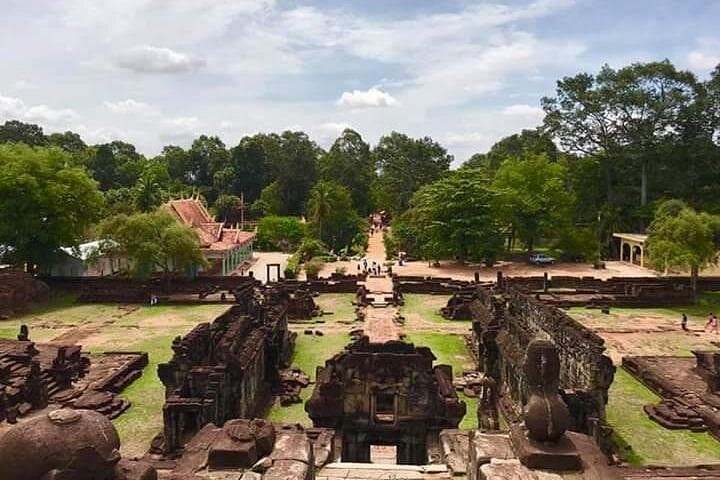
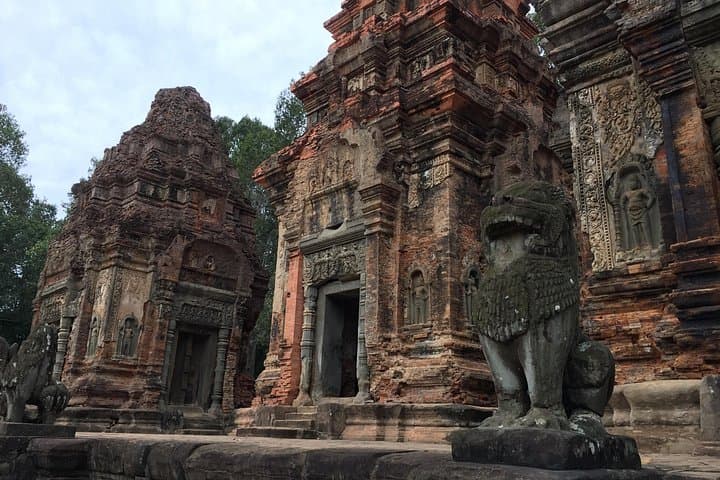
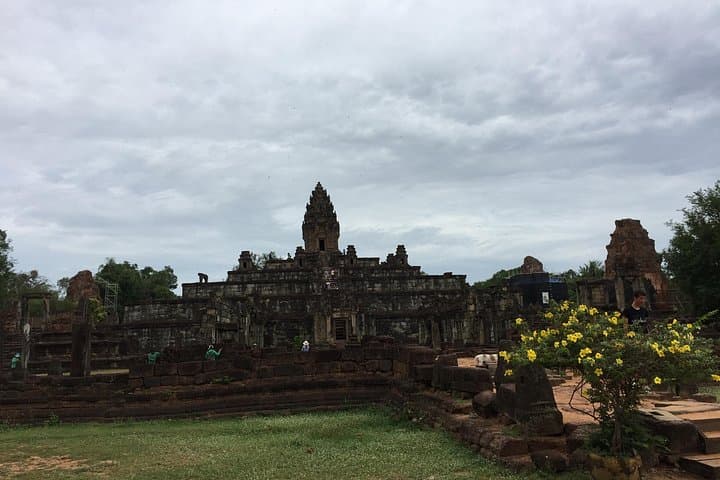
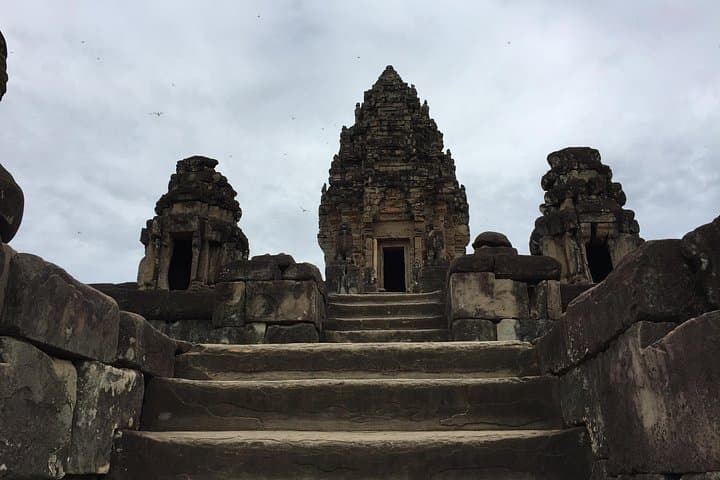
The Roluos group preserves the earliest Angkor-era experiments in temple design: Preah Ko’s carved lintels offering early Khmer iconography, Bakong’s stepped pyramidal form that set a pattern for later state temples, and Lolei’s island setting inside Indratataka Baray, which reveals medieval water-management logic as much as religious intent. These late-9th-century monuments sit on compacted laterite and fired brick, echoing a phase when Hindu kings were shaping a capital’s identity.
Expect low crowds compared with Angkor Wat, and a tactile experience—soft erosion on carved faces, active monastic life near Bakong’s eastern entrance, and broad views over rice fields where the horizon feels close.
Practicalities: the half-day private format runs about four hours with hotel pickup; wear lightweight, modest clothing that covers shoulders and knees for temple entry. Carry cash for your Angkor pass, small donations and vendors. Mornings are best for cooler light and softer shadows on bas-reliefs; afternoons bring more people and harsher sun. Footing is uneven: closed shoes with a good sole help, and bring water—the guides usually supply bottled water but you’ll want enough for the walk. A private guide will add archaeological context and help navigate temple etiquette so you get the most from this compact, foundational chapter of the Angkor story.
easy.
4 hours.
Suitable for travelers with low to moderate fitness; mostly short walks on uneven ground.
No; the Angkor Pass is purchased separately at the official ticket office near the main park—bring passport and cash (USD commonly accepted).
The Roluos group sits roughly 10–15 km east of Siem Reap; drives take about 20–35 minutes depending on traffic and pickup location.
Some areas around the sites are level and approachable by vehicle, but temple interiors and brick steps are uneven and may be difficult for full wheelchair access—check with the operator for tailored arrangements.
Yes—photography is allowed, but flash may be discouraged in certain sanctuaries and always respect worshippers and signs about restricted areas.
The Roluos group dates to the late 9th century and represents the first major capital centers of the Angkorian state under King Indravarman and successors, marking a shift to brick and stone temple construction.
Visitor management focuses on preserving fragile brickwork and controlling vegetation; stick to paths, avoid touching carvings, and consider small donations that support local conservation efforts.
Private Tour Guide-Phnom Penh operates guided outdoor trips and adventures with an emphasis on safety, stewardship, and memorable experiences.
You arrive before the heat settles, dust on the road and a low, reflective baray catching the sky—Lolei’s brick towers rising from the old reservoir like an island city daring you to step closer. A private car carries you out of Siem Reap and into flat rice plain geometry: ox paths, roadside shrines, the steady call of distant drums.
You arrive before the heat settles, dust on the road and a low, reflective baray catching the sky—Lolei’s brick towers rising from the old reservoir like an island city daring you to step closer. A private car carries you out of Siem Reap and into flat rice plain geometry: ox paths, roadside shrines, the steady call of distant drums.
The Roluos group preserves the earliest Angkor-era experiments in temple design: Preah Ko’s carved lintels offering early Khmer iconography, Bakong’s stepped pyramidal form that set a pattern for later state temples, and Lolei’s island setting inside Indratataka Baray, which reveals medieval water-management logic as much as religious intent. These late-9th-century monuments sit on compacted laterite and fired brick, echoing a phase when Hindu kings were shaping a capital’s identity.
Expect low crowds compared with Angkor Wat, and a tactile experience—soft erosion on carved faces, active monastic life near Bakong’s eastern entrance, and broad views over rice fields where the horizon feels close.
Practicalities: the half-day private format runs about four hours with hotel pickup; wear lightweight, modest clothing that covers shoulders and knees for temple entry. Carry cash for your Angkor pass, small donations and vendors. Mornings are best for cooler light and softer shadows on bas-reliefs; afternoons bring more people and harsher sun. Footing is uneven: closed shoes with a good sole help, and bring water—the guides usually supply bottled water but you’ll want enough for the walk. A private guide will add archaeological context and help navigate temple etiquette so you get the most from this compact, foundational chapter of the Angkor story.