THE ADVENTURE COLLECTIVE® · Independent discovery and booking for outdoor travel

Spend a private half day on the Giza Plateau with an Egyptologist guide: walk among the Great Pyramid, ride a camel with sweeping pyramid views, and visit the Sphinx and Valley Temple. Practical tips on timing, gear, and what the tour includes to help you plan.
Spend a private half day on the Giza Plateau with an Egyptologist guide: walk among the Great Pyramid, ride a camel with sweeping pyramid views, and visit the Sphinx and Valley Temple. Practical tips on timing, gear, and what the tour includes to help you plan.
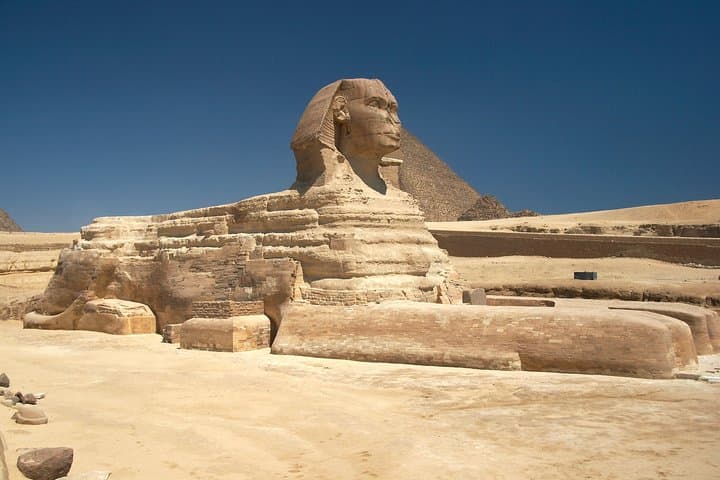
You step out of the car onto wind-scoured sand and the silhouette of the Great Pyramid fills the sky — a raw, geometric mountain that rearranges distance and time. Morning light sharpens the edges of limestone blocks while the Sphinx sits forward-facing, its gaze fixed across millennia. A private guide leads you along firm tracks between souvenir vendors and the low-lying hum of Cairo traffic, and the plateau opens into a landscape where human ambition reads like bedrock.
Verified experiences and guided adventures in the surrounding area.
Operated by Egypt Top Tours · Giza, Giza Governorate
You step out of the car onto wind-scoured sand and the silhouette of the Great Pyramid fills the sky — a raw, geometric mountain that rearranges distance and time. Morning light sharpens the edges of limestone blocks while the Sphinx sits forward-facing, its gaze fixed across millennia. A private guide leads you along firm tracks between souvenir vendors and the low-lying hum of Cairo traffic, and the plateau opens into a landscape where human ambition reads like bedrock.
This half-day private tour visits the three main pyramids of Giza — Khufu (Cheops), Khafre (Chephren), and Menkaure (Mykerinus) — plus the Sphinx and the adjacent Valley Temple. The pyramids date to Egypt's Fourth Dynasty, around 2600–2500 BCE, built as funerary monuments and aligned with astronomical points. Geologically, the plateau sits on Pleistocene limestone; erosion and quarrying have exposed bedding planes that give the site its terraced feel. Culturally, the area has long been a working frontier between urban Cairo and the desert, where local camel and donkey handlers contribute to the living landscape.
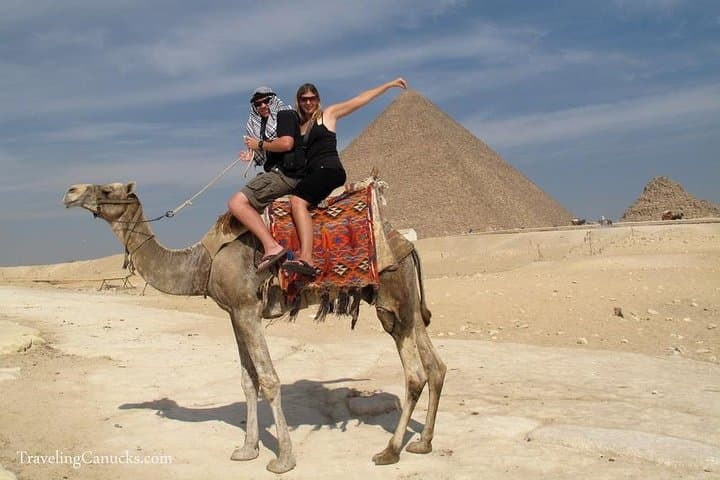
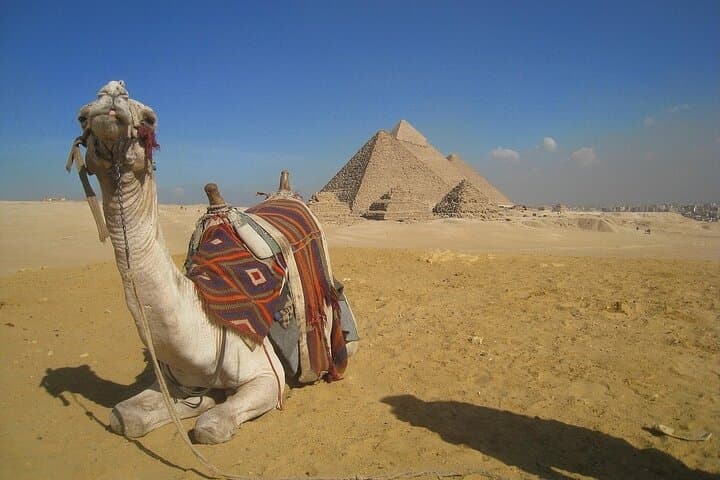
Practical guidance: the tour runs about four hours with hotel pickup, bottled water, and an optional 30-minute camel ride. Wear sturdy closed-toe shoes for walking on sand and avoid peak sun hours in summer; bring sun protection and a refillable water bottle. Ask your operator in advance about pyramid interior access and photography rules. Keep to established paths, listen to your Egyptologist guide, and budget time for photos at the panoramic viewpoint — it frames the plateau with the city behind it.
easy.
4 hours.
Suitable for most fitness levels; expect moderate walking on uneven sand and some steps
Yes — the tour includes hotel pickup and drop-off by private vehicle; confirm pickup time when booking.
The listing specifies a private guide and transport but does not guarantee pyramid interior tickets; confirm with the operator whether entrance to chamber interiors is included or an extra cost.
The 30-minute camel ride is optional; handlers generally require children to be supervised and recommend against participation for pregnant travelers or those with cardiovascular issues.
Expect moderate walking across sandy and uneven limestone surfaces for roughly 1–2 miles total, with short climbs to panoramic viewpoints.
The Giza pyramids were built in Egypt's Fourth Dynasty (circa 2600–2500 BCE); Khufu's Great Pyramid is the largest, with the Sphinx most often associated with Khafre's funerary complex.
Tourists should stay on designated paths, avoid climbing monuments, and minimize plastic waste; using licensed guides helps support site management and local communities.
Egypt Top Tours operates guided outdoor trips and adventures with an emphasis on safety, stewardship, and memorable experiences.

You step out of the car onto wind-scoured sand and the silhouette of the Great Pyramid fills the sky — a raw, geometric mountain that rearranges distance and time. Morning light sharpens the edges of limestone blocks while the Sphinx sits forward-facing, its gaze fixed across millennia. A private guide leads you along firm tracks between souvenir vendors and the low-lying hum of Cairo traffic, and the plateau opens into a landscape where human ambition reads like bedrock.
You step out of the car onto wind-scoured sand and the silhouette of the Great Pyramid fills the sky — a raw, geometric mountain that rearranges distance and time. Morning light sharpens the edges of limestone blocks while the Sphinx sits forward-facing, its gaze fixed across millennia. A private guide leads you along firm tracks between souvenir vendors and the low-lying hum of Cairo traffic, and the plateau opens into a landscape where human ambition reads like bedrock.
This half-day private tour visits the three main pyramids of Giza — Khufu (Cheops), Khafre (Chephren), and Menkaure (Mykerinus) — plus the Sphinx and the adjacent Valley Temple. The pyramids date to Egypt's Fourth Dynasty, around 2600–2500 BCE, built as funerary monuments and aligned with astronomical points. Geologically, the plateau sits on Pleistocene limestone; erosion and quarrying have exposed bedding planes that give the site its terraced feel. Culturally, the area has long been a working frontier between urban Cairo and the desert, where local camel and donkey handlers contribute to the living landscape.
Practical guidance: the tour runs about four hours with hotel pickup, bottled water, and an optional 30-minute camel ride. Wear sturdy closed-toe shoes for walking on sand and avoid peak sun hours in summer; bring sun protection and a refillable water bottle. Ask your operator in advance about pyramid interior access and photography rules. Keep to established paths, listen to your Egyptologist guide, and budget time for photos at the panoramic viewpoint — it frames the plateau with the city behind it.