THE ADVENTURE COLLECTIVE® · Independent discovery and booking for outdoor travel

Step through Buland Darwaza into Akbar’s red sandstone capital on this private half-day tour from Agra. Expect an expert guide, easy walking over flat terrain, and clear historical context on a compact UNESCO site.
Step through Buland Darwaza into Akbar’s red sandstone capital on this private half-day tour from Agra. Expect an expert guide, easy walking over flat terrain, and clear historical context on a compact UNESCO site.
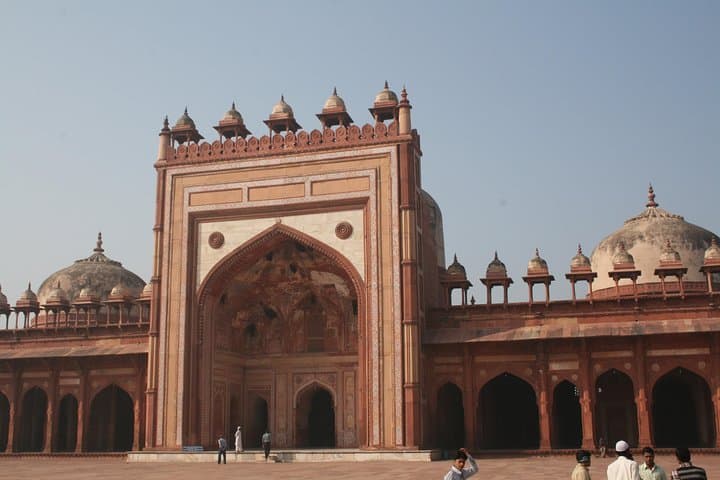
The gate rises before you—red sandstone glowing under a broad Indian sky, birds lifting from battered courtyards as the guide’s voice threads history into the arches. A short drive from Agra deposits you at Fatehpur Sikri, the short-lived Mughal capital where imperial ambition met local craft in sunbaked blocks of stone.
Verified experiences and guided adventures in the surrounding area.
Operated by Padma Holidays · Fatehpur Sikri, Uttar Pradesh
The gate rises before you—red sandstone glowing under a broad Indian sky, birds lifting from battered courtyards as the guide’s voice threads history into the arches. A short drive from Agra deposits you at Fatehpur Sikri, the short-lived Mughal capital where imperial ambition met local craft in sunbaked blocks of stone.
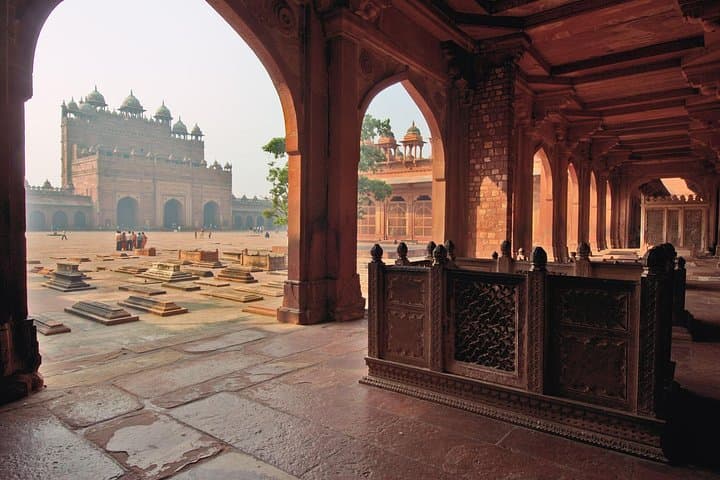
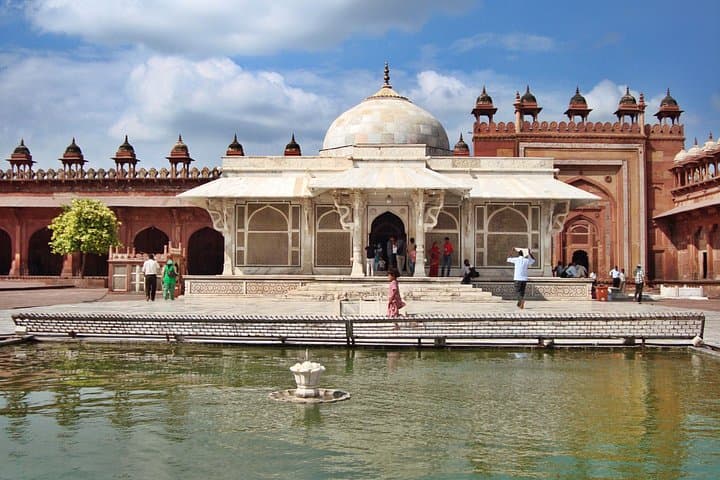
Built by Emperor Akbar in the late 16th century, Fatehpur Sikri was designed as a planned capital blending Timurid form with Hindu domestic motifs. Buland Darwaza still dominates the approach; inside, the Jama Masjid, Diwan-i-Khas and Panch Mahal show layered uses of space and light rather than simple symmetry. The city’s abandonment—largely blamed on water scarcity—adds a rawness to the walk: buildings preserved but not overcrowded, their carved jalis testing the slant of sunlight.
Expect roughly 2–3 km of walking across packed earth, flagstones and shallow steps; elevation is flat but exposed. Your private guide translates inscriptions, points out Gujarati influences and explains how courtyards managed climate centuries before modern engineering. Photography is excellent in morning or late afternoon when shadows carve relief into façades.
Practical edge: the site is mostly open-air and can be hot midday. Bring sun protection and sturdy shoes for uneven thresholds. Entrance tickets and bottled water are commonly included on private tours; confirm pickup time from Agra (40–60 minutes by road) and leave an extra hour for traffic. A half-day visit delivers concentrated history—perfect for travelers who want culture with minimal logistics.
easy.
4–6 hours.
Suitable for most fitness levels; involves 2–3 km of walking on flat but uneven surfaces
The site is about 35–45 km west of Agra; typical drive time is 40–60 minutes depending on traffic.
Many private tours include monument entrance tickets—confirm when booking to avoid surprises at the gate.
The site is largely level but has uneven surfaces and steps; parts are accessible but those with significant mobility issues should check in advance.
Early morning or late afternoon offers cooler temperatures and better light for photography; midday can be hot and bright.
Fatehpur Sikri was founded by Emperor Akbar in the 1570s as a planned capital and court complex, then largely abandoned within two decades—water shortages likely prompted its desertion.
The site is a UNESCO World Heritage property with ongoing conservation efforts focused on stabilizing sandstone facades and managing visitor impact; visitors should stay on marked paths to protect fragile carvings.
Padma Holidays operates guided outdoor trips and adventures with an emphasis on safety, stewardship, and memorable experiences.

The gate rises before you—red sandstone glowing under a broad Indian sky, birds lifting from battered courtyards as the guide’s voice threads history into the arches. A short drive from Agra deposits you at Fatehpur Sikri, the short-lived Mughal capital where imperial ambition met local craft in sunbaked blocks of stone.
The gate rises before you—red sandstone glowing under a broad Indian sky, birds lifting from battered courtyards as the guide’s voice threads history into the arches. A short drive from Agra deposits you at Fatehpur Sikri, the short-lived Mughal capital where imperial ambition met local craft in sunbaked blocks of stone.
Built by Emperor Akbar in the late 16th century, Fatehpur Sikri was designed as a planned capital blending Timurid form with Hindu domestic motifs. Buland Darwaza still dominates the approach; inside, the Jama Masjid, Diwan-i-Khas and Panch Mahal show layered uses of space and light rather than simple symmetry. The city’s abandonment—largely blamed on water scarcity—adds a rawness to the walk: buildings preserved but not overcrowded, their carved jalis testing the slant of sunlight.
Expect roughly 2–3 km of walking across packed earth, flagstones and shallow steps; elevation is flat but exposed. Your private guide translates inscriptions, points out Gujarati influences and explains how courtyards managed climate centuries before modern engineering. Photography is excellent in morning or late afternoon when shadows carve relief into façades.
Practical edge: the site is mostly open-air and can be hot midday. Bring sun protection and sturdy shoes for uneven thresholds. Entrance tickets and bottled water are commonly included on private tours; confirm pickup time from Agra (40–60 minutes by road) and leave an extra hour for traffic. A half-day visit delivers concentrated history—perfect for travelers who want culture with minimal logistics.