THE ADVENTURE COLLECTIVE® · Independent discovery and booking for outdoor travel

Explore Nizwa’s fort, souk, and mountain views in a private half-day tour that combines short drives, local markets, and visits to historic mud houses and plantations. Ideal for travelers wanting a compact cultural and landscape introduction to central Oman.
Explore Nizwa’s fort, souk, and mountain views in a private half-day tour that combines short drives, local markets, and visits to historic mud houses and plantations. Ideal for travelers wanting a compact cultural and landscape introduction to central Oman.
You arrive into a dry, sun-warmed plaza where the fortress’s squat silhouette watches over the town. The guide leads you past vendors arranging silver khanjars and woven baskets; the breeze carries the scent of date syrup and hot spices while jagged wadis and terraced farms cut the distant hills into geometric lines.
Verified experiences and guided adventures in the surrounding area.
Operated by taxiGo Limo Airport Service · Nizwa, Ad Dakhiliyah
You arrive into a dry, sun-warmed plaza where the fortress’s squat silhouette watches over the town. The guide leads you past vendors arranging silver khanjars and woven baskets; the breeze carries the scent of date syrup and hot spices while jagged wadis and terraced farms cut the distant hills into geometric lines.
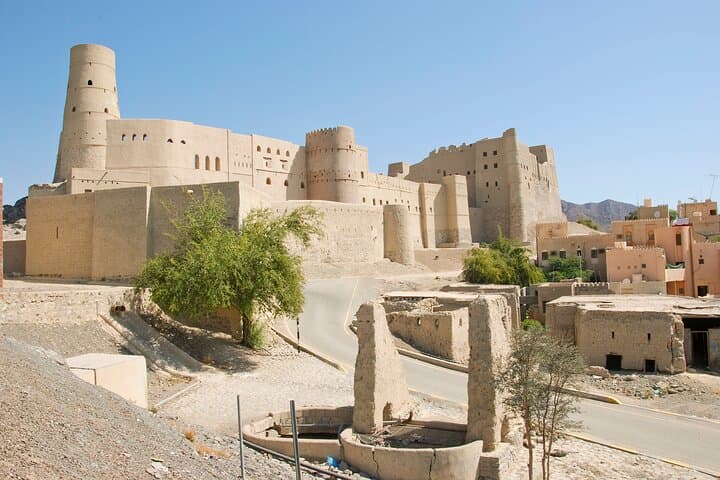
Nizwa sits at the edge of Oman’s Hajar mountains and has been a regional trading hub for centuries. The city’s 17th-century fort, thick with lime-washed walls and round watchtowers, speaks to a time when water control and high-ground forts settled disputes. The surrounding geology—limestone ridges and steep wadis—shaped settlement patterns and the falaj irrigation channels that still feed banana and date palms.
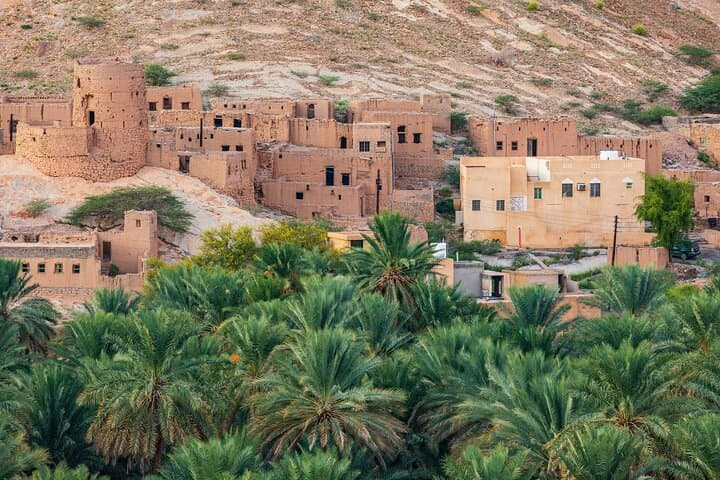
This half-day private tour moves at a calm pace: short drives in an air-conditioned vehicle, a stop at Fanja’s old town and market, a look over mountain-top mud houses and forts, a walk among plantations and ruins, and time to browse Nizwa Souk and the exterior of Nizwa Fort. Expect practical cultural moments—local music, chance to watch cattle trading at the market, and explanations of traditional irrigation (falaj).
Plan for sun and uneven paving. Wear supportive shoes for short walks, carry water, and allow time to photograph the fort from different angles—the light shifts quickly across the stone. The route is accessible for most fitness levels and gives a compact, actionable introduction to central Oman’s landscape and history.
easy.
4–5 hours.
Suitable for most fitness levels; involves short, gentle walks and vehicle transfers
The experience runs about five hours including pick-up and drop-off at Nizwa city center or local hotels.
This itinerary notes exterior visits and time at the souk; confirm with the operator if Fort entry fees are covered.
Yes—transport is private and air-conditioned with limited walking; infant seats are available on request.
Local guides commonly speak English and Arabic; check when booking for other language needs.
Nizwa was a central trade and religious center in Oman; its 17th-century fort was rebuilt to control trade routes and water resources.
Falaj systems remain vital and are protected by local practice; visitors should avoid disturbing irrigation channels and littering in wadis.
taxiGo Limo Airport Service operates guided outdoor trips and adventures with an emphasis on safety, stewardship, and memorable experiences.


You arrive into a dry, sun-warmed plaza where the fortress’s squat silhouette watches over the town. The guide leads you past vendors arranging silver khanjars and woven baskets; the breeze carries the scent of date syrup and hot spices while jagged wadis and terraced farms cut the distant hills into geometric lines.
You arrive into a dry, sun-warmed plaza where the fortress’s squat silhouette watches over the town. The guide leads you past vendors arranging silver khanjars and woven baskets; the breeze carries the scent of date syrup and hot spices while jagged wadis and terraced farms cut the distant hills into geometric lines.
Nizwa sits at the edge of Oman’s Hajar mountains and has been a regional trading hub for centuries. The city’s 17th-century fort, thick with lime-washed walls and round watchtowers, speaks to a time when water control and high-ground forts settled disputes. The surrounding geology—limestone ridges and steep wadis—shaped settlement patterns and the falaj irrigation channels that still feed banana and date palms.
This half-day private tour moves at a calm pace: short drives in an air-conditioned vehicle, a stop at Fanja’s old town and market, a look over mountain-top mud houses and forts, a walk among plantations and ruins, and time to browse Nizwa Souk and the exterior of Nizwa Fort. Expect practical cultural moments—local music, chance to watch cattle trading at the market, and explanations of traditional irrigation (falaj).
Plan for sun and uneven paving. Wear supportive shoes for short walks, carry water, and allow time to photograph the fort from different angles—the light shifts quickly across the stone. The route is accessible for most fitness levels and gives a compact, actionable introduction to central Oman’s landscape and history.