THE ADVENTURE COLLECTIVE® · Independent discovery and booking for outdoor travel

See the Great Pyramids and Sphinx with a private Egyptologist on this focused half-day tour. Expect close-up views, guided history, and optional inside-pyramid entry or camel rides for an extra fee.
See the Great Pyramids and Sphinx with a private Egyptologist on this focused half-day tour. Expect close-up views, guided history, and optional inside-pyramid entry or camel rides for an extra fee.
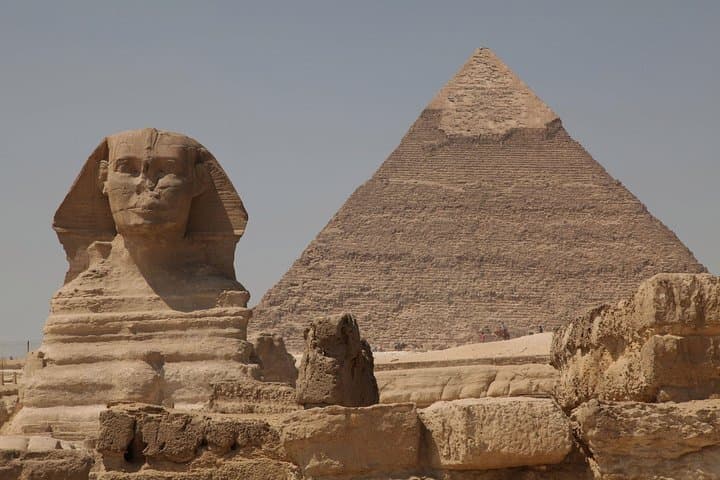
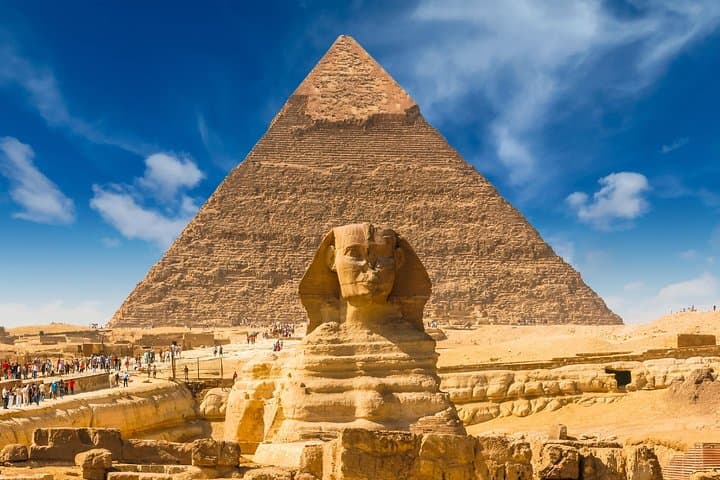
You step from an air-conditioned vehicle onto a rim of wind-swept stone and sand; the desert pushes gently against your boots and the three pyramids rise like engineered mountains against the blue. A private Egyptologist walks beside you, pointing out angled faces and mason marks while the Sphinx watches with an inscrutable, limestone gaze.
Verified experiences and guided adventures in the surrounding area.
Operated by Egypt Tours Online · Giza, Cairo Governorate
You step from an air-conditioned vehicle onto a rim of wind-swept stone and sand; the desert pushes gently against your boots and the three pyramids rise like engineered mountains against the blue. A private Egyptologist walks beside you, pointing out angled faces and mason marks while the Sphinx watches with an inscrutable, limestone gaze.
The Giza Plateau records Egypt’s Old Kingdom — Khufu’s Great Pyramid (c. 2560 BCE), Khafre’s companion and the enigmatic Sphinx are carved from nummulitic limestone and set on a natural bedrock shoulder above the Nile floodplain. The Valley Temples reveal ancient processional routes and stonework that informed royal funerary practice; nearby, modern Cairo spills outward with bazaars, papyrus sellers and perfumers serving centuries of culture.
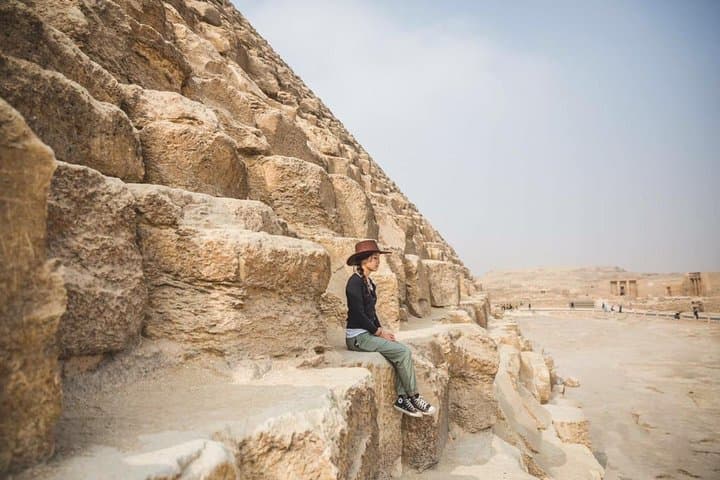
Expect mostly flat walking across hard-packed sand, occasional paved pathways and uneven limestone platforms; total on-foot distance can reach 2–3 km depending on stops. There’s minimal elevation gain but sun exposure is constant, and temperatures soar in summer. Inside-pyramid access and camel rides are typically optional and cost extra; booking the private tour secures a dedicated guide and private transfers.
Practicalities: arrange morning pickup to avoid peak heat, carry a full water bottle and sun protection, and wear grippy, closed-toe shoes for limestone steps and sandy slopes. Bring cash for entrance options, tips and market purchases; keep passport or ID handy for ticketing. The visit is compact but rich — a half-day that pairs on-the-ground history with clear logistics, ideal for first-time visitors who want expert context without spending the whole day in transit.
easy.
4 hours.
Light walking ability; should be able to walk and stand on uneven surfaces for up to 2–3 hours
Basic area entry is typically included; access inside individual pyramids and the Solar Boat Museum usually cost extra and must be paid on site or pre-booked.
Camel rides are optional and available for an additional fee; negotiate duration and price beforehand and be prepared to pay in cash.
The tour involves walking on uneven ground and is not recommended for travelers with serious spinal, heart or pregnancy-related restrictions; check medical suitability before booking.
Private hotel pickup and drop-off in central Cairo and Giza are included; confirm your exact pickup point and allow time for traffic.
The pyramids date to Egypt’s Old Kingdom (c. 2600–2500 BCE); Khufu’s Great Pyramid was built as a royal tomb using massive limestone blocks quarried nearby.
The Giza Plateau faces wear from tourism, urban encroachment and air pollution; stick to marked paths, avoid touching ancient stone and support licensed guides and conservation-minded operators.
Egypt Tours Online operates guided outdoor trips and adventures with an emphasis on safety, stewardship, and memorable experiences.
You step from an air-conditioned vehicle onto a rim of wind-swept stone and sand; the desert pushes gently against your boots and the three pyramids rise like engineered mountains against the blue. A private Egyptologist walks beside you, pointing out angled faces and mason marks while the Sphinx watches with an inscrutable, limestone gaze.
You step from an air-conditioned vehicle onto a rim of wind-swept stone and sand; the desert pushes gently against your boots and the three pyramids rise like engineered mountains against the blue. A private Egyptologist walks beside you, pointing out angled faces and mason marks while the Sphinx watches with an inscrutable, limestone gaze.
The Giza Plateau records Egypt’s Old Kingdom — Khufu’s Great Pyramid (c. 2560 BCE), Khafre’s companion and the enigmatic Sphinx are carved from nummulitic limestone and set on a natural bedrock shoulder above the Nile floodplain. The Valley Temples reveal ancient processional routes and stonework that informed royal funerary practice; nearby, modern Cairo spills outward with bazaars, papyrus sellers and perfumers serving centuries of culture.
Expect mostly flat walking across hard-packed sand, occasional paved pathways and uneven limestone platforms; total on-foot distance can reach 2–3 km depending on stops. There’s minimal elevation gain but sun exposure is constant, and temperatures soar in summer. Inside-pyramid access and camel rides are typically optional and cost extra; booking the private tour secures a dedicated guide and private transfers.
Practicalities: arrange morning pickup to avoid peak heat, carry a full water bottle and sun protection, and wear grippy, closed-toe shoes for limestone steps and sandy slopes. Bring cash for entrance options, tips and market purchases; keep passport or ID handy for ticketing. The visit is compact but rich — a half-day that pairs on-the-ground history with clear logistics, ideal for first-time visitors who want expert context without spending the whole day in transit.