THE ADVENTURE COLLECTIVE® · Independent discovery and booking for outdoor travel

Experience the Giza Plateau on a focused private half-day: Great Pyramid, Sphinx, a 25-minute camel ride and lunch. Ideal for travelers who want structured access with a local Egyptologist guide.
Experience the Giza Plateau on a focused private half-day: Great Pyramid, Sphinx, a 25-minute camel ride and lunch. Ideal for travelers who want structured access with a local Egyptologist guide.
You arrive onto the Giza Plateau in the cool hush of morning, wind lifting Saharan grit across flat limestone. The Great Pyramid rises ahead — block upon block of ancient engineering catching light like a stepped cliff — while the Sphinx watches with a human gaze and a lion’s patience.
Verified experiences and guided adventures in the surrounding area.
Operated by Upper Egypt Services · Giza, Giza Governorate
You arrive onto the Giza Plateau in the cool hush of morning, wind lifting Saharan grit across flat limestone. The Great Pyramid rises ahead — block upon block of ancient engineering catching light like a stepped cliff — while the Sphinx watches with a human gaze and a lion’s patience.
This half-day private tour condenses millennia into hours. Built around 2560 BC for Pharaoh Khufu, the Great Pyramid is the oldest remaining Wonder of the Ancient World; nearby, Khafre’s pyramid and the Valley Temple reflect the ritual landscape that supported funerary processions and solar cults. Geologically, the plateau is compacted limestone and desert veneer — erosion and quarrying have exposed the underlying bedrock that ancient builders used as foundation.
Local guides are often Egyptologists who explain hieroglyphic shorthand, burial practices, and the modern conservation pressures these monuments face. A short camel ride across the plateau offers a shifting view: the desert seems to push you forward, and the city of Cairo hovers on the horizon.
Practical guidance: expect uneven footing, loose sand, and strong sun. Mobility-accessible routes exist around key viewpoints but not through every archaeological trench. Bring sunscreen, a brimmed hat, and shoes with grip; carry cash in Egyptian pounds for vendor purchases and tips. Photography is free in most outdoor areas but interior pyramid access is limited, may require extra tickets, and is sometimes closed.
A private vehicle pickup and an included lunch make this an efficient way to see the site without rushing — arrive early to beat heat and crowds, and leave space in your itinerary for the Solar Boat Museum or the plateau’s quieter corners.
easy.
3–4 hours.
Basic mobility and the ability to walk short distances on uneven terrain; suitable for most fitness levels.
Interior access is sometimes available but limited and can require separate tickets or be closed for conservation; your guide can check availability and handle tickets.
Yes — camel rides provided are short and guided; riders sit in a simple saddle and guides assist mounting and dismounting, though motion can be jarring for some.
There are wheelchair-accessible routes around major viewpoints and transport is often accessible, but many original surfaces and some paths are uneven; check with the operator ahead of booking.
Early morning offers cooler temperatures and softer light for photos; late afternoon is also pleasant but can be busier and has stronger shadows for photography.
The Great Pyramid was completed around 2560 BC for Pharaoh Khufu; the Sphinx is associated with Khafre and acted as a guardian figure for the necropolis.
Erosion, tourist abrasion, and urban air pollution pose threats; stick to marked paths, avoid touching masonry, and follow guide instructions to reduce impact.
Upper Egypt Services operates guided outdoor trips and adventures with an emphasis on safety, stewardship, and memorable experiences.
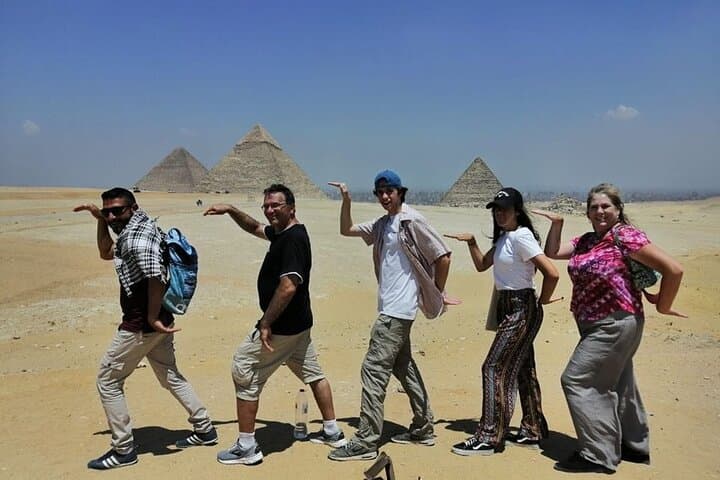
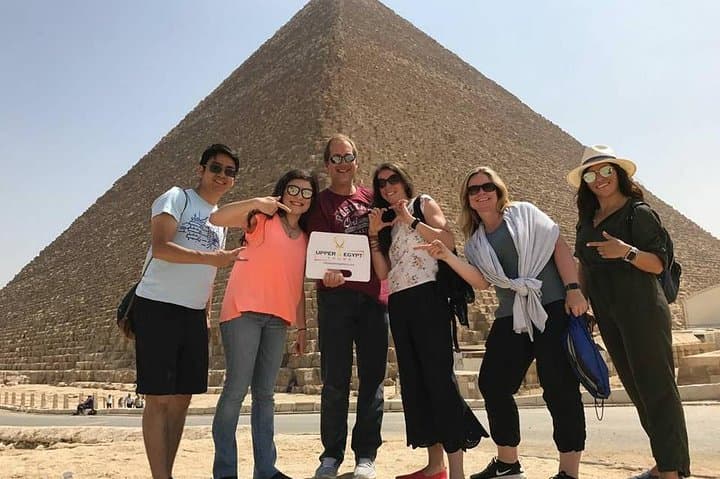
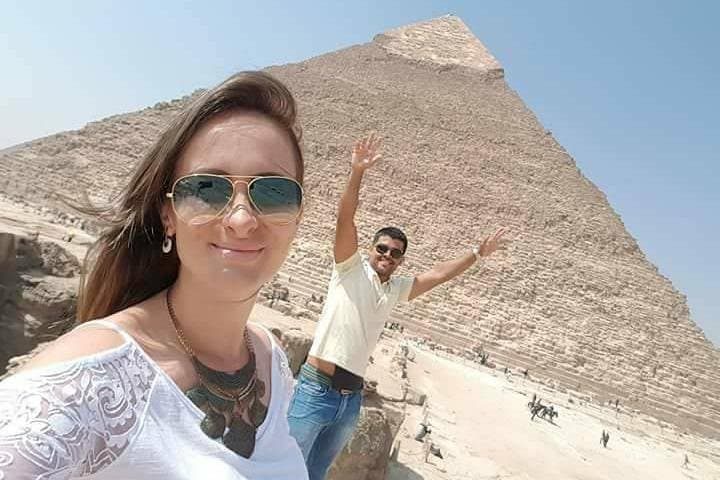
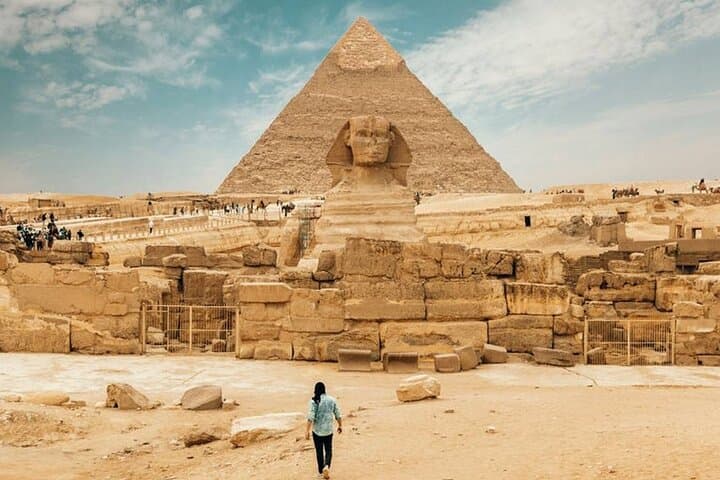
You arrive onto the Giza Plateau in the cool hush of morning, wind lifting Saharan grit across flat limestone. The Great Pyramid rises ahead — block upon block of ancient engineering catching light like a stepped cliff — while the Sphinx watches with a human gaze and a lion’s patience.
You arrive onto the Giza Plateau in the cool hush of morning, wind lifting Saharan grit across flat limestone. The Great Pyramid rises ahead — block upon block of ancient engineering catching light like a stepped cliff — while the Sphinx watches with a human gaze and a lion’s patience.
This half-day private tour condenses millennia into hours. Built around 2560 BC for Pharaoh Khufu, the Great Pyramid is the oldest remaining Wonder of the Ancient World; nearby, Khafre’s pyramid and the Valley Temple reflect the ritual landscape that supported funerary processions and solar cults. Geologically, the plateau is compacted limestone and desert veneer — erosion and quarrying have exposed the underlying bedrock that ancient builders used as foundation.
Local guides are often Egyptologists who explain hieroglyphic shorthand, burial practices, and the modern conservation pressures these monuments face. A short camel ride across the plateau offers a shifting view: the desert seems to push you forward, and the city of Cairo hovers on the horizon.
Practical guidance: expect uneven footing, loose sand, and strong sun. Mobility-accessible routes exist around key viewpoints but not through every archaeological trench. Bring sunscreen, a brimmed hat, and shoes with grip; carry cash in Egyptian pounds for vendor purchases and tips. Photography is free in most outdoor areas but interior pyramid access is limited, may require extra tickets, and is sometimes closed.
A private vehicle pickup and an included lunch make this an efficient way to see the site without rushing — arrive early to beat heat and crowds, and leave space in your itinerary for the Solar Boat Museum or the plateau’s quieter corners.