THE ADVENTURE COLLECTIVE® · Independent discovery and booking for outdoor travel

A compact, private half-day loop that pairs the dramatic plunge of Devi’s Fall with the subterranean calm of Gupteshwor Cave and the panoramic quiet of the World Peace Stupa. Ideal for travelers wanting a concise, scenic introduction to Pokhara’s natural and cultural highlights.
A compact, private half-day loop that pairs the dramatic plunge of Devi’s Fall with the subterranean calm of Gupteshwor Cave and the panoramic quiet of the World Peace Stupa. Ideal for travelers wanting a concise, scenic introduction to Pokhara’s natural and cultural highlights.
You step off the shaded lane into the hiss of falling water—cold mist catching sunbeams as Devi’s Fall throws the Pardi Khola into a sudden, underground throat. For an afternoon, Pokhara’s lakeside calm gives way to a sequence of natural drama and quiet viewpoints: the plunging waterfall, the narrow limestone passages of Gupteshwor Mahadev Cave, and the white curve of the World Peace Stupa above Phewa Lake.
Verified experiences and guided adventures in the surrounding area.
Operated by CAN Travels · Pokhara, Gandaki Province
You step off the shaded lane into the hiss of falling water—cold mist catching sunbeams as Devi’s Fall throws the Pardi Khola into a sudden, underground throat. For an afternoon, Pokhara’s lakeside calm gives way to a sequence of natural drama and quiet viewpoints: the plunging waterfall, the narrow limestone passages of Gupteshwor Mahadev Cave, and the white curve of the World Peace Stupa above Phewa Lake.
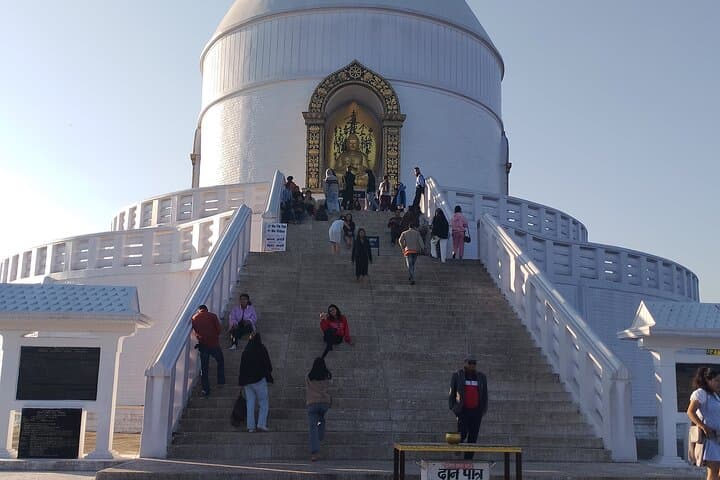
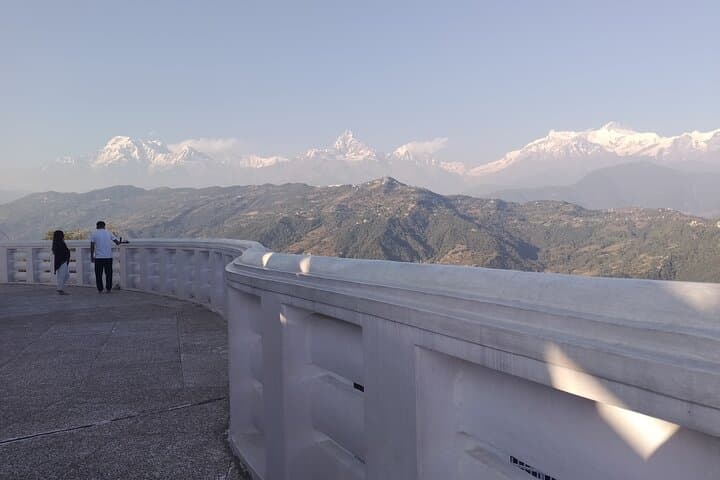
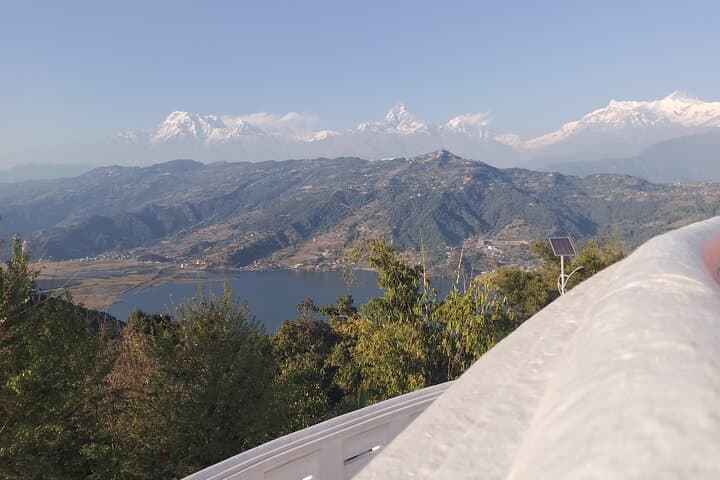
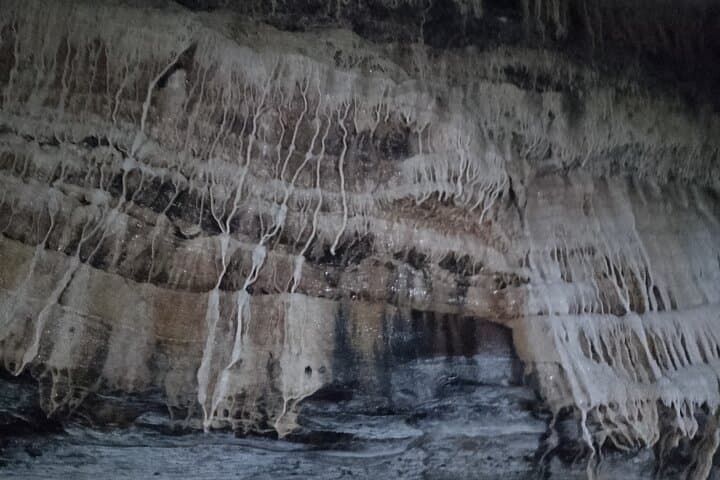
Devi’s Fall carries local lore—the story of a foreign visitor lost to the cataract—and sits on alluvial rock carved by swift water over millennia. Gupteshwor is a karst cave where stalactites and stalagmites crowd a dim passage that opens to an underground roar and a small Shiva lingam, a place of both geology and devotion. The World Peace Stupa, built in the early 2000s as part of global peace stupa efforts, crowns Anadu Hill and rewards a short climb with broad views of the Annapurna range and the lake’s living mirror.
Practical notes: the private half-day tour runs about four hours and typically includes a short boat crossing of Phewa Lake and hotel pickup. Expect staircases in the cave and a steep but well-trodden path up to the stupa—good shoes and steady footing matter. Bring a dry layer and waterproof phone protection for the waterfall mist, and plan visits outside monsoon season for the clearest mountain panoramas. Small temples and local vendors near each stop offer snacks and cultural context—carry small bills and respect worship spaces. For a compact, sensory slice of Pokhara’s landscape and culture, this loop delivers clear views, lively water, and quiet shrine moments.
easy.
3–4 hours.
Suitable for travelers in average physical condition who can manage short climbs and stairs; not strenuous.
Yes—this private tour typically includes entrance fees, a boat ride across Phewa Lake, and round-trip hotel transfer.
Gupteshwor Cave has stairs and narrow passages and is not wheelchair accessible; travelers with limited mobility should consider skipping the cave stop.
The climb from the lakeside takes roughly 20–40 minutes depending on pace; the path is steep but well maintained.
On clear days—especially post-monsoon and in fall—you get expansive views of the Annapurna foothills and Phewa Lake; visibility depends on weather.
Devi’s Fall is linked to local legends about a foreign visitor and sits where the Pardi Khola plunges underground; the World Peace Stupa is one of several peace stupas built worldwide to promote harmony and offers panoramic viewpoints.
Stick to marked paths, avoid single-use plastics by carrying a reusable bottle, and show reverence at sacred sites—these practices help protect fragile cave formations and local cultural spaces.
CAN Travels operates guided outdoor trips and adventures with an emphasis on safety, stewardship, and memorable experiences.
You step off the shaded lane into the hiss of falling water—cold mist catching sunbeams as Devi’s Fall throws the Pardi Khola into a sudden, underground throat. For an afternoon, Pokhara’s lakeside calm gives way to a sequence of natural drama and quiet viewpoints: the plunging waterfall, the narrow limestone passages of Gupteshwor Mahadev Cave, and the white curve of the World Peace Stupa above Phewa Lake.
You step off the shaded lane into the hiss of falling water—cold mist catching sunbeams as Devi’s Fall throws the Pardi Khola into a sudden, underground throat. For an afternoon, Pokhara’s lakeside calm gives way to a sequence of natural drama and quiet viewpoints: the plunging waterfall, the narrow limestone passages of Gupteshwor Mahadev Cave, and the white curve of the World Peace Stupa above Phewa Lake.
Devi’s Fall carries local lore—the story of a foreign visitor lost to the cataract—and sits on alluvial rock carved by swift water over millennia. Gupteshwor is a karst cave where stalactites and stalagmites crowd a dim passage that opens to an underground roar and a small Shiva lingam, a place of both geology and devotion. The World Peace Stupa, built in the early 2000s as part of global peace stupa efforts, crowns Anadu Hill and rewards a short climb with broad views of the Annapurna range and the lake’s living mirror.
Practical notes: the private half-day tour runs about four hours and typically includes a short boat crossing of Phewa Lake and hotel pickup. Expect staircases in the cave and a steep but well-trodden path up to the stupa—good shoes and steady footing matter. Bring a dry layer and waterproof phone protection for the waterfall mist, and plan visits outside monsoon season for the clearest mountain panoramas. Small temples and local vendors near each stop offer snacks and cultural context—carry small bills and respect worship spaces. For a compact, sensory slice of Pokhara’s landscape and culture, this loop delivers clear views, lively water, and quiet shrine moments.