THE ADVENTURE COLLECTIVE® · Independent discovery and booking for outdoor travel

A private half-day drive from Catania up Mount Etna to Rifugio Sapienza and the Silvestri Craters. Expect panoramic photo stops, local tastings and short walks across volcanic terrain with an optional cable car higher on the flank.
A private half-day drive from Catania up Mount Etna to Rifugio Sapienza and the Silvestri Craters. Expect panoramic photo stops, local tastings and short walks across volcanic terrain with an optional cable car higher on the flank.
You climb out of Catania by car, the city shrinking behind you as olive groves and black lava ribbons take over the view. The road winds through Mascalucia and Nicolosi, then up provincial SP92 toward Rifugio Sapienza at roughly 1,900 m — the air thins and the volcanic ground becomes a mosaic of recent flows and weathered basalt.
Verified experiences and guided adventures in the surrounding area.
Operated by You In Sicily · Catania, Sicily
You climb out of Catania by car, the city shrinking behind you as olive groves and black lava ribbons take over the view. The road winds through Mascalucia and Nicolosi, then up provincial SP92 toward Rifugio Sapienza at roughly 1,900 m — the air thins and the volcanic ground becomes a mosaic of recent flows and weathered basalt.
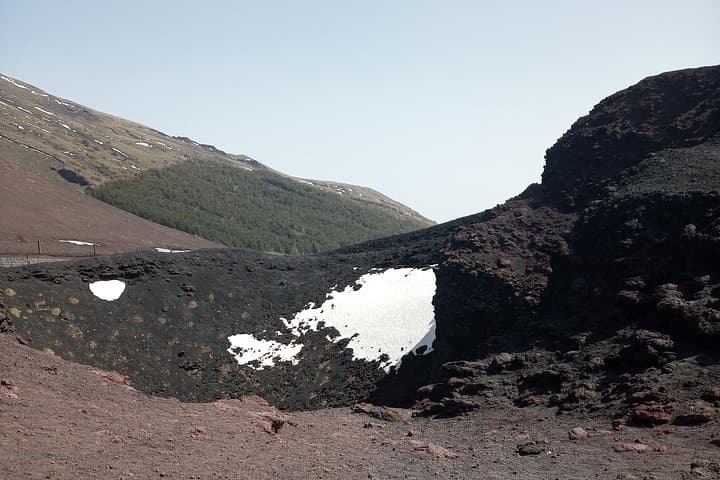
Mount Etna is one of Europe’s most active stratovolcanoes, a geological engine shaped by repeated eruptions that have both built and erased settlements. The southern flank you visit bears the Silvestri Craters, smaller mouths formed in the 19th–20th centuries, and is layered with pumice, ash and blocky lava fields that tell the mountain’s eruptive history.
Culture here mixes agricultural tradition with volcanic commerce: honey, rosoli and Etna wines are products of mineral-rich soils. Local drivers and guides know how the mountain’s moods change by hour and season; audio commentary during the drive gives context to the landscape you pass.
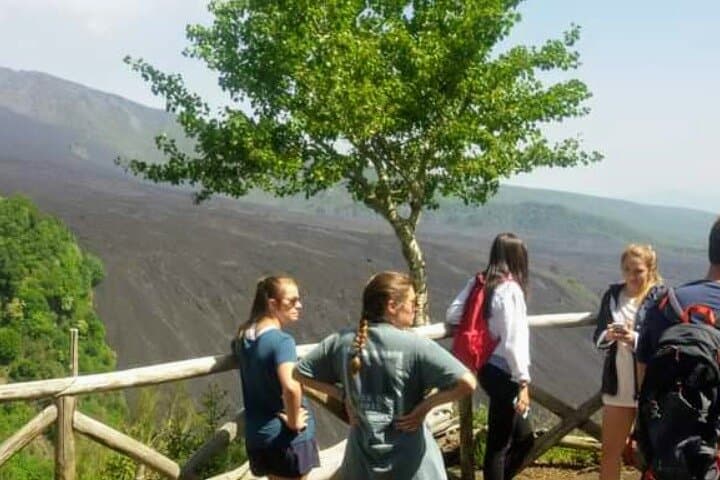
Practically, the tour is private and vehicle-based (4–5 hours). You’ll have about two hours at Sapienza to explore the Silvestri Craters, sample local products and, optionally, transfer by cable car toward 2,500–3,000 m. Expect short, uneven walks over rocky volcanic terrain, panoramic photo stops, and rapidly changing weather — sun to wind to chill in a matter of minutes. Bring sturdy shoes, layers, water and a sense of patience: Etna’s wildness is part showman, part teacher.
easy.
4–5 hours.
Suitable for people in average fitness; mainly seated travel with short, moderately uneven walks up to a couple hours.
The road trip is roughly 30–45 minutes from central Catania depending on traffic, with driving distance around 30–40 km along SP92.
Cable car tickets are not always included; the tour offers time to purchase and use it, but operations depend on weather and may incur extra cost.
Walks at Silvestri Craters are short but over uneven volcanic terrain—no technical climbing required, but good footwear is recommended.
Yes—transport is private and comfortable; however, those with cardiovascular issues or mobility limits should consider the altitude and uneven surfaces.
Etna’s eruptions have shaped local settlement patterns for millennia; villages on the slopes have rebuilt repeatedly after lava events.
Visitor pressure is managed seasonally; stick to marked areas to protect fragile pioneer vegetation and avoid trampling new growth on lava fields.
You In Sicily operates guided outdoor trips and adventures with an emphasis on safety, stewardship, and memorable experiences.
You climb out of Catania by car, the city shrinking behind you as olive groves and black lava ribbons take over the view. The road winds through Mascalucia and Nicolosi, then up provincial SP92 toward Rifugio Sapienza at roughly 1,900 m — the air thins and the volcanic ground becomes a mosaic of recent flows and weathered basalt.
You climb out of Catania by car, the city shrinking behind you as olive groves and black lava ribbons take over the view. The road winds through Mascalucia and Nicolosi, then up provincial SP92 toward Rifugio Sapienza at roughly 1,900 m — the air thins and the volcanic ground becomes a mosaic of recent flows and weathered basalt.
Mount Etna is one of Europe’s most active stratovolcanoes, a geological engine shaped by repeated eruptions that have both built and erased settlements. The southern flank you visit bears the Silvestri Craters, smaller mouths formed in the 19th–20th centuries, and is layered with pumice, ash and blocky lava fields that tell the mountain’s eruptive history.
Culture here mixes agricultural tradition with volcanic commerce: honey, rosoli and Etna wines are products of mineral-rich soils. Local drivers and guides know how the mountain’s moods change by hour and season; audio commentary during the drive gives context to the landscape you pass.
Practically, the tour is private and vehicle-based (4–5 hours). You’ll have about two hours at Sapienza to explore the Silvestri Craters, sample local products and, optionally, transfer by cable car toward 2,500–3,000 m. Expect short, uneven walks over rocky volcanic terrain, panoramic photo stops, and rapidly changing weather — sun to wind to chill in a matter of minutes. Bring sturdy shoes, layers, water and a sense of patience: Etna’s wildness is part showman, part teacher.