THE ADVENTURE COLLECTIVE® · Independent discovery and booking for outdoor travel

Explore the West Bank’s crown sites on a private half-day tour that visits the Valley of the Kings, Queen Hatshepsut’s temple and the Colossi of Memnon. Expect short walks, strong sun, and close-up access to New Kingdom tomb architecture and carved reliefs.
Explore the West Bank’s crown sites on a private half-day tour that visits the Valley of the Kings, Queen Hatshepsut’s temple and the Colossi of Memnon. Expect short walks, strong sun, and close-up access to New Kingdom tomb architecture and carved reliefs.
You step off the air-conditioned minivan and the West Bank sun hits the limestone plateau like a warm, dry hand. Heat waves shimmer above rows of painted burial shafts; the valley itself seems to breathe stories. Your private guide leads you along compacted paths toward rock-cut entrances, the modern world dropping away as quickly as the sun slides behind the desert ridge.
Verified experiences and guided adventures in the surrounding area.
Operated by Egypt Tours Travel · Luxor, Luxor Governorate
You step off the air-conditioned minivan and the West Bank sun hits the limestone plateau like a warm, dry hand. Heat waves shimmer above rows of painted burial shafts; the valley itself seems to breathe stories. Your private guide leads you along compacted paths toward rock-cut entrances, the modern world dropping away as quickly as the sun slides behind the desert ridge.
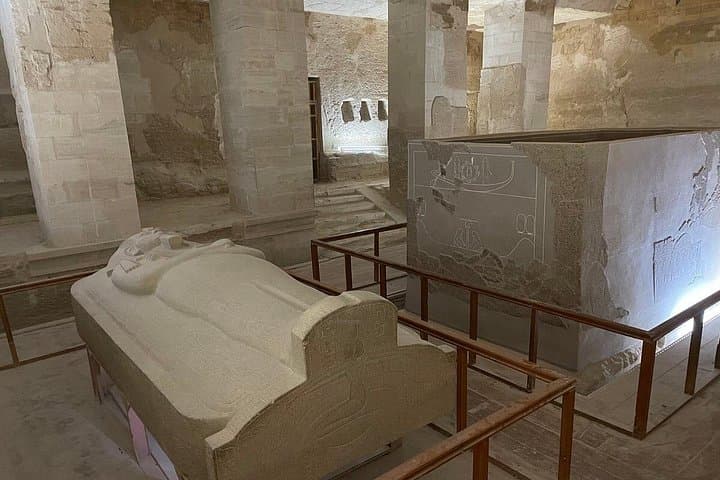
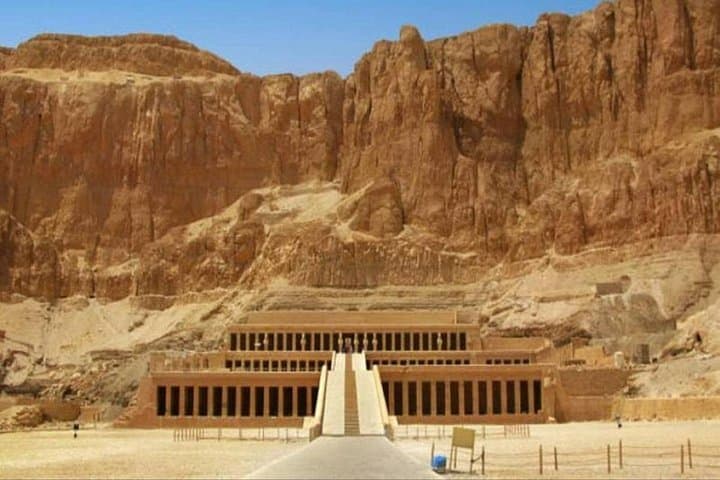
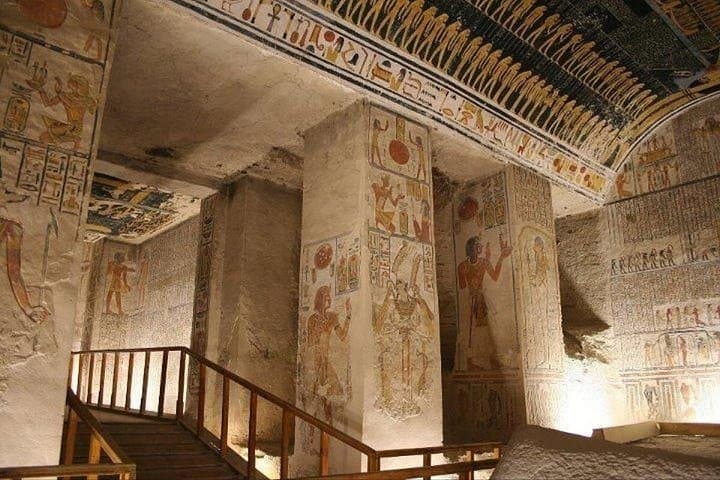
This route threads together the core of New Kingdom Luxor: the Valley of the Kings—where tombs of pharaohs were carved into bedrock—the colonnaded terraces of Queen Hatshepsut's Deir el-Bahari, and the Colossi of Memnon, two weathered sentries surviving centuries of Nile floods and earthquake-scarred stone. Geology here is simple and brutal: soft sedimentary limestone and sandstone, easily hollowed into burial chambers but sensitive to humidity and human traffic, which keeps conservators busy. Culturally, the West Bank was a funerary landscape for workers, priests and kings; Deir el-Medina’s nearby village adds human scale to the royal monuments.
Practically: plan for roughly 5–6 hours including hotel pickup. Bottled water and an air-conditioned vehicle are usually provided; entrance fees are included in many private tours but confirm before booking. Wear sturdy, closed shoes for uneven stone steps; sun protection is essential and photography rules vary by tomb. Move deliberately, speak quietly—breath and flash light accelerate pigment decay—and allow time at Hatshepsut’s terraces and for a quick stop at the Colossi to let the scale register. This half-day is compact but rich: the desert keeps its secrets close, but a guided visit opens clear, durable lines to the past.
easy.
5–6 hours.
Suitable for most fitness levels; requires short walks on uneven ground and some stair negotiation.
Many private tours include the cost of entrance; confirm with the operator. Note that access can be limited and viewing conditions may vary to protect fragile interiors.
Rules differ by tomb—flash photography is often prohibited. Follow guide instructions and posted signs to avoid harming painted surfaces.
Transport and some viewing areas can be wheelchair accessible, but many tomb interiors have stairs and narrow passages; check accessibility details before booking.
Tipping is customary; amounts vary but small cash tips for the guide and driver are appreciated for good service.
The Valley of the Kings served as the royal necropolis for New Kingdom pharaohs (circa 16th–11th century BCE); Tutankhamun’s intact tomb was famously uncovered by Howard Carter in 1922.
Tomb interiors are sensitive to humidity, body oils and flash photography; conservation efforts limit access and enforce rules to slow pigment and plaster deterioration.
Egypt Tours Travel operates guided outdoor trips and adventures with an emphasis on safety, stewardship, and memorable experiences.

You step off the air-conditioned minivan and the West Bank sun hits the limestone plateau like a warm, dry hand. Heat waves shimmer above rows of painted burial shafts; the valley itself seems to breathe stories. Your private guide leads you along compacted paths toward rock-cut entrances, the modern world dropping away as quickly as the sun slides behind the desert ridge.
You step off the air-conditioned minivan and the West Bank sun hits the limestone plateau like a warm, dry hand. Heat waves shimmer above rows of painted burial shafts; the valley itself seems to breathe stories. Your private guide leads you along compacted paths toward rock-cut entrances, the modern world dropping away as quickly as the sun slides behind the desert ridge.
This route threads together the core of New Kingdom Luxor: the Valley of the Kings—where tombs of pharaohs were carved into bedrock—the colonnaded terraces of Queen Hatshepsut's Deir el-Bahari, and the Colossi of Memnon, two weathered sentries surviving centuries of Nile floods and earthquake-scarred stone. Geology here is simple and brutal: soft sedimentary limestone and sandstone, easily hollowed into burial chambers but sensitive to humidity and human traffic, which keeps conservators busy. Culturally, the West Bank was a funerary landscape for workers, priests and kings; Deir el-Medina’s nearby village adds human scale to the royal monuments.
Practically: plan for roughly 5–6 hours including hotel pickup. Bottled water and an air-conditioned vehicle are usually provided; entrance fees are included in many private tours but confirm before booking. Wear sturdy, closed shoes for uneven stone steps; sun protection is essential and photography rules vary by tomb. Move deliberately, speak quietly—breath and flash light accelerate pigment decay—and allow time at Hatshepsut’s terraces and for a quick stop at the Colossi to let the scale register. This half-day is compact but rich: the desert keeps its secrets close, but a guided visit opens clear, durable lines to the past.