
Half-Day Private Iguana Island Charter from Providenciales — Snorkel, Sand Dollars & Rock Iguanas
Board a private pontoon for a focused four-hour tour from Providenciales: snorkel the barrier reef, hunt sand dollars at Half Moon Bay, and meet the Turks and Caicos rock iguanas on a tiny cay. Small-group, personalized service and an included lunch make this a compact, high-value marine outing.
An Adventure In Providenciales.
Board a private pontoon for a focused four-hour tour from Providenciales: snorkel the barrier reef, hunt sand dollars at Half Moon Bay, and meet the Turks and Caicos rock iguanas on a tiny cay. Small-group, personalized service and an included lunch make this a compact, high-value marine outing.
Read the full experience
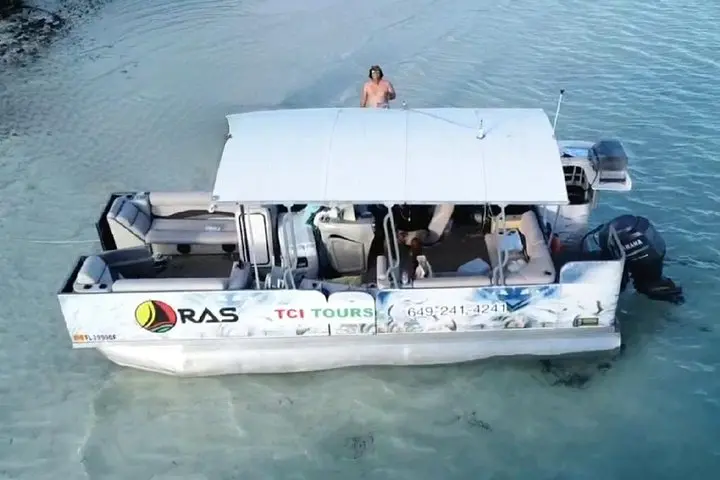
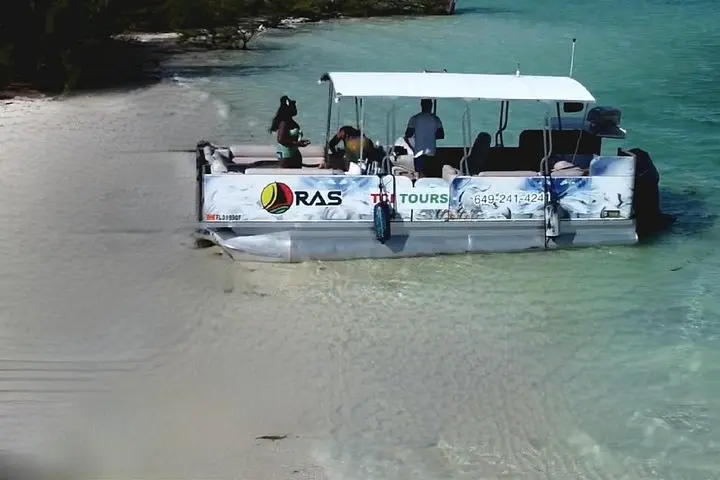
The pontoon eases away from the dock and the harbor noise drops to a hum—waves take over the soundtrack. Onboard RAS TCI Tours, a low-slung sun awning shades eight guests who trade sunburn anxiety for rum punch and a crew that already knows the reef like a local map. Four hours later, the turquoise widens into a pale gradient: the shallow sweep of Half Moon Bay, a coral wall that dares you to dive, and a tiny, scruffy cay where rock iguanas sun themselves like stoic, prehistoric statues.
The pontoon eases away from the dock and the harbor noise drops to a hum—waves take over the soundtrack. Onboard RAS TCI Tours, a low-slung sun awning shades eight guests who trade sunburn anxiety for rum punch and a crew that already knows the reef like a local map. Four hours later, the turquoise widens into a pale gradient: the shallow sweep of Half Moon Bay, a coral wall that dares you to dive, and a tiny, scruffy cay where rock iguanas sun themselves like stoic, prehistoric statues.
This is Providenciales from water level—less resort postcard, more working seascape. The Turks and Caicos sit at the edge of the Caicos Bank, a drowned limestone platform whose buried coral growth created the island’s broad sand flats and protective barrier reef. That same reef, the third-largest in the world, frames the snorkeling here: hard corals, finger sponges, and parrotfish that chip at the reef with clinical persistence.
Human history in these waters runs through salt rakers, conch divers, and shipwrecked sailors. The rock iguanas—Cyclura carinata—are a local chapter: endemic, ancient-looking, and, thanks to conservation efforts, increasingly habituated to curious visitors who approach quietly and keep their hands in their pockets. Half Moon Bay, with its shallow sandbars, doubles as a field guide for sand dollar hunters and a place where currents sculpt the beach every few months.
The itinerary is compact and practical: an hour of barrier-reef snorkeling with provided equipment, a stop at Half Moon Bay to comb for sand dollars, then a landing at Iguana Island to learn about the lizards’ habitat and snap photos. Lunch is served—simple wraps and snacks—and the boat’s grill can be fired up on request. Free Wi‑Fi and a polite bar add comfort, but most guests find their attention hijacked by color—fish that flash like coins and water that looks as if someone mixed glass and sky.
For planning: the trip is private for up to eight people and runs about four hours; it’s suitable for a wide range of fitness levels but not recommended for guests with significant spinal or cardiovascular issues or for pregnant travelers. Bring reef-safe sunscreen, a snug mask, and shoes that handle sand and coral snags. Respect the iguanas—observe from a distance, don’t feed them—and listen to the crew’s guidance around fragile reef areas.
Timing matters: mornings usually offer calmer seas and clearer visibility; late afternoons present softer light for photos. If you want fewer people and better wildlife encounters, book earlier in the day and avoid peak hurricane months. For travelers staying in Grace Bay or central Providenciales, this half-day charter is an easy, concentrated way to see the reef, beach, and the island’s iconic reptiles without the fuss of a full-day commitment.
Frequently asked questions
Meet at the dock listed in your confirmation; the boat is RAS TCI Tours and is the first vessel when entering the dock area.
The charter is family‑friendly; children who can comfortably wear a lifejacket and follow basic safety instructions are welcome—check with the operator for infant policies.
Yes—snorkeling equipment, lifejackets, and basic flotation are provided for all guests.
The boat has a grill and the operator provides lunch and snacks; special requests can often be accommodated—note dietary needs when booking.
Take motion‑sickness medication before boarding if you have a history of seasickness, sit mid‑boat for the smoothest ride, and stay hydrated.
No—feeding or handling wildlife is discouraged; the guides will explain how to photograph and observe iguanas safely.
About This Experience
RAS TCI Tours operates guided outdoor trips and adventures with an emphasis on safety, stewardship, and memorable experiences.
Adventure tips
Recommended gear
- Reef‑safe sunscreen: Protects skin and the reef—apply before boarding.
- Snorkel mask and fins: A good mask and fins increase comfort and visibility on the barrier reef.
- Water shoes: Protect toes when stepping on sandbars and rocky shores at Half Moon Bay.
- Light windbreaker: Mornings out on open water can be breezy; a thin layer keeps you comfortable.
Photos of the experience
Related adventures & guides
Read the full experience
The pontoon eases away from the dock and the harbor noise drops to a hum—waves take over the soundtrack. Onboard RAS TCI Tours, a low-slung sun awning shades eight guests who trade sunburn anxiety for rum punch and a crew that already knows the reef like a local map. Four hours later, the turquoise widens into a pale gradient: the shallow sweep of Half Moon Bay, a coral wall that dares you to dive, and a tiny, scruffy cay where rock iguanas sun themselves like stoic, prehistoric statues.
The pontoon eases away from the dock and the harbor noise drops to a hum—waves take over the soundtrack. Onboard RAS TCI Tours, a low-slung sun awning shades eight guests who trade sunburn anxiety for rum punch and a crew that already knows the reef like a local map. Four hours later, the turquoise widens into a pale gradient: the shallow sweep of Half Moon Bay, a coral wall that dares you to dive, and a tiny, scruffy cay where rock iguanas sun themselves like stoic, prehistoric statues.
This is Providenciales from water level—less resort postcard, more working seascape. The Turks and Caicos sit at the edge of the Caicos Bank, a drowned limestone platform whose buried coral growth created the island’s broad sand flats and protective barrier reef. That same reef, the third-largest in the world, frames the snorkeling here: hard corals, finger sponges, and parrotfish that chip at the reef with clinical persistence.
Human history in these waters runs through salt rakers, conch divers, and shipwrecked sailors. The rock iguanas—Cyclura carinata—are a local chapter: endemic, ancient-looking, and, thanks to conservation efforts, increasingly habituated to curious visitors who approach quietly and keep their hands in their pockets. Half Moon Bay, with its shallow sandbars, doubles as a field guide for sand dollar hunters and a place where currents sculpt the beach every few months.
The itinerary is compact and practical: an hour of barrier-reef snorkeling with provided equipment, a stop at Half Moon Bay to comb for sand dollars, then a landing at Iguana Island to learn about the lizards’ habitat and snap photos. Lunch is served—simple wraps and snacks—and the boat’s grill can be fired up on request. Free Wi‑Fi and a polite bar add comfort, but most guests find their attention hijacked by color—fish that flash like coins and water that looks as if someone mixed glass and sky.
For planning: the trip is private for up to eight people and runs about four hours; it’s suitable for a wide range of fitness levels but not recommended for guests with significant spinal or cardiovascular issues or for pregnant travelers. Bring reef-safe sunscreen, a snug mask, and shoes that handle sand and coral snags. Respect the iguanas—observe from a distance, don’t feed them—and listen to the crew’s guidance around fragile reef areas.
Timing matters: mornings usually offer calmer seas and clearer visibility; late afternoons present softer light for photos. If you want fewer people and better wildlife encounters, book earlier in the day and avoid peak hurricane months. For travelers staying in Grace Bay or central Providenciales, this half-day charter is an easy, concentrated way to see the reef, beach, and the island’s iconic reptiles without the fuss of a full-day commitment.
Make a day of it nearby.
Verified experiences and guided adventures in the surrounding area.