THE ADVENTURE COLLECTIVE® · Independent discovery and booking for outdoor travel

A private half-day hike on Bukhansan’s Gugi-dong course pairs granite ridgelines, a 1,000-year-old temple visit and a restorative Korean jjimjilbang. Ideal for beginners and first-time visitors who want a managed, culture-rich mountain experience with lunch and hotel transfer included.
A private half-day hike on Bukhansan’s Gugi-dong course pairs granite ridgelines, a 1,000-year-old temple visit and a restorative Korean jjimjilbang. Ideal for beginners and first-time visitors who want a managed, culture-rich mountain experience with lunch and hotel transfer included.
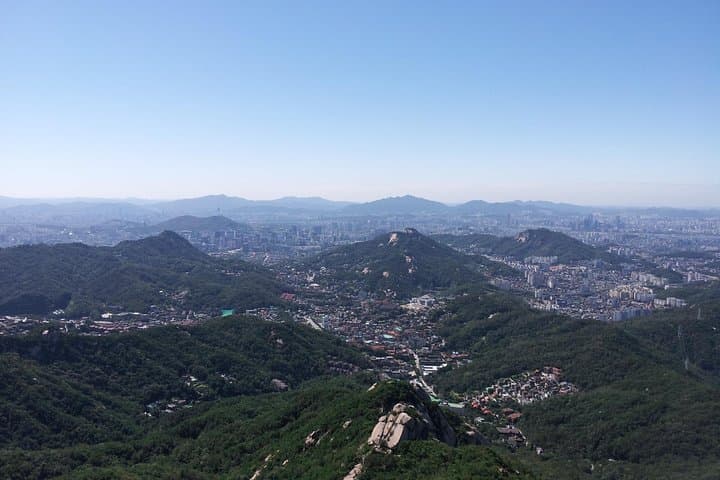
You step off the air-conditioned van and the city noise thins—Seoul’s concrete hum yields to a wall of granite and pine. The trailhead at Gugi-dong is busy with locals starting their day, but within minutes the path narrows and the mountain takes on its own tempo. Sun lights the octagonal pavilion on Bugak Skyway across the valley; ahead, the granite ridgelines of Bukhansan rise like a set of natural steps, each slab insisting you pay attention to your footing.
Verified experiences and guided adventures in the surrounding area.
Operated by Outdoors Korea · Seoul, Seoul
You step off the air-conditioned van and the city noise thins—Seoul’s concrete hum yields to a wall of granite and pine. The trailhead at Gugi-dong is busy with locals starting their day, but within minutes the path narrows and the mountain takes on its own tempo. Sun lights the octagonal pavilion on Bugak Skyway across the valley; ahead, the granite ridgelines of Bukhansan rise like a set of natural steps, each slab insisting you pay attention to your footing.
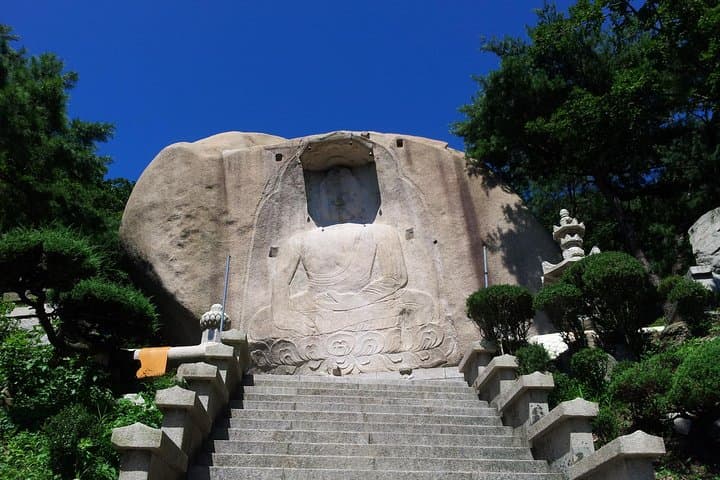
Bukhansan National Park sits on the northern edge of Seoul and has been an anchor for human activity for centuries. Seunggasa, a thousand-year-old temple on this route, still houses women monks and offers a quiet counterpoint to the chatter of hikers. Geologically, the park is a landscape of Cretaceous granite—rounded domes and sheer faces carved by millennia of freeze-thaw. On clear days the viewpoints reveal the Han River threading through the city, a reminder of how close wilderness and metropolis sit here.
The Gugi-dong course is classified as easy to moderate: expect roughly 4–6 km round trip with about 300–500 m of elevation gain depending on route variations. Trails alternate between packed dirt, stone steps and exposed granite slabs that require sure-footed moves. Key landmarks include the Bugak Skyway Octagonal Pavilion Observatory, Seunggasa Temple and the so-called Rock of North Korean Spies, a jagged outcrop tied to the 1968 raid that adds a modern historical layer to the landscape.
Your guide—a mountain expert—shapes the day to your pace. Plan on 2–4 hours of hiking, a traditional Korean lunch in a nearby town, and a restorative visit to a jjimjilbang (Korean-style sauna) to loosen stiff muscles. Bottled water, hotel pickup and private transport are part of the package, which makes logistics simple and lets you focus on the hike.
Practical edge: go early in the morning to avoid crowds and midday heat, wear footwear with good grip for wet granite, and carry light layers—temperatures can swing between shaded valleys and sun-exposed ridgelines.
After the sauna, the ride back to Seoul feels different: your legs still remember stepping up the slabs, your throat recalls the cool temple bell, and the city lights look softer from inside a tired, satisfied body. This is Bukhansan in a day—accessible, layered with history, and uncompromising in its granite honesty.
moderate.
4–7 hours.
Suitable for travelers with a moderate fitness level—comfortable walking, some steady climbing and short scrambling on rock required.
Expect 2–4 hours of walking on trail depending on your pace and how many viewpoints you stop at; the full tour runs about 7 hours including transport, lunch and sauna.
Yes—this route is beginner-friendly, but children should be at least 8 years old and able to handle uneven steps; guides can shorten or extend the route to match ability.
Bring a swimsuit or towel if you prefer, but most jjimjilbangs provide communal facilities and separate gender bathing areas; casual lounge clothes are typically worn in shared spaces.
There is no permit for day hiking on these trails, but small parking or entrance fees may apply at certain access points; your tour includes park access guidance and transport.
Yes—guides will adjust the hiking plan for poor weather or mobility limits; the tour operator advises moderate fitness but can customize pace and stops.
Hotel pickup and drop-off in the Seoul area are included, so you return directly to your accommodation after the sauna.
Seunggasa Temple on this route dates back roughly a thousand years and remains one of the few temples occupied by women monks; the Rock of North Korean Spies marks a 1968 ambush event tied to Cold War tensions.
Bukhansan sees heavy local visitation—stick to marked trails, carry out trash and avoid picking plants to help protect fragile alpine flora and cultural sites.
Outdoors Korea operates guided outdoor trips and adventures with an emphasis on safety, stewardship, and memorable experiences.


You step off the air-conditioned van and the city noise thins—Seoul’s concrete hum yields to a wall of granite and pine. The trailhead at Gugi-dong is busy with locals starting their day, but within minutes the path narrows and the mountain takes on its own tempo. Sun lights the octagonal pavilion on Bugak Skyway across the valley; ahead, the granite ridgelines of Bukhansan rise like a set of natural steps, each slab insisting you pay attention to your footing.
You step off the air-conditioned van and the city noise thins—Seoul’s concrete hum yields to a wall of granite and pine. The trailhead at Gugi-dong is busy with locals starting their day, but within minutes the path narrows and the mountain takes on its own tempo. Sun lights the octagonal pavilion on Bugak Skyway across the valley; ahead, the granite ridgelines of Bukhansan rise like a set of natural steps, each slab insisting you pay attention to your footing.
Bukhansan National Park sits on the northern edge of Seoul and has been an anchor for human activity for centuries. Seunggasa, a thousand-year-old temple on this route, still houses women monks and offers a quiet counterpoint to the chatter of hikers. Geologically, the park is a landscape of Cretaceous granite—rounded domes and sheer faces carved by millennia of freeze-thaw. On clear days the viewpoints reveal the Han River threading through the city, a reminder of how close wilderness and metropolis sit here.
The Gugi-dong course is classified as easy to moderate: expect roughly 4–6 km round trip with about 300–500 m of elevation gain depending on route variations. Trails alternate between packed dirt, stone steps and exposed granite slabs that require sure-footed moves. Key landmarks include the Bugak Skyway Octagonal Pavilion Observatory, Seunggasa Temple and the so-called Rock of North Korean Spies, a jagged outcrop tied to the 1968 raid that adds a modern historical layer to the landscape.
Your guide—a mountain expert—shapes the day to your pace. Plan on 2–4 hours of hiking, a traditional Korean lunch in a nearby town, and a restorative visit to a jjimjilbang (Korean-style sauna) to loosen stiff muscles. Bottled water, hotel pickup and private transport are part of the package, which makes logistics simple and lets you focus on the hike.
Practical edge: go early in the morning to avoid crowds and midday heat, wear footwear with good grip for wet granite, and carry light layers—temperatures can swing between shaded valleys and sun-exposed ridgelines.
After the sauna, the ride back to Seoul feels different: your legs still remember stepping up the slabs, your throat recalls the cool temple bell, and the city lights look softer from inside a tired, satisfied body. This is Bukhansan in a day—accessible, layered with history, and uncompromising in its granite honesty.