THE ADVENTURE COLLECTIVE® · Independent discovery and booking for outdoor travel

A compact, private half-day in Hanoi that stitches Tran Quoc’s calm, Train Street’s edge, and the Old Quarter’s bustle into a coherent cultural snapshot. Ideal for travelers who want depth in a short time.
A compact, private half-day in Hanoi that stitches Tran Quoc’s calm, Train Street’s edge, and the Old Quarter’s bustle into a coherent cultural snapshot. Ideal for travelers who want depth in a short time.
You step out of an air-conditioned vehicle onto a narrow lane where an old temple’s tiled roof cuts a clean line against West Lake. A saffron-robed monk moves through Tran Quoc Pagoda’s shaded courtyards while the guide explains 1,500 years of Buddhist practice; minutes later the city’s tempo shifts as you stand inches from rails where a freight train threads through living rooms on Train Street.
Verified experiences and guided adventures in the surrounding area.
Operated by Tiger Trail Travel · Hanoi, Hanoi
You step out of an air-conditioned vehicle onto a narrow lane where an old temple’s tiled roof cuts a clean line against West Lake. A saffron-robed monk moves through Tran Quoc Pagoda’s shaded courtyards while the guide explains 1,500 years of Buddhist practice; minutes later the city’s tempo shifts as you stand inches from rails where a freight train threads through living rooms on Train Street.
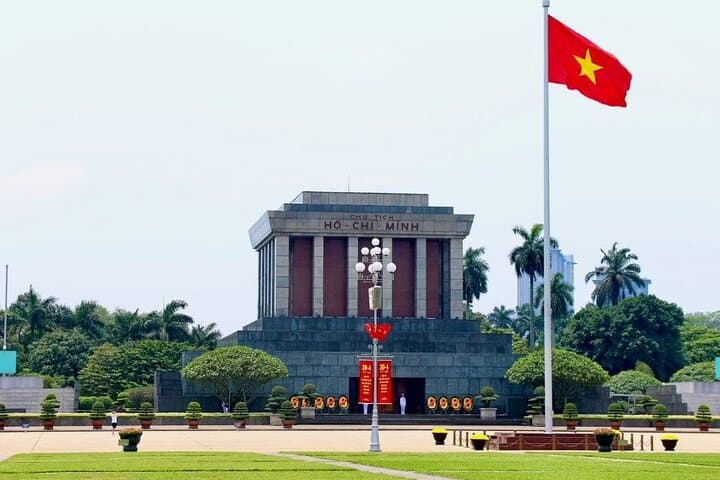
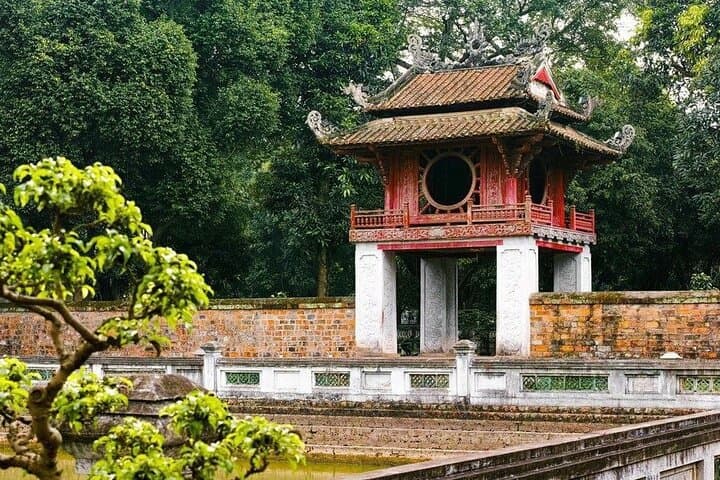
Hanoi layers history into tight blocks: French colonial façades, the austere Ho Chi Minh Mausoleum, and the studious courtyards of the Temple of Literature. Long Bien Bridge, designed by Gustave Eiffel-era engineers, shows the city’s industrial past while Dong Xuan Market reveals its contemporary pulse—produce, textiles, and loud bargaining.
Geology here is subtle: lowland alluvium around the Red River shapes the city’s flat streets and broad lakes, while human history—imperial courts, colonial rule, revolutionary struggle—has engraved civic memory into architecture and museums.
Expect a curated, private 4–5 hour loop that mixes short walks with vehicle transfers; sites include Tran Quoc Pagoda, Ho Chi Minh’s exterior, Train Street, Old Quarter craft lanes, Dong Xuan Market, Opera House, Long Bien Bridge, St. Joseph’s Cathedral, Hoa Lo Prison, Temple of Literature, and Hoan Kiem Lake. Practical notes: wear closed-toe shoes for market alleys, carry a rain jacket during monsoon months, and bring small bills for market purchases. Train Street can be crowded and timing-dependent—your guide will advise on safe viewing spots. This tour suits travelers wanting concentrated cultural context with efficient logistics—history, architecture, and everyday Hanoi in a single, focused half-day.
easy.
4–5 hours.
Light — suitable for most fitness levels; requires short periods of standing and walking on city pavements.
Yes; the tour notes that infants must sit on laps in the vehicle, and walking sections are short—confirm any stroller needs at booking.
Yes — the private format allows adjustments to focus on specific interests like history, food, or photography, subject to time and opening hours.
Yes — entrance fees listed in the itinerary (museums, pagodas) are included in the tour price.
The standard offering includes a professional English-speaking guide; check availability for other languages when booking.
Hanoi’s street plan grew around its imperial and colonial eras; the Temple of Literature marks Vietnam’s Confucian scholarly tradition while Hoa Lo Prison reflects colonial and wartime histories.
Litter and traffic pressure are ongoing challenges—visitors can help by using refillable water bottles and avoiding single-use plastics in markets.
Tiger Trail Travel operates guided outdoor trips and adventures with an emphasis on safety, stewardship, and memorable experiences.
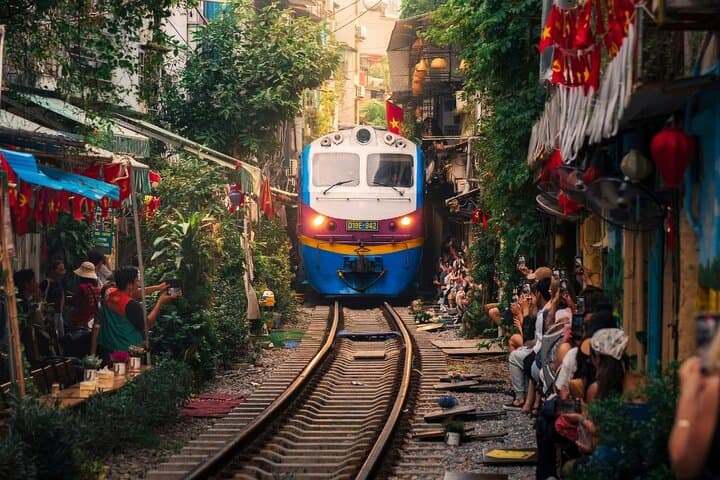
You step out of an air-conditioned vehicle onto a narrow lane where an old temple’s tiled roof cuts a clean line against West Lake. A saffron-robed monk moves through Tran Quoc Pagoda’s shaded courtyards while the guide explains 1,500 years of Buddhist practice; minutes later the city’s tempo shifts as you stand inches from rails where a freight train threads through living rooms on Train Street.
You step out of an air-conditioned vehicle onto a narrow lane where an old temple’s tiled roof cuts a clean line against West Lake. A saffron-robed monk moves through Tran Quoc Pagoda’s shaded courtyards while the guide explains 1,500 years of Buddhist practice; minutes later the city’s tempo shifts as you stand inches from rails where a freight train threads through living rooms on Train Street.
Hanoi layers history into tight blocks: French colonial façades, the austere Ho Chi Minh Mausoleum, and the studious courtyards of the Temple of Literature. Long Bien Bridge, designed by Gustave Eiffel-era engineers, shows the city’s industrial past while Dong Xuan Market reveals its contemporary pulse—produce, textiles, and loud bargaining.
Geology here is subtle: lowland alluvium around the Red River shapes the city’s flat streets and broad lakes, while human history—imperial courts, colonial rule, revolutionary struggle—has engraved civic memory into architecture and museums.
Expect a curated, private 4–5 hour loop that mixes short walks with vehicle transfers; sites include Tran Quoc Pagoda, Ho Chi Minh’s exterior, Train Street, Old Quarter craft lanes, Dong Xuan Market, Opera House, Long Bien Bridge, St. Joseph’s Cathedral, Hoa Lo Prison, Temple of Literature, and Hoan Kiem Lake. Practical notes: wear closed-toe shoes for market alleys, carry a rain jacket during monsoon months, and bring small bills for market purchases. Train Street can be crowded and timing-dependent—your guide will advise on safe viewing spots. This tour suits travelers wanting concentrated cultural context with efficient logistics—history, architecture, and everyday Hanoi in a single, focused half-day.