THE ADVENTURE COLLECTIVE® · Independent discovery and booking for outdoor travel

Walk across fields still marked by shell-holes and memorials with a private guide who brings the Somme’s 1916 offensive to life. This four-hour tour from Albert combines preserved trenches, visitor centres and personalized storytelling for a compact, respectful battlefield experience.
Walk across fields still marked by shell-holes and memorials with a private guide who brings the Somme’s 1916 offensive to life. This four-hour tour from Albert combines preserved trenches, visitor centres and personalized storytelling for a compact, respectful battlefield experience.
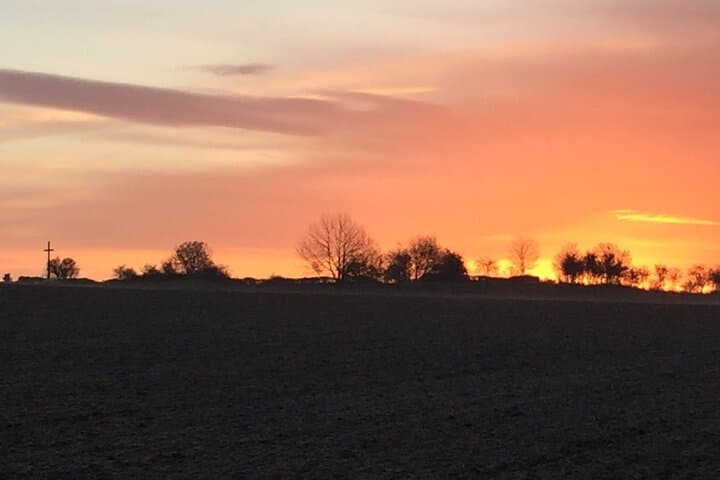
You step off the train in Albert and the air feels different: flat fields stretch toward low ridgelines, punctuated by solitary memorials and the neat geometry of cultivated plots that still carry the scars of 1916.
Verified experiences and guided adventures in the surrounding area.
Operated by ALW Battlefield Tours · Albert, Somme
You step off the train in Albert and the air feels different: flat fields stretch toward low ridgelines, punctuated by solitary memorials and the neat geometry of cultivated plots that still carry the scars of 1916.
Your guide gathers the group into an air-conditioned vehicle and, as the town recedes, begins to stitch the landscape to events — artillery-cratered ground, preserved trench lines and the stone names on memorial walls. The Somme offensive (summer–autumn 1916) reshaped Picardy physically and culturally; towns like Albert rebuilt quickly while miles of battlefield preserved memory and soil disturbed by millions of shells.
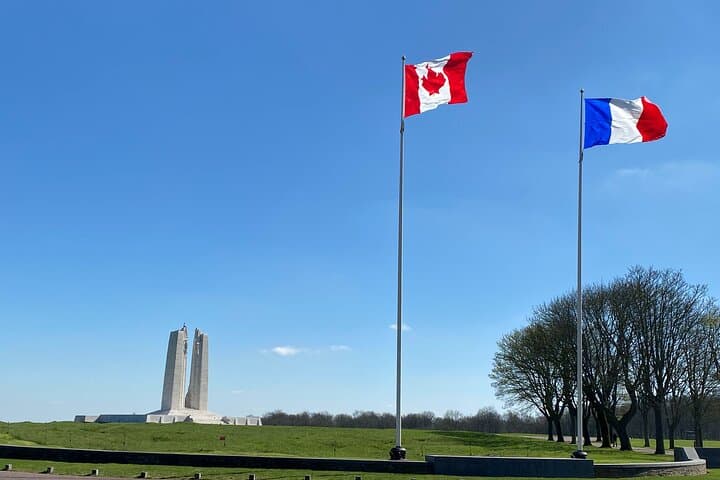
Geology here is simple but telling: chalk and clay plains drain into small river valleys, making fields boggy after rain and amplifying the flattened horizon that once exposed troops to long artillery sightlines. Local culture is practical — small museums, bakeries in Albert, and quiet commemorative ceremonies at monuments like Thiepval and Lochnagar Crater.
Practically, expect a four-hour private tour starting and ending at Albert station. Stops typically include a visitors centre, preserved trenches, memorial viewpoints and stories of units including Australian contingents. Terrain ranges from paved memorial access to uneven grass tracks and shallow trench reconstructions; bring waterproof shoes and layers. Photography is welcome but keep respectful distances and follow guide instructions around fragile sites and graves. Tours are adaptable — if you want to trace a relative’s path, provide details in advance so the guide can tailor stops and context.
easy.
4 hours.
Suitable for most fitness levels; expect short walks on uneven ground and some standing during explanations.
Most memorials and outdoor preserved sites are free, but some museums may have separate admission; the tour price typically excludes museum entry unless specified.
Yes — with advance notice and available records the guide can research and adapt the itinerary to include locations relevant to a relative or specific unit.
The tour meets and finishes at the main doors of Albert train station; pick-up and drop-off at Albert station are included as part of the service.
The tour is generally suitable for all fitness levels, but some stops (preserved trenches and grassy tracks) involve uneven terrain and limited accessibility — contact the operator to discuss specific mobility needs.
The Somme offensive (July–November 1916) was one of World War I’s largest battles, involving British, French, Australian and other forces and significant casualties; the landscape still bears memorials and preserved sites that mark key actions.
Many sites are managed by the Commonwealth War Graves Commission and local bodies; stay on marked paths, don’t remove artefacts, and respect conservation signage to protect archaeology and habitats.
ALW Battlefield Tours operates guided outdoor trips and adventures with an emphasis on safety, stewardship, and memorable experiences.
You step off the train in Albert and the air feels different: flat fields stretch toward low ridgelines, punctuated by solitary memorials and the neat geometry of cultivated plots that still carry the scars of 1916.
You step off the train in Albert and the air feels different: flat fields stretch toward low ridgelines, punctuated by solitary memorials and the neat geometry of cultivated plots that still carry the scars of 1916.
Your guide gathers the group into an air-conditioned vehicle and, as the town recedes, begins to stitch the landscape to events — artillery-cratered ground, preserved trench lines and the stone names on memorial walls. The Somme offensive (summer–autumn 1916) reshaped Picardy physically and culturally; towns like Albert rebuilt quickly while miles of battlefield preserved memory and soil disturbed by millions of shells.
Geology here is simple but telling: chalk and clay plains drain into small river valleys, making fields boggy after rain and amplifying the flattened horizon that once exposed troops to long artillery sightlines. Local culture is practical — small museums, bakeries in Albert, and quiet commemorative ceremonies at monuments like Thiepval and Lochnagar Crater.
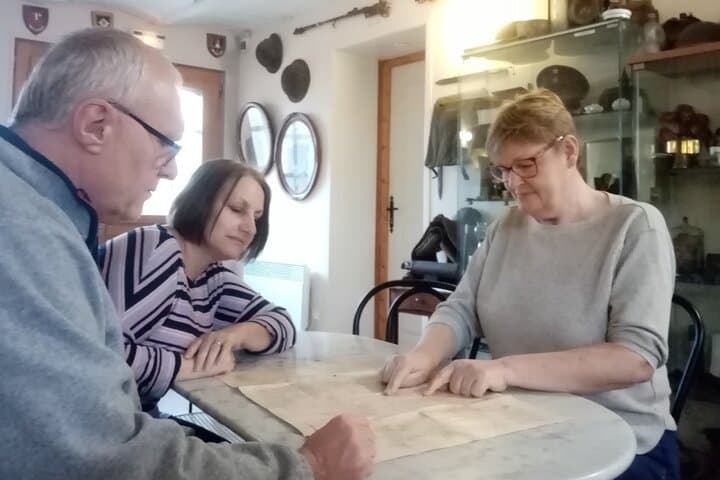
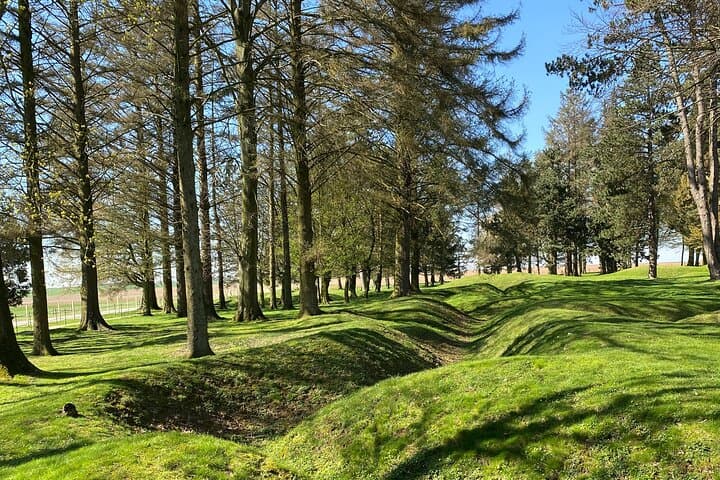
Practically, expect a four-hour private tour starting and ending at Albert station. Stops typically include a visitors centre, preserved trenches, memorial viewpoints and stories of units including Australian contingents. Terrain ranges from paved memorial access to uneven grass tracks and shallow trench reconstructions; bring waterproof shoes and layers. Photography is welcome but keep respectful distances and follow guide instructions around fragile sites and graves. Tours are adaptable — if you want to trace a relative’s path, provide details in advance so the guide can tailor stops and context.