THE ADVENTURE COLLECTIVE® · Independent discovery and booking for outdoor travel

Drive from Port Chalmers into Dunedin’s stone streets and onward to the dramatic Otago Peninsula on this private half-day tour. Short walks, panoramic lookouts and flexible stops let you tailor a compact introduction to the city’s architecture, gardens and coastal wildlife.
Drive from Port Chalmers into Dunedin’s stone streets and onward to the dramatic Otago Peninsula on this private half-day tour. Short walks, panoramic lookouts and flexible stops let you tailor a compact introduction to the city’s architecture, gardens and coastal wildlife.
The van eases out of Port Chalmers and the city unfolds: a mix of Victorian stone, university spires and ocean-sheared headlands. Salt-laced wind pushes across the Otago Harbour as the route climbs toward Signal Hill for a first panorama; later the road hugs Otago Peninsula where cliffs and bays dare you to look closer.
Verified experiences and guided adventures in the surrounding area.
Operated by Fantail Tours Limited · Dunedin, Otago
The van eases out of Port Chalmers and the city unfolds: a mix of Victorian stone, university spires and ocean-sheared headlands. Salt-laced wind pushes across the Otago Harbour as the route climbs toward Signal Hill for a first panorama; later the road hugs Otago Peninsula where cliffs and bays dare you to look closer.
Dunedin is a 19th-century Scottish transplant turned university city, its boom-era architecture—Olveston House and the railway station—speaks to gold rush wealth. Geologically, the peninsula is the rim of an ancient volcanic complex carved by waves and time, producing steep cliffs, sheltered coves and beaches shaped by tidal currents.
Culture here mixes student energy with conservation focus: the Royal Albatross and hoiho (yellow-eyed penguin) breeding programmes make wildlife a reason many visit. Local gardens such as Glenfalloch show subtropical plantings that thrive in the maritime climate.
Practical guidance: this private half-day (about four hours) is primarily a scenic drive with short walks—expect a few 10–30 minute stops for photos and brief strolls on uneven paths. Mornings are best for wildlife sightings; afternoons offer soft light over the beaches. Wear sturdy shoes, a windproof layer and bring binoculars for birdlife on the peninsula. Drivers/guides tailor the stops, so tell them if you prefer gardens, architecture or wildlife. Note that some attractions (e.g. Albatross Centre, Larnach Castle) may require separate admission and operate on seasonal hours. The tour suits travelers who want concentrated, flexible exploration without long hikes—an efficient way to sample Dunedin’s history, coastline and natural highlights in one compact outing.
The guide meets at the Port Chalmers cruise terminal private tour area (door 2) and returns there at the end of the half-day tour.
Yes—this private tour is flexible; the driver-guide will tailor stops and time spent to your group's interests within the four-hour window.
Admissions are generally not included; visits to sites such as Larnach Castle or the Albatross Centre may require separate tickets and have seasonal opening hours.
Yes; infant seats are available and the tour can accommodate families, though some short walks involve uneven terrain that may be unsuitable for very young children.
Fantail Tours Limited operates guided outdoor trips and adventures with an emphasis on safety, stewardship, and memorable experiences.
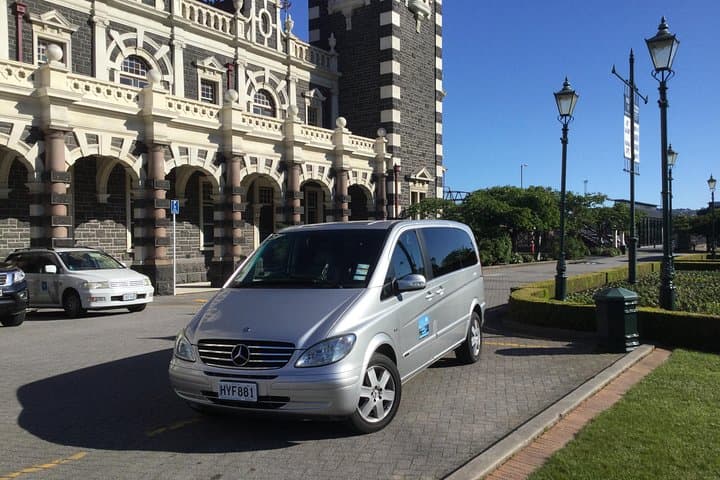

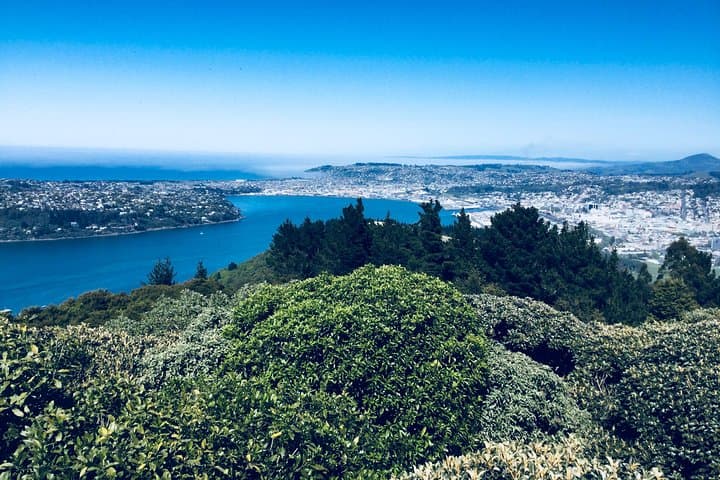

The van eases out of Port Chalmers and the city unfolds: a mix of Victorian stone, university spires and ocean-sheared headlands. Salt-laced wind pushes across the Otago Harbour as the route climbs toward Signal Hill for a first panorama; later the road hugs Otago Peninsula where cliffs and bays dare you to look closer.
The van eases out of Port Chalmers and the city unfolds: a mix of Victorian stone, university spires and ocean-sheared headlands. Salt-laced wind pushes across the Otago Harbour as the route climbs toward Signal Hill for a first panorama; later the road hugs Otago Peninsula where cliffs and bays dare you to look closer.
Dunedin is a 19th-century Scottish transplant turned university city, its boom-era architecture—Olveston House and the railway station—speaks to gold rush wealth. Geologically, the peninsula is the rim of an ancient volcanic complex carved by waves and time, producing steep cliffs, sheltered coves and beaches shaped by tidal currents.
Culture here mixes student energy with conservation focus: the Royal Albatross and hoiho (yellow-eyed penguin) breeding programmes make wildlife a reason many visit. Local gardens such as Glenfalloch show subtropical plantings that thrive in the maritime climate.
Practical guidance: this private half-day (about four hours) is primarily a scenic drive with short walks—expect a few 10–30 minute stops for photos and brief strolls on uneven paths. Mornings are best for wildlife sightings; afternoons offer soft light over the beaches. Wear sturdy shoes, a windproof layer and bring binoculars for birdlife on the peninsula. Drivers/guides tailor the stops, so tell them if you prefer gardens, architecture or wildlife. Note that some attractions (e.g. Albatross Centre, Larnach Castle) may require separate admission and operate on seasonal hours. The tour suits travelers who want concentrated, flexible exploration without long hikes—an efficient way to sample Dunedin’s history, coastline and natural highlights in one compact outing.