THE ADVENTURE COLLECTIVE® · Independent discovery and booking for outdoor travel

Spend a focused half-day exploring Agadir’s marina, the kasbah ruins of Agadir Oufella, the museum of Berber jewelry and the bustling Souk El Had. This private tour packs coastal views, history and market life into 3–4 hours with hotel pickup.
Spend a focused half-day exploring Agadir’s marina, the kasbah ruins of Agadir Oufella, the museum of Berber jewelry and the bustling Souk El Had. This private tour packs coastal views, history and market life into 3–4 hours with hotel pickup.
The Atlantic wind hits the promenade as you step from the marina onto a wide, sunlit walkway; fishing boats bob and gulls thread the air while the city rises back from the shore in clean, low-slung blocks. This half-day private tour stitches together Agadir’s coastal pulse, earthquake history and market life into a compact, lively introduction.
Verified experiences and guided adventures in the surrounding area.
Operated by Agharass Tours · Agadir, Souss-Massa
The Atlantic wind hits the promenade as you step from the marina onto a wide, sunlit walkway; fishing boats bob and gulls thread the air while the city rises back from the shore in clean, low-slung blocks. This half-day private tour stitches together Agadir’s coastal pulse, earthquake history and market life into a compact, lively introduction.
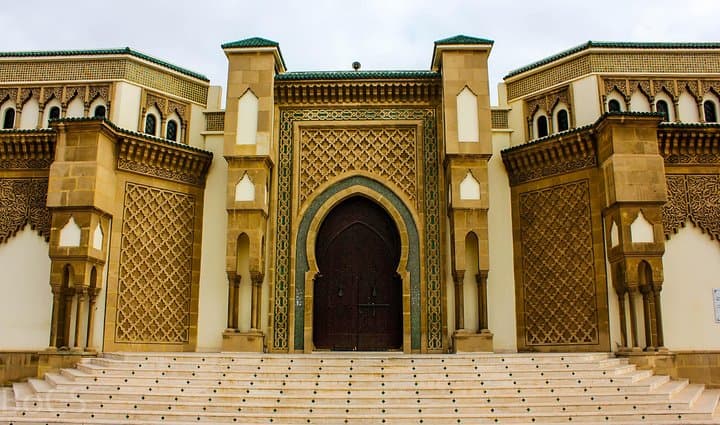
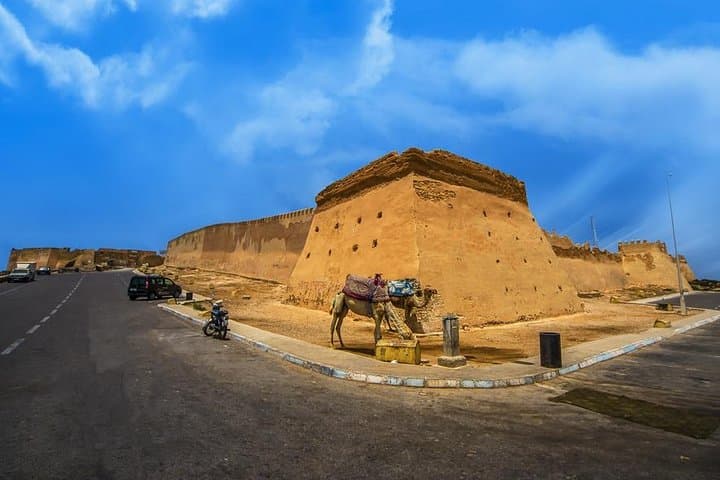
Agadir was largely rebuilt after the devastating 1960 earthquake; the reconstruction created the modern grid you’ll see from the ruined heights of Agadir Oufella, a kasbah that now frames sweeping city-and-sea views. Geologically, the region sits on a coastal plain backed by the Anti-Atlas foothills; the urban sand and stone reflect that coastal-arid interface. Culturally the day touches on Berber crafts at the museum of Berber jewelry, Islamic architecture at Talborjt mosque, and the sensory rush of Souk El Had, one of Morocco’s largest markets with spices, textiles and everyday life on display.
Practical guidance: allow 3–4 hours for a relaxed pace, bring sun protection and small bills for market purchases, and plan for short walks on paved and uneven surfaces. The private vehicle and driver make transfers simple, but expect photographic stops and brief climbs to viewpoints. If you prefer a focused visit—more time at the museum or extended souk wandering—request that when booking. This tour is a good first-day orientation: it introduces landmarks, local rhythms and bargaining culture while leaving room to return to favorites later.
easy.
3–4 hours.
Suitable for most fitness levels; requires short walks and occasional steps at viewpoints.
Yes—hotel pickup and drop-off are included; provide your hotel details and preferred pickup time at booking.
The driver may speak English, French and German, but language ability can vary—confirm at booking if you need a specific language.
Yes—infant seats and boosters are available on request; mention ages when booking to ensure proper seating.
You typically have a short free time window to explore the souk (30–60 minutes); request extra time if you want a longer visit.
Agadir was largely destroyed by a 1960 earthquake and rebuilt in a modern grid; the kasbah ruins and City Suiss quarter date from the post-quake reconstruction period.
Visitors should avoid littering and single-use plastics in the market and on the beach; support local artisans to encourage sustainable cultural tourism.
Agharass Tours operates guided outdoor trips and adventures with an emphasis on safety, stewardship, and memorable experiences.
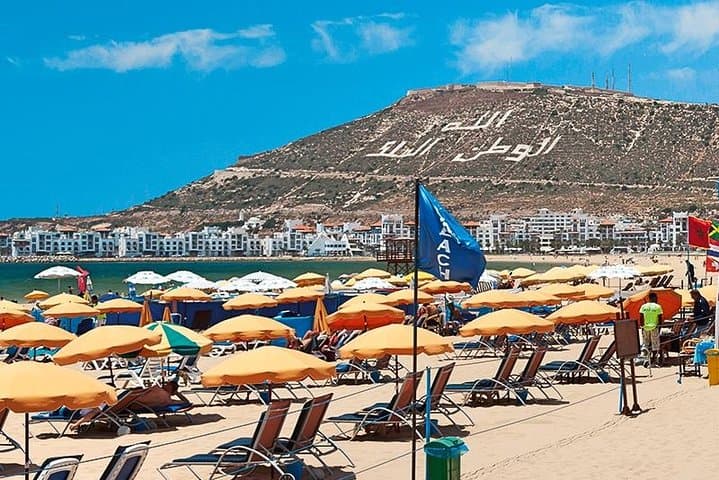
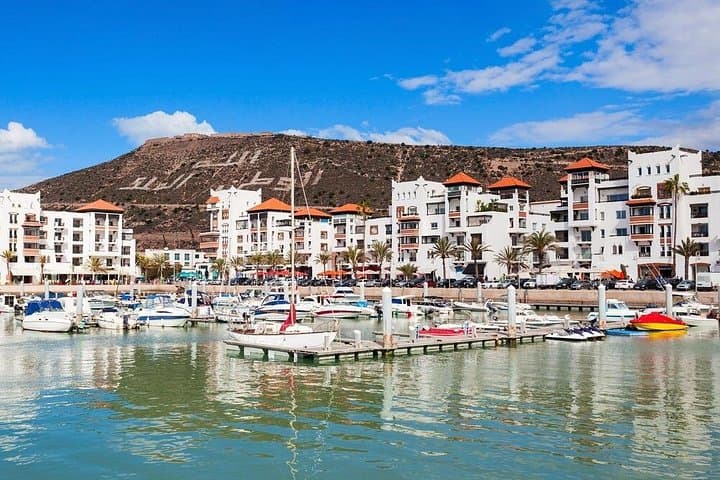
The Atlantic wind hits the promenade as you step from the marina onto a wide, sunlit walkway; fishing boats bob and gulls thread the air while the city rises back from the shore in clean, low-slung blocks. This half-day private tour stitches together Agadir’s coastal pulse, earthquake history and market life into a compact, lively introduction.
The Atlantic wind hits the promenade as you step from the marina onto a wide, sunlit walkway; fishing boats bob and gulls thread the air while the city rises back from the shore in clean, low-slung blocks. This half-day private tour stitches together Agadir’s coastal pulse, earthquake history and market life into a compact, lively introduction.
Agadir was largely rebuilt after the devastating 1960 earthquake; the reconstruction created the modern grid you’ll see from the ruined heights of Agadir Oufella, a kasbah that now frames sweeping city-and-sea views. Geologically, the region sits on a coastal plain backed by the Anti-Atlas foothills; the urban sand and stone reflect that coastal-arid interface. Culturally the day touches on Berber crafts at the museum of Berber jewelry, Islamic architecture at Talborjt mosque, and the sensory rush of Souk El Had, one of Morocco’s largest markets with spices, textiles and everyday life on display.
Practical guidance: allow 3–4 hours for a relaxed pace, bring sun protection and small bills for market purchases, and plan for short walks on paved and uneven surfaces. The private vehicle and driver make transfers simple, but expect photographic stops and brief climbs to viewpoints. If you prefer a focused visit—more time at the museum or extended souk wandering—request that when booking. This tour is a good first-day orientation: it introduces landmarks, local rhythms and bargaining culture while leaving room to return to favorites later.