THE ADVENTURE COLLECTIVE® · Independent discovery and booking for outdoor travel

See the Parthenon and Athens’ signature sites in a focused private half-day. This guided tour combines Acropolis access, panoramic viewpoints, and door-to-door transport for efficient sightseeing.
See the Parthenon and Athens’ signature sites in a focused private half-day. This guided tour combines Acropolis access, panoramic viewpoints, and door-to-door transport for efficient sightseeing.
Morning light cuts across the marble of the Acropolis as a private minivan drops visitors at the base of the hill. Feet crunch on ancient steps; the city sprawls away below, white blocks and terracotta roofs meeting the blue sweep of the Aegean. On a five-hour private tour the Parthenon dominates the skyline, but smaller details—weathered friezes, carved Caryatids, the angled stones of the Propylaea—reward the careful eye.
Verified experiences and guided adventures in the surrounding area.
Operated by Greece Athens Transfers & Tours · Athens, Attica
Morning light cuts across the marble of the Acropolis as a private minivan drops visitors at the base of the hill. Feet crunch on ancient steps; the city sprawls away below, white blocks and terracotta roofs meeting the blue sweep of the Aegean. On a five-hour private tour the Parthenon dominates the skyline, but smaller details—weathered friezes, carved Caryatids, the angled stones of the Propylaea—reward the careful eye.
This route threads together classical Athens and modern civic life. The Acropolis sits on 5th-century BC foundations raised after the Persian invasions; nearby ruins—Hadrian’s Arch, the Temple of Olympian Zeus and the Panathenaic Stadium—trace later Roman and modern chapters. Geologically the hill is Pentelic marble, quarried from nearby Mount Pentelicus, whose golden grains change color with the sun. Culturally, Athens is a city of layered voices: antiquity’s civic experiments give way to Ottoman, Venetian and contemporary Greek notes in the urban fabric.
Practical guidance: expect uneven, steep paths and sections of exposed rock; sturdy shoes and a sun hat make the climb manageable. A licensed guide will contextualize the Parthenon’s sculptural program and point to best photo angles, while private transport shaves transit time between sites. If the Acropolis Museum is selected, allow an extra hour to see original sculptures and fragments up close.
Timing matters—early morning or late afternoon reduces crowds and heat. Bring a refillable water bottle (bottled water may be provided), wear sunscreen, and budget time afterward for a relaxed walk through Plaka’s narrow streets.
moderate.
4–5 hours.
Suitable for travelers who can walk and climb stairs on uneven surfaces; light to moderate fitness recommended.
Some booking options include Acropolis entrance; confirm your selection — otherwise the guide can advise on purchasing tickets at pickup.
The Acropolis has steep, uneven surfaces and limited wheelchair access; travelers with mobility concerns should check alternatives or contact the operator before booking.
There’s an optional one-hour visit to the Acropolis Museum if chosen when booking, which adds about an hour to the tour duration.
Guides provide commentary and meet you at sites, but may not be licensed inside restricted areas; they will explain features from approved vantage points.
The Acropolis complex was largely rebuilt under Pericles in the 5th century BC using Pentelic marble; its monuments symbolize classical Athenian democracy and artistic achievement.
The site is under continuous conservation to stabilize ancient structures and mitigate tourist impact; visitors are asked to follow marked paths and avoid touching fragile surfaces.
Greece Athens Transfers & Tours operates guided outdoor trips and adventures with an emphasis on safety, stewardship, and memorable experiences.
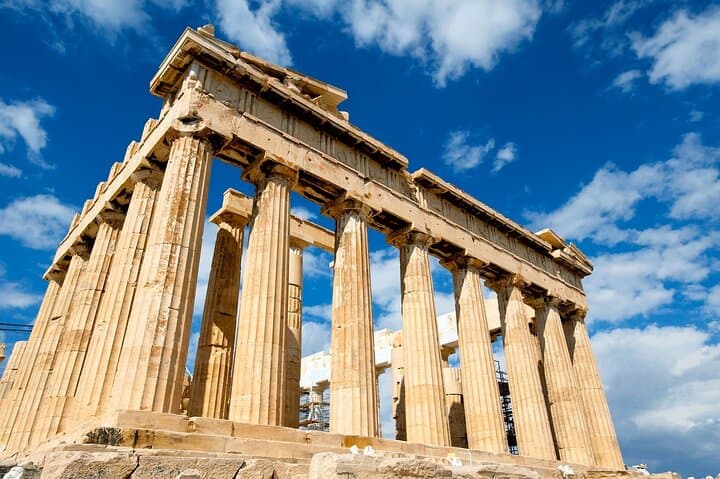
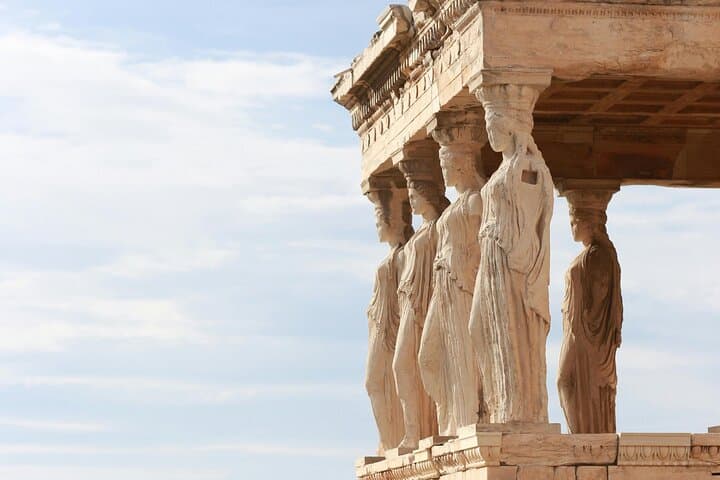
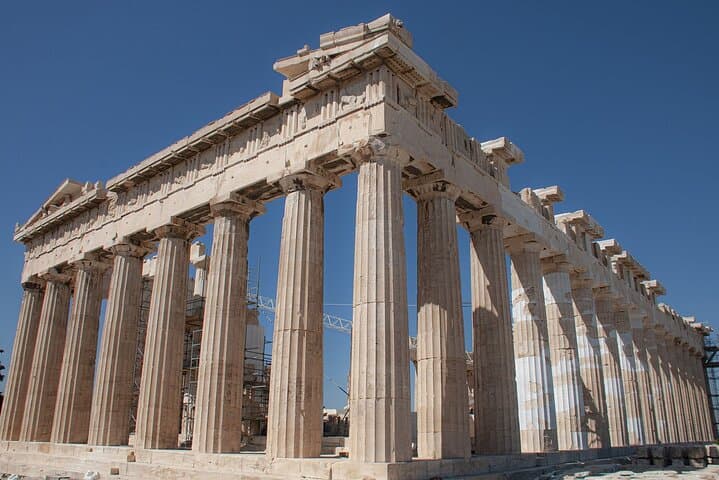
Morning light cuts across the marble of the Acropolis as a private minivan drops visitors at the base of the hill. Feet crunch on ancient steps; the city sprawls away below, white blocks and terracotta roofs meeting the blue sweep of the Aegean. On a five-hour private tour the Parthenon dominates the skyline, but smaller details—weathered friezes, carved Caryatids, the angled stones of the Propylaea—reward the careful eye.
Morning light cuts across the marble of the Acropolis as a private minivan drops visitors at the base of the hill. Feet crunch on ancient steps; the city sprawls away below, white blocks and terracotta roofs meeting the blue sweep of the Aegean. On a five-hour private tour the Parthenon dominates the skyline, but smaller details—weathered friezes, carved Caryatids, the angled stones of the Propylaea—reward the careful eye.
This route threads together classical Athens and modern civic life. The Acropolis sits on 5th-century BC foundations raised after the Persian invasions; nearby ruins—Hadrian’s Arch, the Temple of Olympian Zeus and the Panathenaic Stadium—trace later Roman and modern chapters. Geologically the hill is Pentelic marble, quarried from nearby Mount Pentelicus, whose golden grains change color with the sun. Culturally, Athens is a city of layered voices: antiquity’s civic experiments give way to Ottoman, Venetian and contemporary Greek notes in the urban fabric.
Practical guidance: expect uneven, steep paths and sections of exposed rock; sturdy shoes and a sun hat make the climb manageable. A licensed guide will contextualize the Parthenon’s sculptural program and point to best photo angles, while private transport shaves transit time between sites. If the Acropolis Museum is selected, allow an extra hour to see original sculptures and fragments up close.
Timing matters—early morning or late afternoon reduces crowds and heat. Bring a refillable water bottle (bottled water may be provided), wear sunscreen, and budget time afterward for a relaxed walk through Plaka’s narrow streets.