THE ADVENTURE COLLECTIVE® · Independent discovery and booking for outdoor travel

Explore Pretoria’s civic heart in a focused four-hour tour that moves from the Union Buildings to Paul Kruger’s house. Expect jacaranda-lined streets, concise museum visits and practical hotel pickup for an accessible city overview.
Explore Pretoria’s civic heart in a focused four-hour tour that moves from the Union Buildings to Paul Kruger’s house. Expect jacaranda-lined streets, concise museum visits and practical hotel pickup for an accessible city overview.
Stand beneath a corridor of purple blossoms and hear the city lean in — Pretoria’s jacarandas announce themselves as you set off on a compact, four-hour sweep through political plazas and quiet museum rooms.
Verified experiences and guided adventures in the surrounding area.
Operated by Hominids Tours & Travel · Pretoria, Gauteng
Stand beneath a corridor of purple blossoms and hear the city lean in — Pretoria’s jacarandas announce themselves as you set off on a compact, four-hour sweep through political plazas and quiet museum rooms.
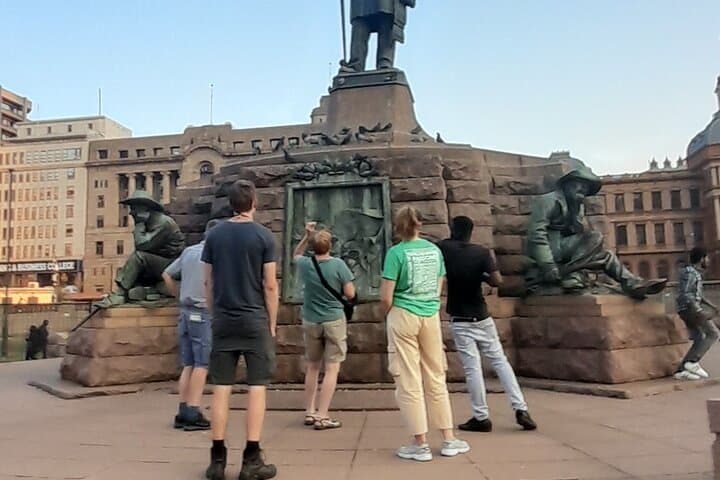
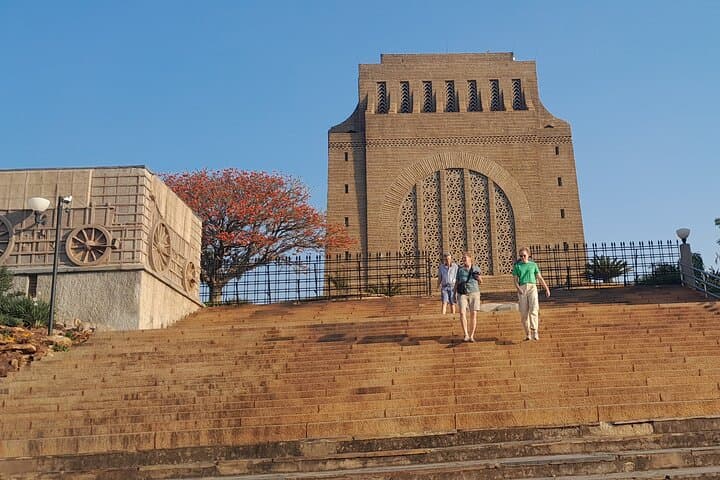
This half-day tour threads the Union Buildings’ terraced lawns, passes the colonial City Hall clock tower and stops at Paul Kruger’s modest 19th-century house, where iron-roofed verandas and marble lions mark a life tied to the Transvaal and the Boer War. Geologically, Pretoria sits on the Highveld plateau — broad, elevated grassland underlain by granite and dolerite — and its open skyline makes for straightforward walking with long city views.
The city’s culture is civic and conversational: government offices at Meintjieskop sit cheek-by-jowl with small cafés and galleries. Melrose House recalls the Vereeniging peace talks that ended the South African War in 1902; Freedom Park and the Pretoria Art Museum nearby offer quieter moments to read the city’s story.
Practically: expect about 4 hours of combined driving and short walks (tour accommodates vehicle transfers between sites). The tour runs best mid-morning to avoid midday sun and to catch museums before closing. Wear comfortable walking shoes and a sun hat; carry water — Pretoria’s altitude (around 1,300 m) means sun and dryness can fatigue you faster than you’d expect.
Accessibility is strong: hotel pickup and wheelchair-accessible transport are typically provided. Bring a light layer for breezy terraces and plan museum entry times if you want more than a quick stop.
moderate.
4 hours.
Moderate fitness—comfortable walking for short sections and getting on/off tour transport required.
Yes — the tour provides hotel pickup and drop-off; you'll specify pickup details when booking.
Transportation and main tour surfaces are wheelchair accessible, though some historic homes may have limited access—confirm specific site access with the operator ahead of time.
Jacarandas flower in Pretoria from late October to November; scheduling the tour then offers a strong chance to see purple-lined streets.
Some stops are included while others may be exterior visits — check the booking page or ask the guide about any optional paid museum entries.
Pretoria was established as the administrative center of the South African Republic; key sites on this route reference the Boer War, the Vereeniging peace agreement (1902), and the early Union government era.
Jacaranda trees are an introduced species; local conservation focuses on water-wise planting and protecting remnant Highveld grassland patches within the city.
Hominids Tours & Travel operates guided outdoor trips and adventures with an emphasis on safety, stewardship, and memorable experiences.
Stand beneath a corridor of purple blossoms and hear the city lean in — Pretoria’s jacarandas announce themselves as you set off on a compact, four-hour sweep through political plazas and quiet museum rooms.
Stand beneath a corridor of purple blossoms and hear the city lean in — Pretoria’s jacarandas announce themselves as you set off on a compact, four-hour sweep through political plazas and quiet museum rooms.
This half-day tour threads the Union Buildings’ terraced lawns, passes the colonial City Hall clock tower and stops at Paul Kruger’s modest 19th-century house, where iron-roofed verandas and marble lions mark a life tied to the Transvaal and the Boer War. Geologically, Pretoria sits on the Highveld plateau — broad, elevated grassland underlain by granite and dolerite — and its open skyline makes for straightforward walking with long city views.
The city’s culture is civic and conversational: government offices at Meintjieskop sit cheek-by-jowl with small cafés and galleries. Melrose House recalls the Vereeniging peace talks that ended the South African War in 1902; Freedom Park and the Pretoria Art Museum nearby offer quieter moments to read the city’s story.
Practically: expect about 4 hours of combined driving and short walks (tour accommodates vehicle transfers between sites). The tour runs best mid-morning to avoid midday sun and to catch museums before closing. Wear comfortable walking shoes and a sun hat; carry water — Pretoria’s altitude (around 1,300 m) means sun and dryness can fatigue you faster than you’d expect.
Accessibility is strong: hotel pickup and wheelchair-accessible transport are typically provided. Bring a light layer for breezy terraces and plan museum entry times if you want more than a quick stop.