THE ADVENTURE COLLECTIVE® · Independent discovery and booking for outdoor travel

Explore two contrasting Angkor-era sites in a focused four-hour drive from Siem Reap. This half-day tour pairs Preah Khan’s root-entwined corridors with the reflective island temple of Neak Pean—perfect for travelers short on time who want history, architecture, and evocative waterside views.
Explore two contrasting Angkor-era sites in a focused four-hour drive from Siem Reap. This half-day tour pairs Preah Khan’s root-entwined corridors with the reflective island temple of Neak Pean—perfect for travelers short on time who want history, architecture, and evocative waterside views.
You step out of the minivan into a warm, green hush: roots and masonry braided together, birds calling along a raised wooden causeway, and the air heavy with dust and incense. Preah Khan's corridors fold around shafts of light, and a short drive away Neak Pean sits like a circular secret afloat on the Northern Baray. In four hours the tour stitches two very different faces of Angkor—one tangled and intimate, the other composed and reflective.
Verified experiences and guided adventures in the surrounding area.
Operated by Kampoul Adventure Tour · Siem Reap, Siem Reap Province
You step out of the minivan into a warm, green hush: roots and masonry braided together, birds calling along a raised wooden causeway, and the air heavy with dust and incense. Preah Khan's corridors fold around shafts of light, and a short drive away Neak Pean sits like a circular secret afloat on the Northern Baray. In four hours the tour stitches two very different faces of Angkor—one tangled and intimate, the other composed and reflective.
Built during the late 12th century under King Jayavarman VII, Preah Khan once functioned as a monastery and administrative center; its unusual two-storey hall and towering root-covered galleries show both Khmer engineering and time’s reclamation. Neak Pean, an artificial island temple, was conceived as a symbolic healing pond connected to Buddhist cosmology and is most striking when the Baray fills in the wet season.
Culturally, these sites are active places of reverence—observe the Angkor dress code for shoulders and knees. Practically, the itinerary includes hotel pickup, bottled water, lunch, and a guide; note that a one-day Angkor pass (USD 37) is paid separately at the park entrance. Paths are uneven: expect tree roots, raised walkways, and occasional slippery stone, so allow steady footing rather than speed.
Timing matters—mornings are cooler and quieter, wet-season reflections make Neak Pean photogenic, and the guide will compress context into a compact visit. Bring sun protection, modest clothing, cash for the temple pass, and comfortable shoes; the tour is short but sensory and historically dense, ideal as an accessible introduction to Angkor’s lesser-visited corners.
easy.
4 hours.
Suitable for most travelers who can walk short distances and manage uneven ground; no long hikes required.
No—the one-day Angkor pass (around USD 37) is paid on arrival at the park ticket office and is not included in the tour cost.
Expect light walking over uneven ground for short periods at each site; the tour is suitable for most fitness levels and not physically demanding.
Transport is by tuk-tuk or air-conditioned minivan depending on group size; your confirmation will specify vehicle type.
Yes—lunch is included and vegetarian options are available if requested at booking; advise the operator of allergies in advance.
Both sites date to the reign of Jayavarman VII in the late 12th century—Preah Khan functioned as a major monastery and administrative complex while Neak Pean served symbolic and healing purposes linked to Buddhist cosmology.
Visit responsibly—do not climb on fragile carvings, carry out trash, and note that park fees contribute to site protection and local conservation efforts.
Kampoul Adventure Tour operates guided outdoor trips and adventures with an emphasis on safety, stewardship, and memorable experiences.
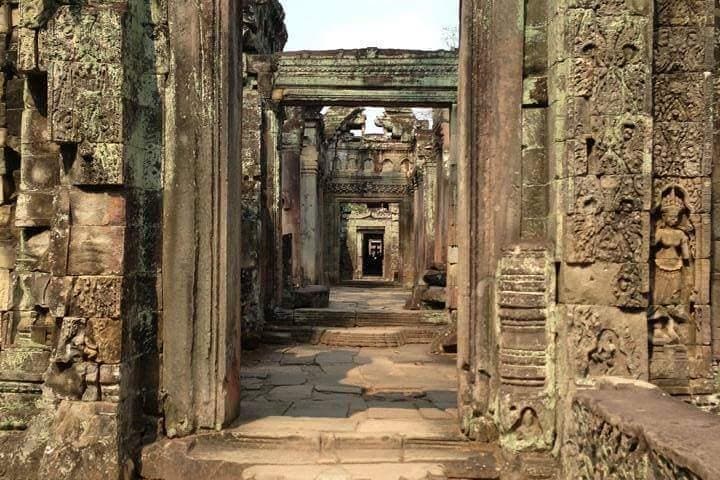
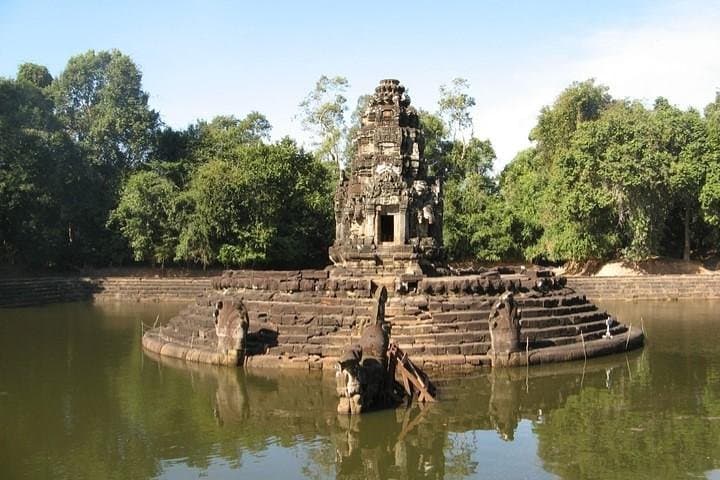
You step out of the minivan into a warm, green hush: roots and masonry braided together, birds calling along a raised wooden causeway, and the air heavy with dust and incense. Preah Khan's corridors fold around shafts of light, and a short drive away Neak Pean sits like a circular secret afloat on the Northern Baray. In four hours the tour stitches two very different faces of Angkor—one tangled and intimate, the other composed and reflective.
You step out of the minivan into a warm, green hush: roots and masonry braided together, birds calling along a raised wooden causeway, and the air heavy with dust and incense. Preah Khan's corridors fold around shafts of light, and a short drive away Neak Pean sits like a circular secret afloat on the Northern Baray. In four hours the tour stitches two very different faces of Angkor—one tangled and intimate, the other composed and reflective.
Built during the late 12th century under King Jayavarman VII, Preah Khan once functioned as a monastery and administrative center; its unusual two-storey hall and towering root-covered galleries show both Khmer engineering and time’s reclamation. Neak Pean, an artificial island temple, was conceived as a symbolic healing pond connected to Buddhist cosmology and is most striking when the Baray fills in the wet season.
Culturally, these sites are active places of reverence—observe the Angkor dress code for shoulders and knees. Practically, the itinerary includes hotel pickup, bottled water, lunch, and a guide; note that a one-day Angkor pass (USD 37) is paid separately at the park entrance. Paths are uneven: expect tree roots, raised walkways, and occasional slippery stone, so allow steady footing rather than speed.
Timing matters—mornings are cooler and quieter, wet-season reflections make Neak Pean photogenic, and the guide will compress context into a compact visit. Bring sun protection, modest clothing, cash for the temple pass, and comfortable shoes; the tour is short but sensory and historically dense, ideal as an accessible introduction to Angkor’s lesser-visited corners.