THE ADVENTURE COLLECTIVE® · Independent discovery and booking for outdoor travel

Drive from the Central Valley into cool cloud forest to peer down at Poás’s steaming crater on a focused half-day tour. Expect dramatic geology, close-up fumaroles, and a sharp ecological contrast with the agricultural lowlands below.
Drive from the Central Valley into cool cloud forest to peer down at Poás’s steaming crater on a focused half-day tour. Expect dramatic geology, close-up fumaroles, and a sharp ecological contrast with the agricultural lowlands below.
Fog parts above the road and the air cools — you climb out of the Central Valley into a lane of orchids and coffee terraces. By the time the visitor center appears, the volcano’s rim breathes steam: a shallow, steaming crater ringed by black rock and cloud forest. Visitors stand at the official overlook and watch the crater pool glimmer, with fumaroles spitting sulfur-scented steam that dares you closer while keeping a safe distance.
Verified experiences and guided adventures in the surrounding area.
Operated by Tico Travel Adventures · Alajuela, Alajuela
Fog parts above the road and the air cools — you climb out of the Central Valley into a lane of orchids and coffee terraces. By the time the visitor center appears, the volcano’s rim breathes steam: a shallow, steaming crater ringed by black rock and cloud forest. Visitors stand at the official overlook and watch the crater pool glimmer, with fumaroles spitting sulfur-scented steam that dares you closer while keeping a safe distance.
Poás (2,708 m / 8,885 ft) is a stratovolcano with frequent phreatic and fumarolic activity; its history is written in ash layers and hardened lava that shaped the surrounding Alajuela highlands. The park’s cloud forest supports moss-draped oaks, bromeliads and patches of páramo-like vegetation — an abrupt ecological shift from the flower farms lower on the slopes. Locally, communities grow strawberries, ornamentals and coffee on volcanic soils that helped build Costa Rica’s agricultural economy.
Practically, the half-day excursion from San José is a 1–1.5 hour drive each way. Park access is controlled — visitors use designated viewpoints and trails; guides explain safety around gases and unstable ground. Expect cool, changeable weather and brief, intense wet spells during the rainy season. Bring layered clothing, a rain shell, sturdy shoes and water; keep inhalers handy if you have respiratory sensitivities. Because visibility can vanish in clouds, morning departures usually give the best chance of clear crater views. The experience blends easy access with raw volcanic geology — a short, high-reward outing for travelers who want a close look at Costa Rica’s restless heart.
easy.
5–6 hours.
Suitable for most fitness levels; activity is primarily short paved walks from viewpoints with minimal elevation change on trails
Expect about 1–1.5 hours each way depending on traffic; many tours depart early to maximize crater visibility.
Access is controlled by park authorities and can close during high volcanic activity or bad weather; guides monitor conditions and the tour includes park entrance.
At ~2,700 m, most people have no issues, but fumarolic sulfur gases can irritate those with respiratory conditions — bring medication and avoid low-lying fumarole areas.
The park reports wheelchair-accessible areas and transport accommodations, though some overlooks may have uneven surfacing; check specific accessibility needs with the operator.
Poás has been active for millennia; its eruptions shaped nearby valleys and contributed ash-rich soils that support local agriculture.
Park management limits access to sensitive areas and enforces trails to protect fragile cloud-forest vegetation and reduce visitor impact.
Tico Travel Adventures operates guided outdoor trips and adventures with an emphasis on safety, stewardship, and memorable experiences.


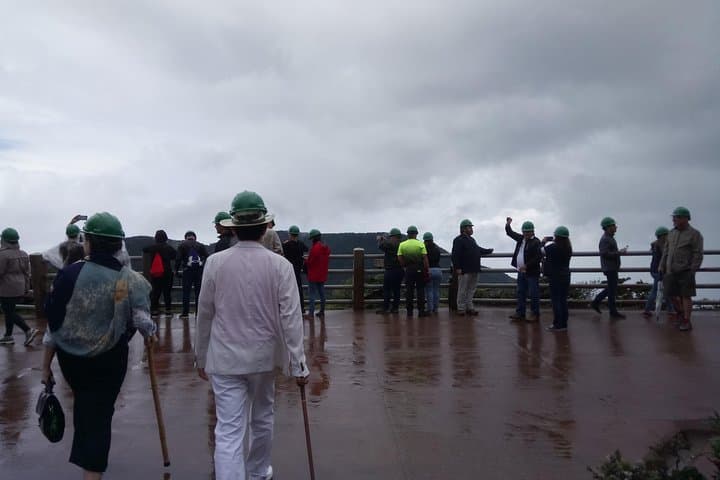
Fog parts above the road and the air cools — you climb out of the Central Valley into a lane of orchids and coffee terraces. By the time the visitor center appears, the volcano’s rim breathes steam: a shallow, steaming crater ringed by black rock and cloud forest. Visitors stand at the official overlook and watch the crater pool glimmer, with fumaroles spitting sulfur-scented steam that dares you closer while keeping a safe distance.
Fog parts above the road and the air cools — you climb out of the Central Valley into a lane of orchids and coffee terraces. By the time the visitor center appears, the volcano’s rim breathes steam: a shallow, steaming crater ringed by black rock and cloud forest. Visitors stand at the official overlook and watch the crater pool glimmer, with fumaroles spitting sulfur-scented steam that dares you closer while keeping a safe distance.
Poás (2,708 m / 8,885 ft) is a stratovolcano with frequent phreatic and fumarolic activity; its history is written in ash layers and hardened lava that shaped the surrounding Alajuela highlands. The park’s cloud forest supports moss-draped oaks, bromeliads and patches of páramo-like vegetation — an abrupt ecological shift from the flower farms lower on the slopes. Locally, communities grow strawberries, ornamentals and coffee on volcanic soils that helped build Costa Rica’s agricultural economy.
Practically, the half-day excursion from San José is a 1–1.5 hour drive each way. Park access is controlled — visitors use designated viewpoints and trails; guides explain safety around gases and unstable ground. Expect cool, changeable weather and brief, intense wet spells during the rainy season. Bring layered clothing, a rain shell, sturdy shoes and water; keep inhalers handy if you have respiratory sensitivities. Because visibility can vanish in clouds, morning departures usually give the best chance of clear crater views. The experience blends easy access with raw volcanic geology — a short, high-reward outing for travelers who want a close look at Costa Rica’s restless heart.