THE ADVENTURE COLLECTIVE® · Independent discovery and booking for outdoor travel

Drive from Taghazout into a narrow, palm-lined canyon where river pools, a short hike to Tizgi waterfall, and a shared tagine lunch make for a refreshing half-day escape. Learn about argan production, visit a botanical garden, and swim in natural rock basins before returning to the coast.
Drive from Taghazout into a narrow, palm-lined canyon where river pools, a short hike to Tizgi waterfall, and a shared tagine lunch make for a refreshing half-day escape. Learn about argan production, visit a botanical garden, and swim in natural rock basins before returning to the coast.
A sun-baked road unwinds from Taghazout into the lower Atlas foothills and, within an hour, the landscape tightens: rocky escarpments give way to a green cleft where the river insists on finding pools and plunge holes.
Verified experiences and guided adventures in the surrounding area.
Operated by MOUJA TOURS · Taghazout, Souss-Massa
A sun-baked road unwinds from Taghazout into the lower Atlas foothills and, within an hour, the landscape tightens: rocky escarpments give way to a green cleft where the river insists on finding pools and plunge holes.
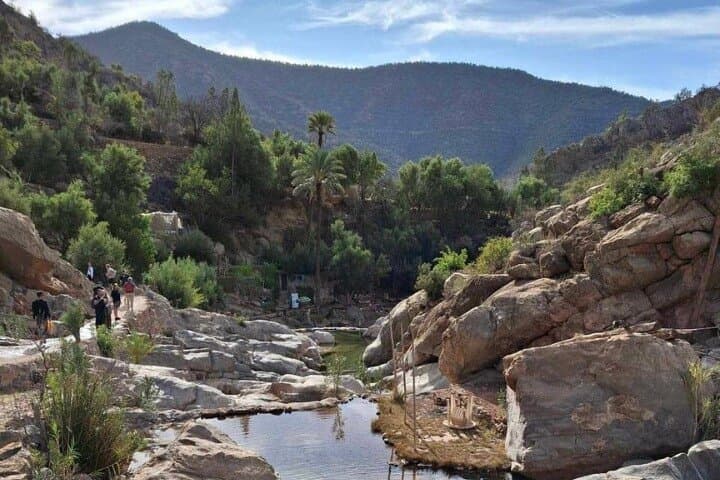
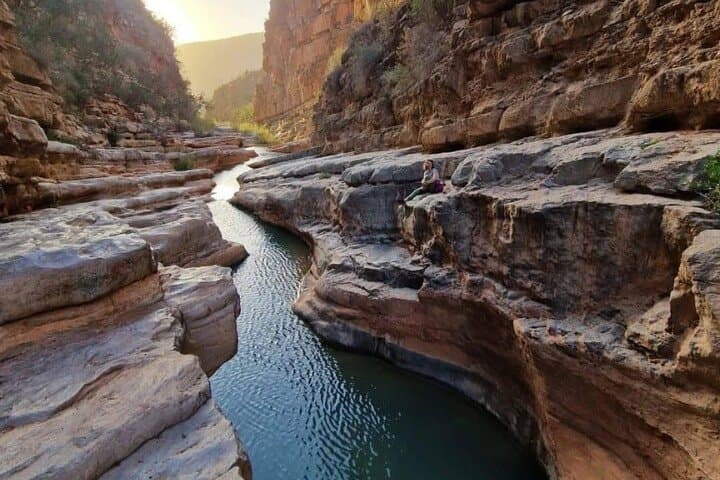
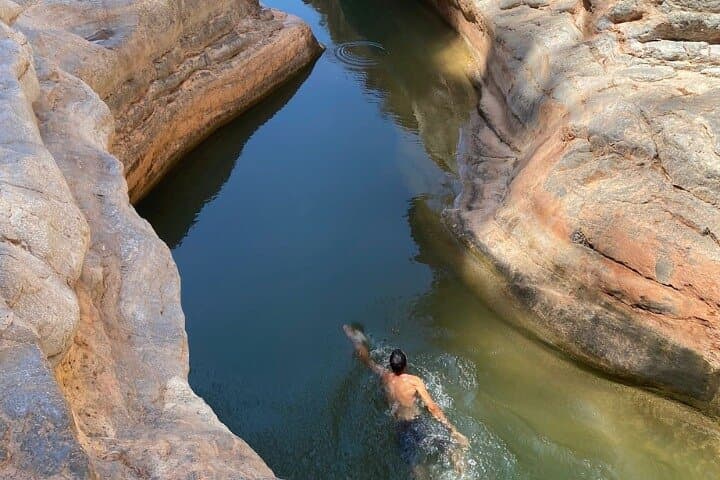
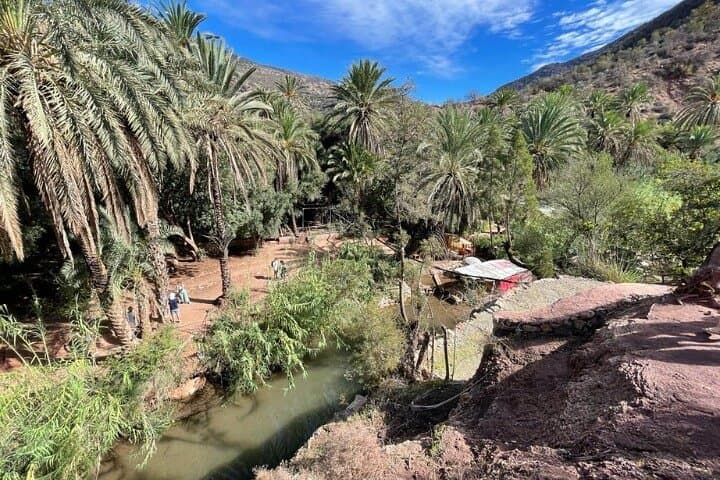
Paradise Valley is a working canyon—palm groves, argan trees and small Berber settlements pressed into the slopes. Geologically it’s an erosional cut through volcanic and sedimentary rock, where the stream has carved stepped basins and natural swimming holes. Visitors pass through Tamzargit oasis, snap photos at cliffside viewpoints, and pick their way on a short hike to Tizgi waterfall and the cooler pools below.
Culturally the route threads local life—women’s cooperatives making argan oil, roadside stalls like Kaban Ali Baba, and simple village homes that reflect Amazigh (Berber) traditions. Lunch is a classic tagine and mint tea, served with views toward the Anti-Atlas ridgeline.
Practically, expect a half-day (about 6 hours) experience that mixes easy driving, a guided walk of 20–40 minutes on uneven terrain, and time to swim. Surfaces are rocky and sometimes slippery; the river tempts you but currents can be stronger after rain. Bring sturdy shoes that can get wet, sun protection, and cash for cooperative products. Pickup from hotels in Tamraght or Taghazout is common, and transport is typically in an air-conditioned minivan.
This is an accessible outing for people comfortable with short hikes and casual swims—an introduction to southern Morocco’s geology, rural culture, and river-carved scenery.
easy.
6 hours.
Light walking ability; able to handle 20–40 minutes on uneven trails and short, modest elevation changes.
The main walk to the swimming holes and waterfall is a short, guided hike typically 20–40 minutes each way over uneven ground.
Children can swim in the pools under close supervision; parents should watch for slippery edges and currents, and consider life vests for less confident swimmers.
Most operators include a stop at a women’s argan cooperative where you can learn the production process and buy products directly.
Lunch (tagine) and tea are usually included in this tour, but carry snacks if you have specific dietary needs or long transfer times.
The valley sits along traditional Amazigh routes into the Anti-Atlas; local villages retain crafts and agricultural practices shaped by limited water and terraced slopes.
Respect water sources and local customs—avoid soap in pools, take all waste with you, and support cooperatives that pay local women fairly.
MOUJA TOURS operates guided outdoor trips and adventures with an emphasis on safety, stewardship, and memorable experiences.
A sun-baked road unwinds from Taghazout into the lower Atlas foothills and, within an hour, the landscape tightens: rocky escarpments give way to a green cleft where the river insists on finding pools and plunge holes.
A sun-baked road unwinds from Taghazout into the lower Atlas foothills and, within an hour, the landscape tightens: rocky escarpments give way to a green cleft where the river insists on finding pools and plunge holes.
Paradise Valley is a working canyon—palm groves, argan trees and small Berber settlements pressed into the slopes. Geologically it’s an erosional cut through volcanic and sedimentary rock, where the stream has carved stepped basins and natural swimming holes. Visitors pass through Tamzargit oasis, snap photos at cliffside viewpoints, and pick their way on a short hike to Tizgi waterfall and the cooler pools below.
Culturally the route threads local life—women’s cooperatives making argan oil, roadside stalls like Kaban Ali Baba, and simple village homes that reflect Amazigh (Berber) traditions. Lunch is a classic tagine and mint tea, served with views toward the Anti-Atlas ridgeline.
Practically, expect a half-day (about 6 hours) experience that mixes easy driving, a guided walk of 20–40 minutes on uneven terrain, and time to swim. Surfaces are rocky and sometimes slippery; the river tempts you but currents can be stronger after rain. Bring sturdy shoes that can get wet, sun protection, and cash for cooperative products. Pickup from hotels in Tamraght or Taghazout is common, and transport is typically in an air-conditioned minivan.
This is an accessible outing for people comfortable with short hikes and casual swims—an introduction to southern Morocco’s geology, rural culture, and river-carved scenery.