THE ADVENTURE COLLECTIVE® · Independent discovery and booking for outdoor travel

Drive from Agadir through banana plantations and Berber villages to a narrow canyon of palms and natural pools. This half-day tour offers easy hikes, swimming in clear pools, and vivid canyon scenery — ideal for a morning escape from the coast.
Drive from Agadir through banana plantations and Berber villages to a narrow canyon of palms and natural pools. This half-day tour offers easy hikes, swimming in clear pools, and vivid canyon scenery — ideal for a morning escape from the coast.
The minivan peels out of Agadir and the Atlantic fades behind you; roadside banana stalls give way to low-rise argan trees and a ribbon of mountain road that climbs into carved basalt and ochre. Within an hour the air feels different — hotter, drier, but threaded with river coolness where the wadi cuts narrow canyons and palms cluster in the shade.
Verified experiences and guided adventures in the surrounding area.
Operated by The Moroccan Secret Tours · Agadir, Souss-Massa
The minivan peels out of Agadir and the Atlantic fades behind you; roadside banana stalls give way to low-rise argan trees and a ribbon of mountain road that climbs into carved basalt and ochre. Within an hour the air feels different — hotter, drier, but threaded with river coolness where the wadi cuts narrow canyons and palms cluster in the shade.
Paradise Valley earned its name from the deep pools and palm-lined gorges that local Berber communities have used for generations. Geologically the gorge is a product of folding and fluvial erosion through soft sedimentary seams, leaving terraced pools and sudden drops; culturally the area sits in the sphere of Amazigh (Berber) villages including Aourir, whose banana plantations supply much of the region.
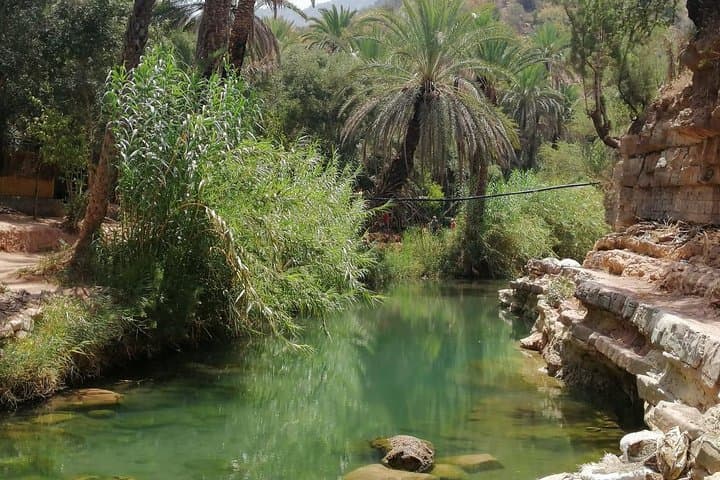
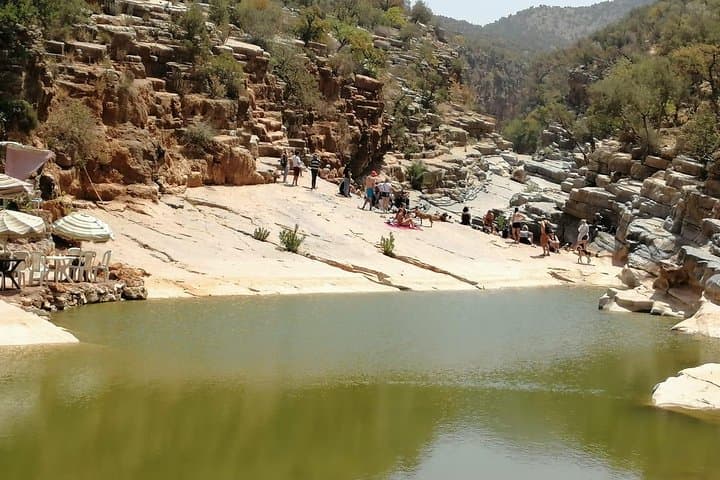
Expect a short, easy-to-moderate walk from the parking area to the swimming pools: uneven dirt paths, some rock-hopping, and narrow steps cut by locals. The river invites a dip — the pools are cool and clear but vary in depth and undercut rock. Photographers find dramatic contrasts: steep canyon walls, umbrella palms, and bright blue water against red stone.
Plan practicalities: wear sturdy shoes that can handle slick rock, bring a towel and quick-dry swimwear, and carry two liters of water in summertime. Morning departures are cooler and less crowded; afternoons can get busy and hotter. Respect local customs — modest swimwear when near villages — and follow Leave No Trace: pack out trash, avoid soaps, and keep noise low. The half-day format returns to Agadir by early afternoon, leaving time for a beach hour or a city stroll.
moderate.
5 hours.
Moderate fitness required: short hikes on uneven ground and the ability to navigate rocky steps.
The drive typically takes 45–60 minutes depending on traffic and pickup points along the coast.
Yes — there are several natural pools suitable for swimming, though depth and currents vary — exercise caution and supervise children.
The path to the main pools is short but uneven; families can manage with care, but those with limited mobility may find rocky sections challenging.
There is no formal permit required for the valley itself on most tours, but local guides or parking fees may apply depending on the access point.
The valley sits within Amazigh (Berber) country and has long been used by local villages for irrigation and seasonal grazing; Aourir nearby is known for its banana cultivation.
Visitor pressure concentrates at popular pools — avoid soaps, pack out all waste, and use established paths to reduce erosion and protect freshwater habitats.
The Moroccan Secret Tours operates guided outdoor trips and adventures with an emphasis on safety, stewardship, and memorable experiences.

The minivan peels out of Agadir and the Atlantic fades behind you; roadside banana stalls give way to low-rise argan trees and a ribbon of mountain road that climbs into carved basalt and ochre. Within an hour the air feels different — hotter, drier, but threaded with river coolness where the wadi cuts narrow canyons and palms cluster in the shade.
The minivan peels out of Agadir and the Atlantic fades behind you; roadside banana stalls give way to low-rise argan trees and a ribbon of mountain road that climbs into carved basalt and ochre. Within an hour the air feels different — hotter, drier, but threaded with river coolness where the wadi cuts narrow canyons and palms cluster in the shade.
Paradise Valley earned its name from the deep pools and palm-lined gorges that local Berber communities have used for generations. Geologically the gorge is a product of folding and fluvial erosion through soft sedimentary seams, leaving terraced pools and sudden drops; culturally the area sits in the sphere of Amazigh (Berber) villages including Aourir, whose banana plantations supply much of the region.
Expect a short, easy-to-moderate walk from the parking area to the swimming pools: uneven dirt paths, some rock-hopping, and narrow steps cut by locals. The river invites a dip — the pools are cool and clear but vary in depth and undercut rock. Photographers find dramatic contrasts: steep canyon walls, umbrella palms, and bright blue water against red stone.
Plan practicalities: wear sturdy shoes that can handle slick rock, bring a towel and quick-dry swimwear, and carry two liters of water in summertime. Morning departures are cooler and less crowded; afternoons can get busy and hotter. Respect local customs — modest swimwear when near villages — and follow Leave No Trace: pack out trash, avoid soaps, and keep noise low. The half-day format returns to Agadir by early afternoon, leaving time for a beach hour or a city stroll.