THE ADVENTURE COLLECTIVE® · Independent discovery and booking for outdoor travel

Discover Paradise Cave in a single morning: a short buggy ride, easy hike, and walkable wooden boardwalks unveil vast chambers and intricate limestone formations. Ideal for photographers and day-trippers based in Phong Nha or Dong Hoi.
Discover Paradise Cave in a single morning: a short buggy ride, easy hike, and walkable wooden boardwalks unveil vast chambers and intricate limestone formations. Ideal for photographers and day-trippers based in Phong Nha or Dong Hoi.
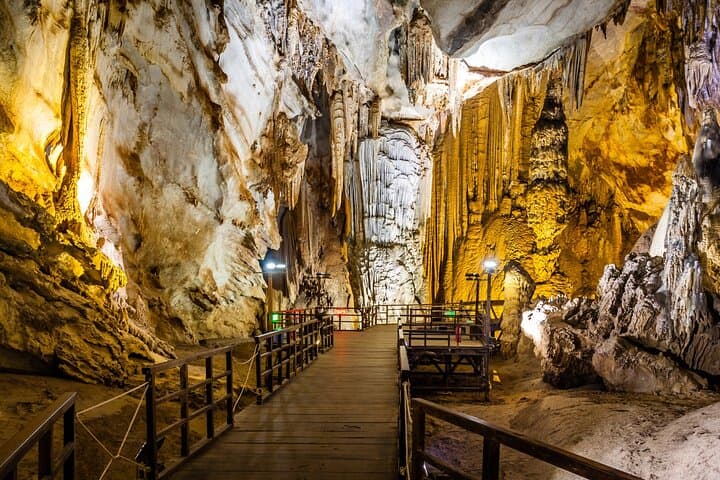
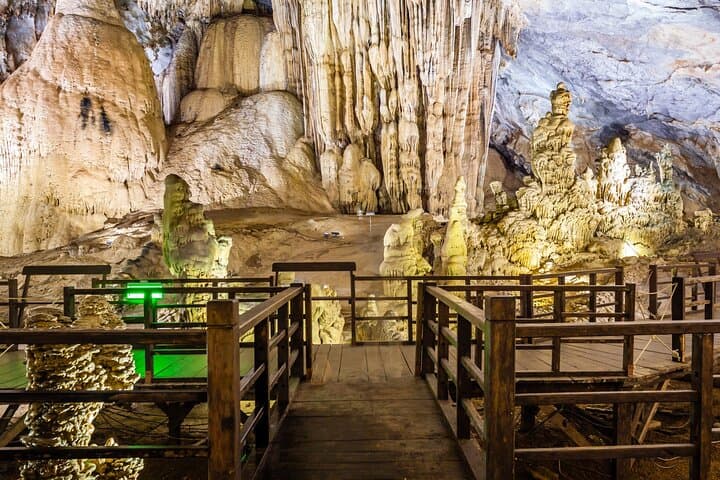
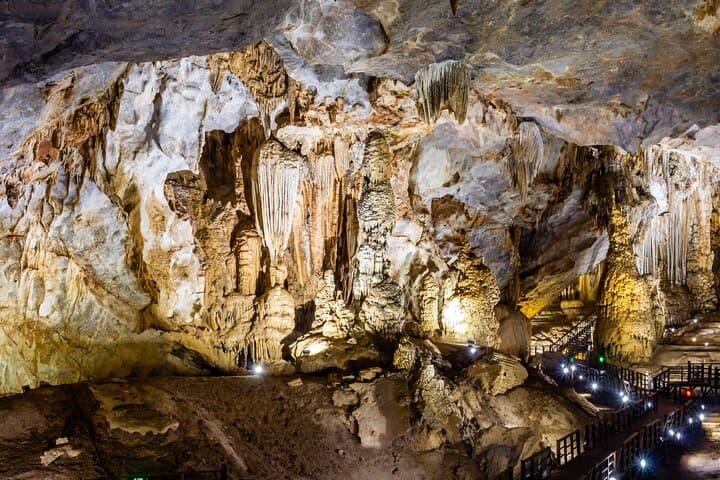
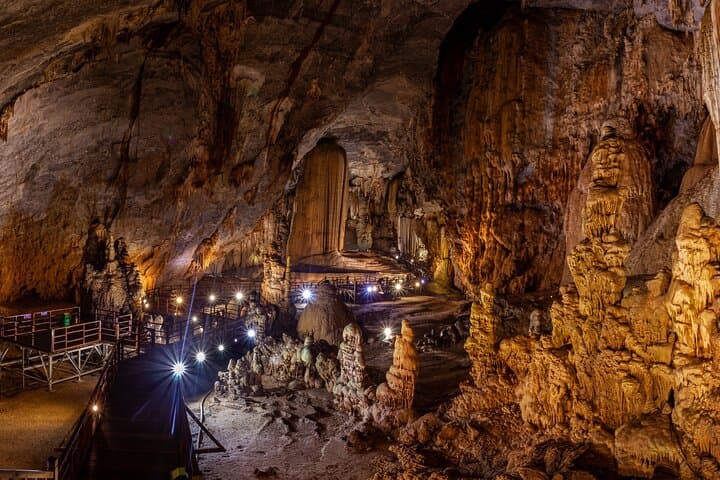
Morning light cuts through the limestone canopy as the transfer winds toward a sweep of karst cliffs—your buggy rattles over jungle tracks, and the air cools with every metre closer to the cave mouth. Step onto the wooden boardwalk and the scale of Paradise Cave reveals itself: cathedral-high chambers, columns like weathered pillars, and formations that catch LED light and throw it back as mineral lace.
Verified experiences and guided adventures in the surrounding area.
Operated by SOVABA TRAVEL · Phong Nha, Quang Binh
Morning light cuts through the limestone canopy as the transfer winds toward a sweep of karst cliffs—your buggy rattles over jungle tracks, and the air cools with every metre closer to the cave mouth. Step onto the wooden boardwalk and the scale of Paradise Cave reveals itself: cathedral-high chambers, columns like weathered pillars, and formations that catch LED light and throw it back as mineral lace.
Phong Nha–Ke Bang is a UNESCO-listed karst landscape carved over hundreds of millions of years; Paradise Cave (Thien Duong) opened to visitors in the 21st century and quickly became a showpiece of dry-cave geology. Guides point out stalactites shaped like lotus petals, flowstone waterfalls, and ceiling chambers that reach around 60 metres—features formed by slow drops of mineral-rich water long before human footsteps.
Culturally, the park sits near villages where rural life still follows the river’s rhythm; local guides add context to the geology with stories of exploration and wartime history that touched these hills.
Practically, the route is built for easy access: a short buggy transfer, a hike up a maintained path, then roughly 1–2 hours of walking on illuminated boardwalks and stairways. Wear sturdy shoes, bring a light layer for the cave’s coolness, and mind your camera’s flash policy to protect formations. Tours commonly include pickup in Phong Nha or Dong Hoi, bottled water, and entrance with tram—making this a compact, high-value morning outing for photographers and nature lovers alike.
easy.
5–8 hours (includes transfers).
Suitable for most fitness levels; expect 1–2 hours walking with some stairs and short uphill approaches
Expect about 1–2 hours of walking on well-maintained wooden boardwalks and stairways covering the main show chambers.
The route is categorized as easy but includes stairs; children and those with limited mobility should assess stair sections—assistance may be required.
Photography for personal use is generally allowed; avoid using flash on delicate formations and follow guide instructions to protect features.
Operators typically offer hotel pickup and drop-off in Phong Nha town and Dong Hoi city; confirm your pickup point when booking.
Phong Nha–Ke Bang was inscribed as a UNESCO World Heritage site for its ancient karst system and extensive caves; many of the formations visible today were formed over hundreds of millions of years.
Stay on boardwalks and avoid touching formations—visitor management and energy-efficient lighting help limit algae growth and preserve delicate cave environments.
SOVABA TRAVEL operates guided outdoor trips and adventures with an emphasis on safety, stewardship, and memorable experiences.
Morning light cuts through the limestone canopy as the transfer winds toward a sweep of karst cliffs—your buggy rattles over jungle tracks, and the air cools with every metre closer to the cave mouth. Step onto the wooden boardwalk and the scale of Paradise Cave reveals itself: cathedral-high chambers, columns like weathered pillars, and formations that catch LED light and throw it back as mineral lace.
Morning light cuts through the limestone canopy as the transfer winds toward a sweep of karst cliffs—your buggy rattles over jungle tracks, and the air cools with every metre closer to the cave mouth. Step onto the wooden boardwalk and the scale of Paradise Cave reveals itself: cathedral-high chambers, columns like weathered pillars, and formations that catch LED light and throw it back as mineral lace.
Phong Nha–Ke Bang is a UNESCO-listed karst landscape carved over hundreds of millions of years; Paradise Cave (Thien Duong) opened to visitors in the 21st century and quickly became a showpiece of dry-cave geology. Guides point out stalactites shaped like lotus petals, flowstone waterfalls, and ceiling chambers that reach around 60 metres—features formed by slow drops of mineral-rich water long before human footsteps.
Culturally, the park sits near villages where rural life still follows the river’s rhythm; local guides add context to the geology with stories of exploration and wartime history that touched these hills.
Practically, the route is built for easy access: a short buggy transfer, a hike up a maintained path, then roughly 1–2 hours of walking on illuminated boardwalks and stairways. Wear sturdy shoes, bring a light layer for the cave’s coolness, and mind your camera’s flash policy to protect formations. Tours commonly include pickup in Phong Nha or Dong Hoi, bottled water, and entrance with tram—making this a compact, high-value morning outing for photographers and nature lovers alike.