THE ADVENTURE COLLECTIVE® · Independent discovery and booking for outdoor travel

Step aboard for a half-day voyage from Cairns to the Outer Great Barrier Reef. Spend up to two hours snorkeling clear reefs with marine guides, wetsuits and masks provided—ideal for both first-timers and experienced snorkelers.
Step aboard for a half-day voyage from Cairns to the Outer Great Barrier Reef. Spend up to two hours snorkeling clear reefs with marine guides, wetsuits and masks provided—ideal for both first-timers and experienced snorkelers.
The morning air off Cairns tastes of salt and diesel as the vessel slips past the marina, engines nudging you toward the ocean’s edge. By the time the shoreline falls away, the water has a different color—green-blue that deepens into sapphire where the outer reef rises like a living wall. Guides brief the group on the deck; a current murmurs against the hull and the reef seems to dare you to jump in.
Verified experiences and guided adventures in the surrounding area.
Operated by Tusa Dive · Cairns, Queensland
The morning air off Cairns tastes of salt and diesel as the vessel slips past the marina, engines nudging you toward the ocean’s edge. By the time the shoreline falls away, the water has a different color—green-blue that deepens into sapphire where the outer reef rises like a living wall. Guides brief the group on the deck; a current murmurs against the hull and the reef seems to dare you to jump in.
The Great Barrier Reef is the planet’s largest coral system, a structure built by coral polyps over millennia and shaped by sea level shifts and tropical currents. Culturally, this stretch of water is part of the traditional sea-country of local First Nations people, whose connection to the reef informs modern protection and visitor practices.
Expect up to a 90-minute wet transit to reach clearer outer-reef sites, then up to two hours in the water exploring coral bommies, swim-throughs and vibrant fish communities. Visibility is usually best on calm mornings; guides point out turtles, reef fish and the reef’s structure while helping newcomers with mask and breathing technique. After snorkeling, the trip back gives time to rinse in hot showers and watch the coastline return.
Practical notes: arrive early, wear reef-safe sunscreen, and listen to briefings—respect for coral and currents keeps the reef healthy and your day enjoyable. If you’re prone to seasickness, take remedies before boarding and plan light meals; the operator provides wetsuits, masks and safety support for all ages.
easy.
5–6 hours.
Suitable for most fitness levels—participants should be comfortable with short swims and basic snorkeling.
The voyage can be up to about 90 minutes each way depending on sea conditions and the captain’s selected site.
Yes—guides supply masks, snorkels, fins and wetsuits or lycra suits, including prescription masks where needed.
Introductory dives are sometimes available as an add-on with pre-booking; divers must complete medical screening and follow local dive rules.
Participants must be at least 4 years old; the trip is suitable for a wide range of fitness levels but those with serious medical issues should consult a physician.
The Great Barrier Reef evolved over thousands of years as coral growth built complex reef structures; it’s also part of the sea-country of Indigenous groups who have managed these waters for generations.
The reef faces warming and bleaching events; follow operator guidelines, use reef-safe products and avoid touching or standing on coral to minimize impact.
Tusa Dive operates guided outdoor trips and adventures with an emphasis on safety, stewardship, and memorable experiences.
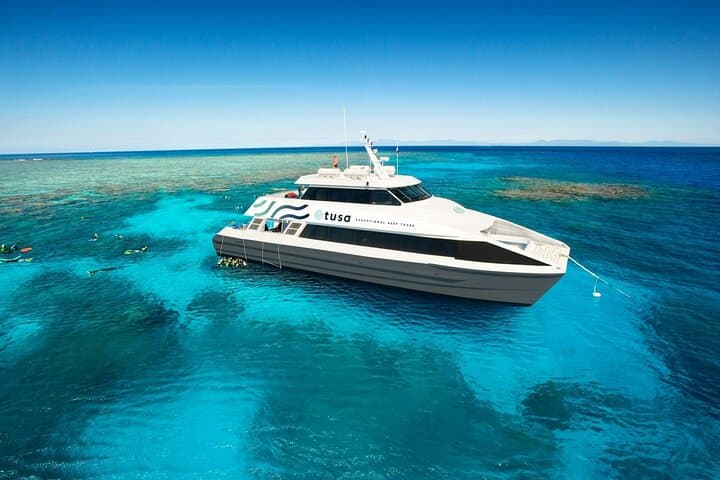
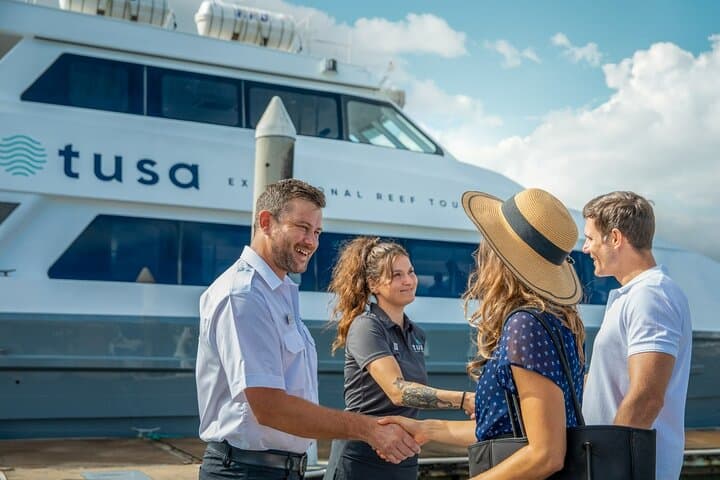


The morning air off Cairns tastes of salt and diesel as the vessel slips past the marina, engines nudging you toward the ocean’s edge. By the time the shoreline falls away, the water has a different color—green-blue that deepens into sapphire where the outer reef rises like a living wall. Guides brief the group on the deck; a current murmurs against the hull and the reef seems to dare you to jump in.
The morning air off Cairns tastes of salt and diesel as the vessel slips past the marina, engines nudging you toward the ocean’s edge. By the time the shoreline falls away, the water has a different color—green-blue that deepens into sapphire where the outer reef rises like a living wall. Guides brief the group on the deck; a current murmurs against the hull and the reef seems to dare you to jump in.
The Great Barrier Reef is the planet’s largest coral system, a structure built by coral polyps over millennia and shaped by sea level shifts and tropical currents. Culturally, this stretch of water is part of the traditional sea-country of local First Nations people, whose connection to the reef informs modern protection and visitor practices.
Expect up to a 90-minute wet transit to reach clearer outer-reef sites, then up to two hours in the water exploring coral bommies, swim-throughs and vibrant fish communities. Visibility is usually best on calm mornings; guides point out turtles, reef fish and the reef’s structure while helping newcomers with mask and breathing technique. After snorkeling, the trip back gives time to rinse in hot showers and watch the coastline return.
Practical notes: arrive early, wear reef-safe sunscreen, and listen to briefings—respect for coral and currents keeps the reef healthy and your day enjoyable. If you’re prone to seasickness, take remedies before boarding and plan light meals; the operator provides wetsuits, masks and safety support for all ages.