THE ADVENTURE COLLECTIVE® · Independent discovery and booking for outdoor travel

Escape Marrakech for a half-day drive into the High Atlas foothills to Setti Fatma and the Ourika Valley. Expect terraced farms, an argan‑oil cooperative and a 30–45 minute uphill walk to a series of tumbling waterfalls.
Escape Marrakech for a half-day drive into the High Atlas foothills to Setti Fatma and the Ourika Valley. Expect terraced farms, an argan‑oil cooperative and a 30–45 minute uphill walk to a series of tumbling waterfalls.
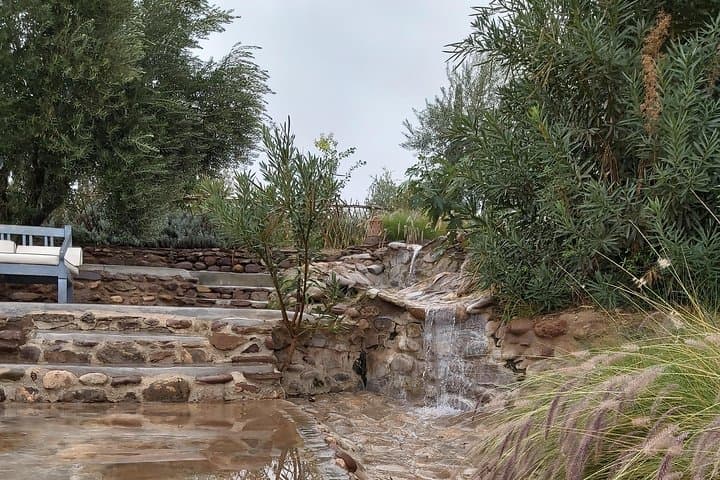
The van eases out of Marrakech and the city noise gives way to rising hills and a thread of river that seems to dare you farther up the valley. Within 30 km the road bends into terraced farms and ochre villages; olive trees crowd the slope and the scent of earth and thyme rides the air. Arrive at the village near Setti Fatma and a short, well-marked trail leads to a cluster of tiered cascades — the falls tumble over weathered schist, carving channels that glint when the sun breaks through.
Verified experiences and guided adventures in the surrounding area.
Operated by Marrakesh Indeed · Setti Fatma, Marrakech-Safi
The van eases out of Marrakech and the city noise gives way to rising hills and a thread of river that seems to dare you farther up the valley. Within 30 km the road bends into terraced farms and ochre villages; olive trees crowd the slope and the scent of earth and thyme rides the air. Arrive at the village near Setti Fatma and a short, well-marked trail leads to a cluster of tiered cascades — the falls tumble over weathered schist, carving channels that glint when the sun breaks through.
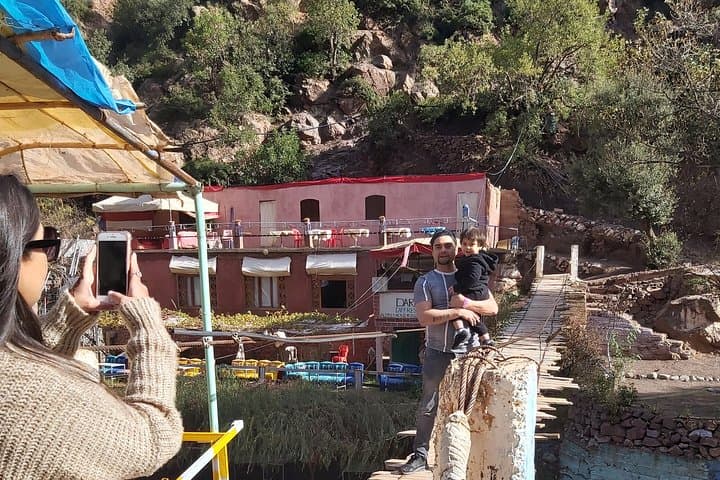
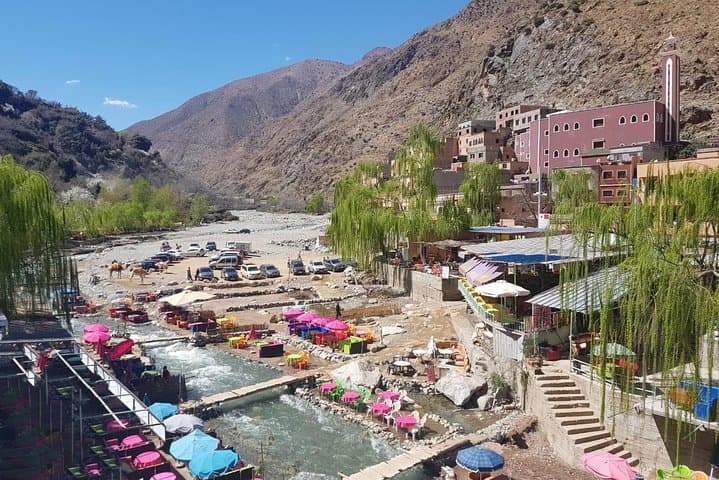
Geologically, the Ourika Valley is an incision of the High Atlas foothills, where sedimentary layers tilt and fold under millennia of winter runoff. Culturally this is Berber country: villages of stone houses, small argan groves and cooperative stalls where women press nuts into oil and serve you mint tea and amlou — a rich paste of argan, almonds and honey. The road from Marrakech is mostly paved but narrows as it approaches the higher hamlets; local restaurants perch above the river and footbridges connect trails.
Practical guidance: plan for a half-day (about 3–4 hours on tour); the hike to the main cascades is a 30–45 minute uphill walk on rocky, sometimes slippery paths. Wear sturdy shoes, bring sun protection and cash for cooperative purchases and tips. Hydrate before the walk — bottled water is usually provided — and be prepared to yield on narrow steps to locals. If you prefer a gentler pace, request extra stops at panoramic viewpoints or longer time at the argan cooperative for tastings and photos.
moderate.
3–4 hours.
Moderate fitness required for short uphill walks and uneven terrain; able-bodied travelers comfortable with 30–45 minute hikes will manage.
The village near Setti Fatma is about 30 km from Marrakech, typically a 40–60 minute drive depending on traffic and route.
The main path is a 30–45 minute uphill trail with uneven rock and steps — suitable for most with moderate mobility but not recommended for those with serious spinal or mobility issues.
Bottled water and a meal are typically included on the tour, and visitors can sample argan products and tea at the women’s cooperative (often for purchase).
Yes — families commonly join; infants can use strollers to an extent but the waterfall trail requires carrying young children or using a carrier for the hillside section.
The valley has long been inhabited by Amazigh (Berber) communities who farm terraced slopes and harvest argan and olives; Setti Fatma grew as a stopping point for shepherds and traders.
Argan cooperatives support local livelihoods and help protect argan woodlands; visitors should avoid disturbing vegetation and pack out waste to minimize impact.
Marrakesh Indeed operates guided outdoor trips and adventures with an emphasis on safety, stewardship, and memorable experiences.
The van eases out of Marrakech and the city noise gives way to rising hills and a thread of river that seems to dare you farther up the valley. Within 30 km the road bends into terraced farms and ochre villages; olive trees crowd the slope and the scent of earth and thyme rides the air. Arrive at the village near Setti Fatma and a short, well-marked trail leads to a cluster of tiered cascades — the falls tumble over weathered schist, carving channels that glint when the sun breaks through.
The van eases out of Marrakech and the city noise gives way to rising hills and a thread of river that seems to dare you farther up the valley. Within 30 km the road bends into terraced farms and ochre villages; olive trees crowd the slope and the scent of earth and thyme rides the air. Arrive at the village near Setti Fatma and a short, well-marked trail leads to a cluster of tiered cascades — the falls tumble over weathered schist, carving channels that glint when the sun breaks through.
Geologically, the Ourika Valley is an incision of the High Atlas foothills, where sedimentary layers tilt and fold under millennia of winter runoff. Culturally this is Berber country: villages of stone houses, small argan groves and cooperative stalls where women press nuts into oil and serve you mint tea and amlou — a rich paste of argan, almonds and honey. The road from Marrakech is mostly paved but narrows as it approaches the higher hamlets; local restaurants perch above the river and footbridges connect trails.
Practical guidance: plan for a half-day (about 3–4 hours on tour); the hike to the main cascades is a 30–45 minute uphill walk on rocky, sometimes slippery paths. Wear sturdy shoes, bring sun protection and cash for cooperative purchases and tips. Hydrate before the walk — bottled water is usually provided — and be prepared to yield on narrow steps to locals. If you prefer a gentler pace, request extra stops at panoramic viewpoints or longer time at the argan cooperative for tastings and photos.