THE ADVENTURE COLLECTIVE® · Independent discovery and booking for outdoor travel

Explore Old Dhaka’s compact, layered history on a private half-day tour that links Lalbagh Fort, Ahsan Manzil and Shaheed Minar. This guided route highlights Mughal remnants, colonial civic architecture, and modern national landmarks with local context and practical tips.
Explore Old Dhaka’s compact, layered history on a private half-day tour that links Lalbagh Fort, Ahsan Manzil and Shaheed Minar. This guided route highlights Mughal remnants, colonial civic architecture, and modern national landmarks with local context and practical tips.
You step out of an air-conditioned vehicle into a swarm of rickshaws, the Buriganga’s brown ribbon glinting in breaks between brick façades. Old Dhaka doesn’t ease you in; it presses its stories close — callused hands bargaining over spices, mosque domes puncturing the skyline, and the steady hum of life that has threaded this quarter for four centuries.
Verified experiences and guided adventures in the surrounding area.
Operated by Travel Mate · Dhaka, Dhaka Division
You step out of an air-conditioned vehicle into a swarm of rickshaws, the Buriganga’s brown ribbon glinting in breaks between brick façades. Old Dhaka doesn’t ease you in; it presses its stories close — callused hands bargaining over spices, mosque domes puncturing the skyline, and the steady hum of life that has threaded this quarter for four centuries.
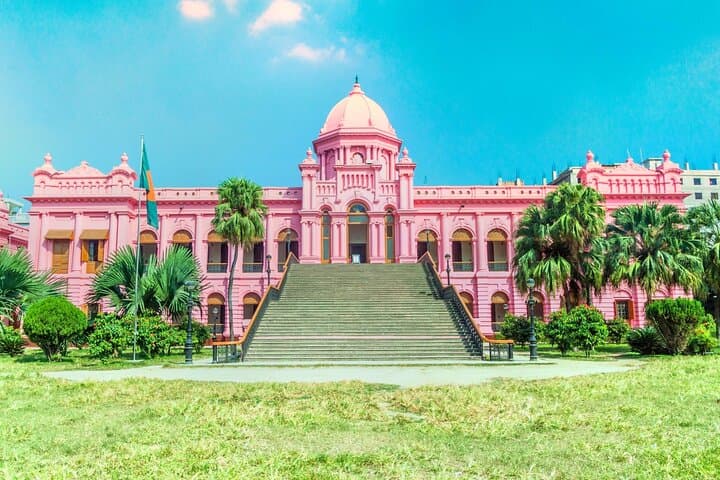
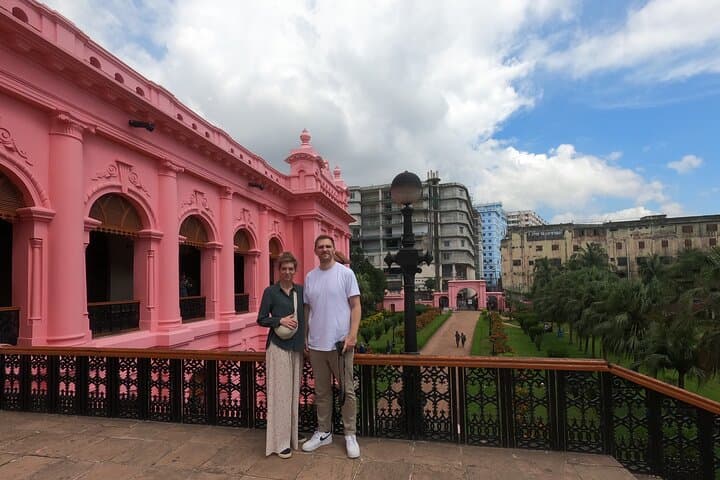
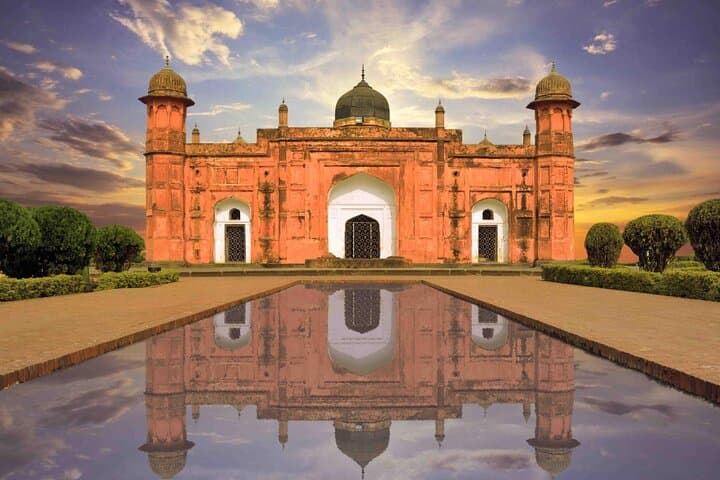
This private half-day itinerary stitches together Mughal-era sites, colonial-era civic buildings, and 20th-century national landmarks. Visitors typically see Lalbagh Fort’s unfinished ramparts beside the river, the rose‑colored curve of Ahsan Manzil that recalls Nawabi pageantry, and the solemn Shaheed Minar commemorating the 1952 Bengali Language Movement. The area’s geology is flat alluvial plain fed by the Ganges-Brahmaputra delta; the Buriganga once made Old Dhaka a trading hub, shaping its narrow lanes and market clusters.
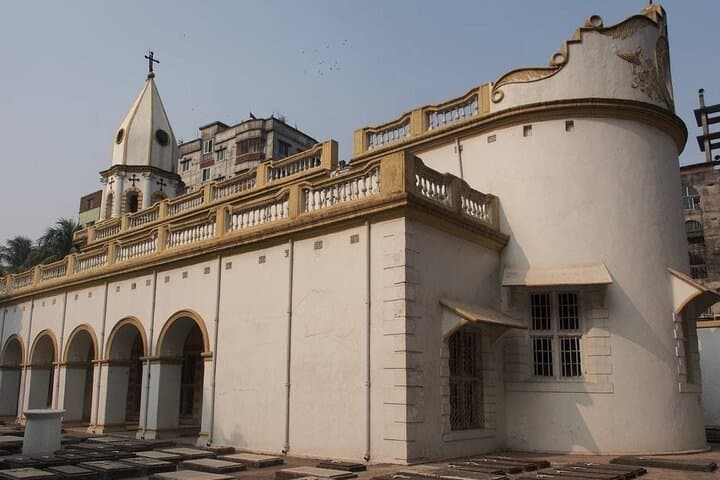
Culturally, the route runs through plural religious history — mosques, temples, and an Armenian church — and through neighborhoods where craftsmen still turn conch shell ornaments and weave saris. Expect tight lanes, sudden courtyards, and steep social textures more than open trails.
Practical guidance: wear closed, comfortable shoes and carry water; humidity can be high and surfaces may be slick near the river. Start early to avoid midday heat, and keep modest clothing for temple and mosque visits. Photography is usually welcome but ask at religious sites. The private format means local insight — bring questions about language, Mughal architecture, and the city’s river economy to make the most of five hours in one of South Asia’s most concentrated historic cores.
easy.
5 hours.
Suitable for light walking and those comfortable with urban strolls and short periods standing; minimal fitness required.
The operator typically offers hotel pickup in central Dhaka and returns you to your pickup point or a nearby drop-off within Old Dhaka.
Yes — the itinerary is listed as physically easy and wheelchair/stroller accessible in many sections, though some laneways may be crowded or uneven.
Admissions vary by site and operator; confirm with the booking whether tickets are included to avoid surprises.
Photography is generally allowed in public spaces; ask permission before photographing inside religious sites or of individuals, and follow your guide’s direction.
Old Dhaka was a Mughal provincial capital in the 17th century and later a center of colonial trade and 20th‑century political movements, including the Bengali Language Movement.
Riverfront pollution and rapid urban development strain historic fabric; choose certified local guides and avoid buying items made from endangered materials to reduce impact.
Travel Mate operates guided outdoor trips and adventures with an emphasis on safety, stewardship, and memorable experiences.
You step out of an air-conditioned vehicle into a swarm of rickshaws, the Buriganga’s brown ribbon glinting in breaks between brick façades. Old Dhaka doesn’t ease you in; it presses its stories close — callused hands bargaining over spices, mosque domes puncturing the skyline, and the steady hum of life that has threaded this quarter for four centuries.
You step out of an air-conditioned vehicle into a swarm of rickshaws, the Buriganga’s brown ribbon glinting in breaks between brick façades. Old Dhaka doesn’t ease you in; it presses its stories close — callused hands bargaining over spices, mosque domes puncturing the skyline, and the steady hum of life that has threaded this quarter for four centuries.
This private half-day itinerary stitches together Mughal-era sites, colonial-era civic buildings, and 20th-century national landmarks. Visitors typically see Lalbagh Fort’s unfinished ramparts beside the river, the rose‑colored curve of Ahsan Manzil that recalls Nawabi pageantry, and the solemn Shaheed Minar commemorating the 1952 Bengali Language Movement. The area’s geology is flat alluvial plain fed by the Ganges-Brahmaputra delta; the Buriganga once made Old Dhaka a trading hub, shaping its narrow lanes and market clusters.
Culturally, the route runs through plural religious history — mosques, temples, and an Armenian church — and through neighborhoods where craftsmen still turn conch shell ornaments and weave saris. Expect tight lanes, sudden courtyards, and steep social textures more than open trails.
Practical guidance: wear closed, comfortable shoes and carry water; humidity can be high and surfaces may be slick near the river. Start early to avoid midday heat, and keep modest clothing for temple and mosque visits. Photography is usually welcome but ask at religious sites. The private format means local insight — bring questions about language, Mughal architecture, and the city’s river economy to make the most of five hours in one of South Asia’s most concentrated historic cores.