THE ADVENTURE COLLECTIVE® · Independent discovery and booking for outdoor travel

Swap a car for a saddle and ride four hours through Napa and Sonoma’s vineyard-scored hills. This half-day off-road tour combines gravel tracks, a winery tasting, and an olive-oil stop for a sensory-packed view of wine country.
Swap a car for a saddle and ride four hours through Napa and Sonoma’s vineyard-scored hills. This half-day off-road tour combines gravel tracks, a winery tasting, and an olive-oil stop for a sensory-packed view of wine country.
You start on a quiet county road with grapevines leaning like rows of green ribs, the air edged with fermenting grape skins and crushed herbs from nearby hedgerows. For four hours you trade a car’s window for a saddle—pedaling past stone winery buildings, scrub oaks, and the occasional olive grove where the scent of pressed oil mingles with warm earth.
Verified experiences and guided adventures in the surrounding area.
You start on a quiet county road with grapevines leaning like rows of green ribs, the air edged with fermenting grape skins and crushed herbs from nearby hedgerows. For four hours you trade a car’s window for a saddle—pedaling past stone winery buildings, scrub oaks, and the occasional olive grove where the scent of pressed oil mingles with warm earth.
This route threads through the northern reaches of Napa and Sonoma Valleys, regions shaped by uplifted marine sediments and volcanic collisions over millions of years, now softened into rolling hills ideal for viticulture. European winemaking traditions arrived in the 1800s; today small family estates sit beside larger producers, and local olive oil presses mark a Mediterranean agricultural feel.
The ride itself is largely off-road farm and secondary roads: expect 12–18 miles of mixed packed dirt and gravel with gentle, rolling climbs totaling roughly 400–600 feet of elevation gain. Terrain rewards you with vineyard panoramas and close looks at varietals—cabernet, pinot, chardonnay—and the odd red-tailed hawk circling overhead. Guides typically stop at one winery for a tasting and at a working olive oil mill for a sample and tour.
Practical notes: bring a helmet, sun protection, and a refillable water bottle; cell service is patchy in valley bottoms. Morning departures are cooler and quieter; harvest season (late summer–fall) is lively and busier. If you want photos, charge your camera and secure a small handlebar bag. The ride is accessible to regular cyclists who can handle short climbs and light off-road surfaces—expect an active, sensory way to experience wine country without the confinement of a vehicle.
moderate.
4 hours.
Good cardiovascular fitness for steady pedaling and short climbs; comfortable on mixed gravel and dirt.
The half-day itinerary covers roughly 12–18 miles on mixed gravel and secondary roads with about 400–600 feet of total climb—moderate difficulty suitable for accustomed recreational cyclists.
Most operators supply well-maintained hybrid or mountain bikes, helmets, and a short skills briefing; confirm size availability when booking.
Yes—typical itineraries include a stop at one local winery for a tasting and a visit to an olive oil mill for sampling; bring ID and expect tasting fees included or as an add-on depending on the operator.
Children with appropriate-sized bikes and riding experience can join, but organizers may set a minimum age or require parents to assess technical ability on gravel surfaces.
European-style vineyards arrived in the 19th century; the region’s modern wine identity grew after mid-20th-century plantings and post-Prohibition revival.
Many vineyards use sustainable practices—look for organic or certified sustainable labels; stay on roads to protect root systems and avoid disturbing wildlife.
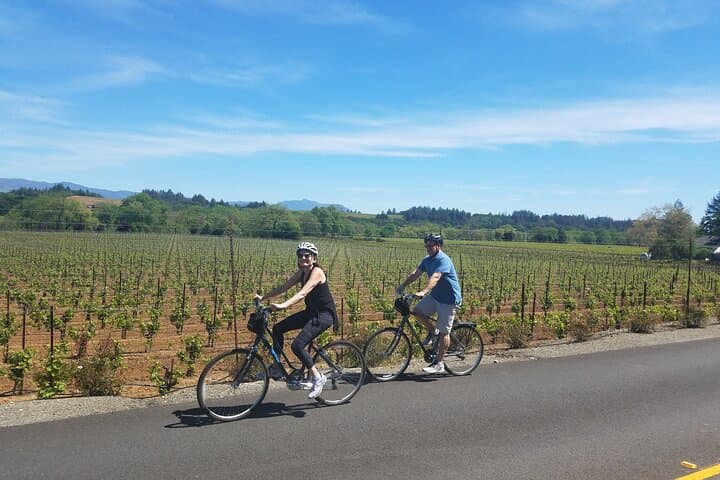
You start on a quiet county road with grapevines leaning like rows of green ribs, the air edged with fermenting grape skins and crushed herbs from nearby hedgerows. For four hours you trade a car’s window for a saddle—pedaling past stone winery buildings, scrub oaks, and the occasional olive grove where the scent of pressed oil mingles with warm earth.
You start on a quiet county road with grapevines leaning like rows of green ribs, the air edged with fermenting grape skins and crushed herbs from nearby hedgerows. For four hours you trade a car’s window for a saddle—pedaling past stone winery buildings, scrub oaks, and the occasional olive grove where the scent of pressed oil mingles with warm earth.
This route threads through the northern reaches of Napa and Sonoma Valleys, regions shaped by uplifted marine sediments and volcanic collisions over millions of years, now softened into rolling hills ideal for viticulture. European winemaking traditions arrived in the 1800s; today small family estates sit beside larger producers, and local olive oil presses mark a Mediterranean agricultural feel.
The ride itself is largely off-road farm and secondary roads: expect 12–18 miles of mixed packed dirt and gravel with gentle, rolling climbs totaling roughly 400–600 feet of elevation gain. Terrain rewards you with vineyard panoramas and close looks at varietals—cabernet, pinot, chardonnay—and the odd red-tailed hawk circling overhead. Guides typically stop at one winery for a tasting and at a working olive oil mill for a sample and tour.
Practical notes: bring a helmet, sun protection, and a refillable water bottle; cell service is patchy in valley bottoms. Morning departures are cooler and quieter; harvest season (late summer–fall) is lively and busier. If you want photos, charge your camera and secure a small handlebar bag. The ride is accessible to regular cyclists who can handle short climbs and light off-road surfaces—expect an active, sensory way to experience wine country without the confinement of a vehicle.