THE ADVENTURE COLLECTIVE® · Independent discovery and booking for outdoor travel

In a brisk three- to four-hour loop, this guided car tour threads together Nha Trang’s coastal geology, Cham-era temples, and city markets. It’s an efficient morning sampler for travelers who want cultural context and coastal views without leaving town.
In a brisk three- to four-hour loop, this guided car tour threads together Nha Trang’s coastal geology, Cham-era temples, and city markets. It’s an efficient morning sampler for travelers who want cultural context and coastal views without leaving town.
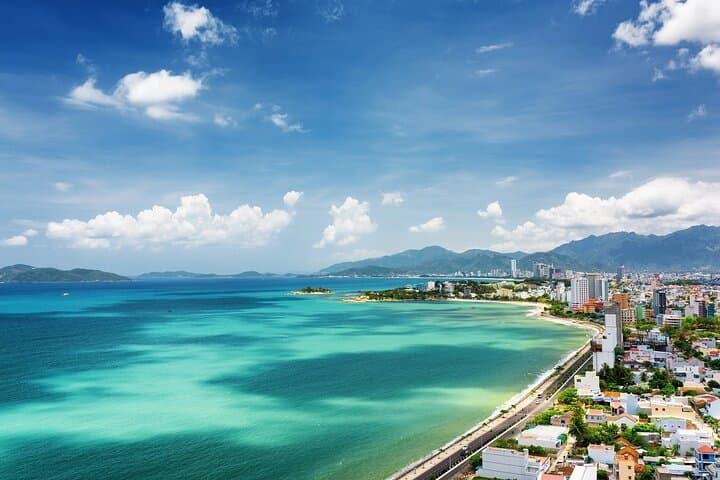
Morning light spills across the South China Sea and the driver eases the minivan up toward La San foothill; the rocks at Hon Chong appear like an argument between wave and stone, each boulder daring the next to fall. A guide steps out, nods toward the five-finger indentation on the highest block, and for a moment the city’s rhythm slows—traffic hums a few streets away, while the ocean pushes forward, relentless and patient.
Verified experiences and guided adventures in the surrounding area.
Operated by Iztrip · Nha Trang, Khánh Hòa
Morning light spills across the South China Sea and the driver eases the minivan up toward La San foothill; the rocks at Hon Chong appear like an argument between wave and stone, each boulder daring the next to fall. A guide steps out, nods toward the five-finger indentation on the highest block, and for a moment the city’s rhythm slows—traffic hums a few streets away, while the ocean pushes forward, relentless and patient.
This half-day circuit stitches together Nha Trang’s coastal geology and layered history. Hon Chong is raw geology made public art—granite outcrops scoured by wind and salt that local folklore has turned into a giant palm pointing seaward. From there the tour moves inland to the Po Nagar Cham Towers, a compact complex begun in the 8th century by the Cham people. Its sandstone blocks and sculpted lintels hold stories of maritime trade and Hindu-Buddhist practice long before modern Nha Trang rose along the bay.
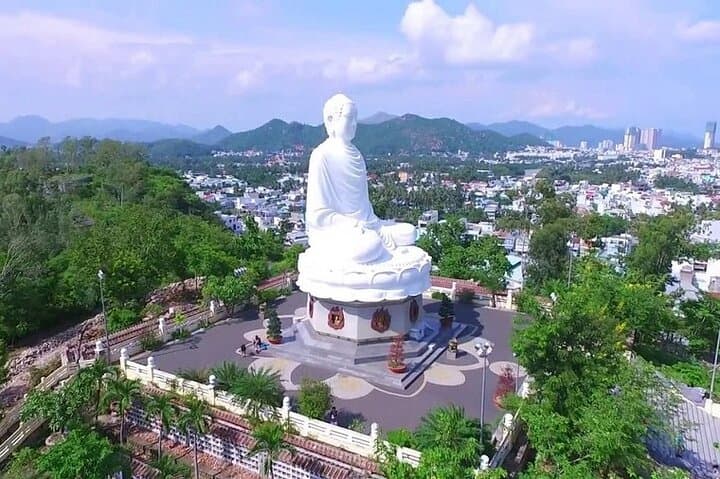
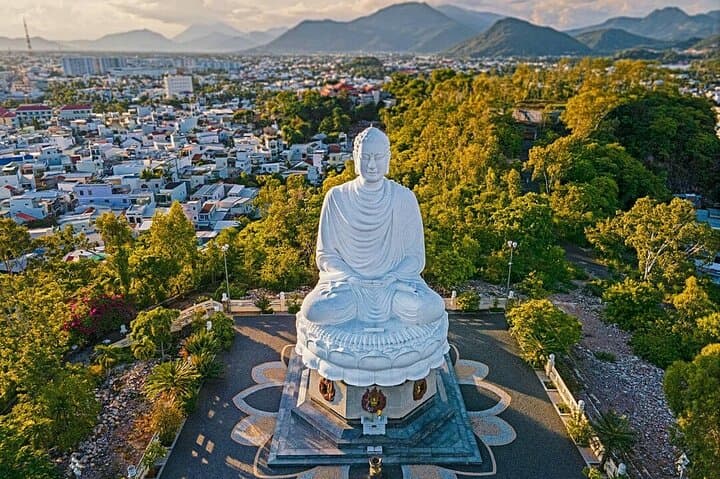
Continuing up the hill, Long Son Pagoda’s giant white Buddha dominates the skyline—an easy landmark and a symbol of 19th- and 20th-century religious revival in the region. Nha Trang Cathedral follows, an austere stone church with a European Gothic silhouette that reflects the French colonial imprint on local architecture. The final stop, Dam Market, is where the city’s present-day commerce and coastal culture meet: fish stalls, lacquerware, and vendors selling herbal teas and dried squid.
Practical realities: the route is driven, with short walks at each stop (paved or well-graded ramps and steps at the temples). The tour lasts roughly three to four hours, making it an ideal morning opener before a beach afternoon or island boat trip. Guides provide context—translations of inscriptions, tips on respectful dress for religious sites, and shortcuts through market lanes.
Tips for planning: aim for the morning pick-up window to avoid midday heat and market crowds; bring a hat and light rain layer during the wet season; carry local currency for small purchases at Dam Market. The tour is accessible for most travelers but includes steps and short stair climbs to viewpoints at the pagoda and towers. Bring a camera with a mid-range zoom for portraits in the market and wide-angle shots at Hon Chong and the bay.
For travelers who want a compact introduction to Nha Trang’s cultural geography, this half-day car excursion is an efficient, sensory-rich primer. It’s less about high-octane adventure and more about layering sights, sounds, and histories into a single morning you can still spend relaxing on the sand by noon.
easy.
3–4 hours.
Suitable for light fitness—short walks and stair climbs; no sustained exertion.
The excursion runs approximately 3–4 hours, depending on traffic and time spent at each stop.
Yes—pickup from most hotels near Bãi Tắm Hòn Chồng is provided; specify your pickup point at booking.
Entrance fees for the listed sites and bottled water are included in the tour price.
Infants must sit on an adult’s lap; the itinerary is generally suitable for families but includes some stairs.
Yes—vegetarian, vegan, and gluten-free options can be arranged if requested at booking.
The operator may cancel for bad weather; the cancellation policy indicates all sales are final but tours can be canceled if conditions are unsafe.
Po Nagar Cham Towers date to the 8th century and reflect the maritime Cham kingdom that once dominated central Vietnam’s coast.
Tour operators encourage staying on designated paths at Hon Chong to protect fragile rock and vegetation; support local vendors to benefit community livelihoods.
Iztrip operates guided outdoor trips and adventures with an emphasis on safety, stewardship, and memorable experiences.

Morning light spills across the South China Sea and the driver eases the minivan up toward La San foothill; the rocks at Hon Chong appear like an argument between wave and stone, each boulder daring the next to fall. A guide steps out, nods toward the five-finger indentation on the highest block, and for a moment the city’s rhythm slows—traffic hums a few streets away, while the ocean pushes forward, relentless and patient.
Morning light spills across the South China Sea and the driver eases the minivan up toward La San foothill; the rocks at Hon Chong appear like an argument between wave and stone, each boulder daring the next to fall. A guide steps out, nods toward the five-finger indentation on the highest block, and for a moment the city’s rhythm slows—traffic hums a few streets away, while the ocean pushes forward, relentless and patient.
This half-day circuit stitches together Nha Trang’s coastal geology and layered history. Hon Chong is raw geology made public art—granite outcrops scoured by wind and salt that local folklore has turned into a giant palm pointing seaward. From there the tour moves inland to the Po Nagar Cham Towers, a compact complex begun in the 8th century by the Cham people. Its sandstone blocks and sculpted lintels hold stories of maritime trade and Hindu-Buddhist practice long before modern Nha Trang rose along the bay.
Continuing up the hill, Long Son Pagoda’s giant white Buddha dominates the skyline—an easy landmark and a symbol of 19th- and 20th-century religious revival in the region. Nha Trang Cathedral follows, an austere stone church with a European Gothic silhouette that reflects the French colonial imprint on local architecture. The final stop, Dam Market, is where the city’s present-day commerce and coastal culture meet: fish stalls, lacquerware, and vendors selling herbal teas and dried squid.
Practical realities: the route is driven, with short walks at each stop (paved or well-graded ramps and steps at the temples). The tour lasts roughly three to four hours, making it an ideal morning opener before a beach afternoon or island boat trip. Guides provide context—translations of inscriptions, tips on respectful dress for religious sites, and shortcuts through market lanes.
Tips for planning: aim for the morning pick-up window to avoid midday heat and market crowds; bring a hat and light rain layer during the wet season; carry local currency for small purchases at Dam Market. The tour is accessible for most travelers but includes steps and short stair climbs to viewpoints at the pagoda and towers. Bring a camera with a mid-range zoom for portraits in the market and wide-angle shots at Hon Chong and the bay.
For travelers who want a compact introduction to Nha Trang’s cultural geography, this half-day car excursion is an efficient, sensory-rich primer. It’s less about high-octane adventure and more about layering sights, sounds, and histories into a single morning you can still spend relaxing on the sand by noon.