THE ADVENTURE COLLECTIVE® · Independent discovery and booking for outdoor travel

Explore Muscat in a focused half-day: the Sultan Qaboos Grand Mosque, Bait Al Zubair museum, the bustling Muttrah Souq and Old Muscat’s palace and forts. Practical, guided, and paced for a single morning of cultural immersion.
Explore Muscat in a focused half-day: the Sultan Qaboos Grand Mosque, Bait Al Zubair museum, the bustling Muttrah Souq and Old Muscat’s palace and forts. Practical, guided, and paced for a single morning of cultural immersion.
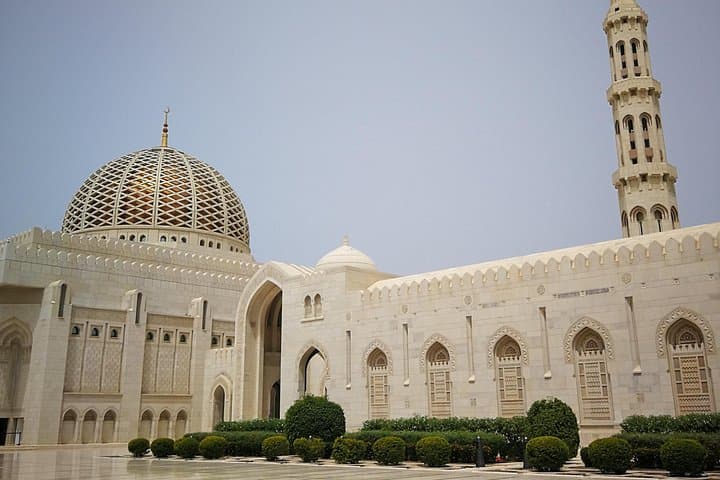
Morning light washes the mosque's white marble in a sharp, geometric glow; the main prayer hall stretches quiet and cool under a massive chandelier while your guide outlines five minarets that mark the pillars of Islam. This half-day tour threads those architectural lines into the living city — a measured walk through Oman’s modern identity and its older coastal heartbeat.
Verified experiences and guided adventures in the surrounding area.
Operated by Hashtag Oman Tourism · Muscat, Muscat Governorate
Morning light washes the mosque's white marble in a sharp, geometric glow; the main prayer hall stretches quiet and cool under a massive chandelier while your guide outlines five minarets that mark the pillars of Islam. This half-day tour threads those architectural lines into the living city — a measured walk through Oman’s modern identity and its older coastal heartbeat.
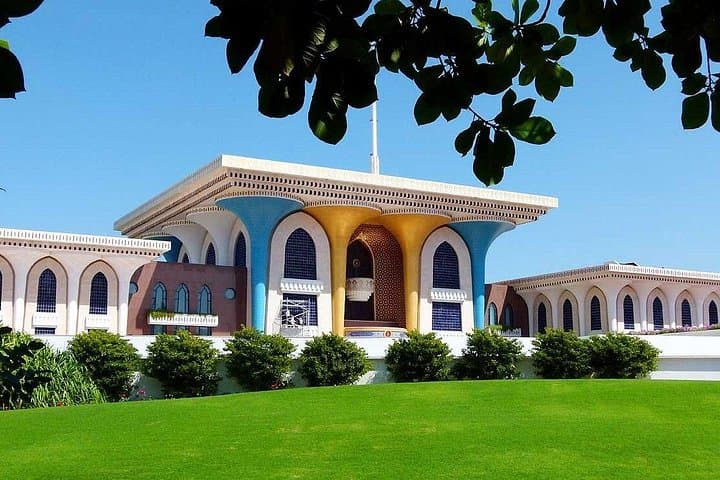
Begin with the Sultan Qaboos Grand Mosque, built by the late Sultan and designed to be both a place of worship and a learning centre. The tour then moves to Bait Al Zubair, a small museum that charts Oman’s material culture through jewelry, costumes and household objects, offering context to the coastal trade that shaped Muscat. Muttrah Souq follows: narrow alleys, brass lamps, spices and goldsmiths where bargaining is part of the rhythm. Finish with a stroll around Old Muscat and photo stops at Al Alam Palace and the 16th-century Portuguese forts of Jalali and Mirani, which sit like watchful stone on the harbour lip.
Geology here is straightforward — a coastal strip backed by arid foothills — but it’s the human geography that matters: sea trade, frankincense routes and Portuguese occupation left clear marks on the streets and forts. Expect moderate walking on paved streets, crowded market alleys and cultural protocols — modest dress and respectful behavior inside religious sites. Bring water, sun protection and small bills for market purchases. With a private guide and a compact schedule, this tour gives a practical, sensory primer on Muscat’s past and present in roughly four hours.
easy.
4 hours.
Light fitness — able to walk on paved surfaces for several short stretches and stand for museum stops
Yes — the tour includes admission and a guided visit; note some areas are restricted during prayer times.
Photography is allowed in most outdoor and public areas, but avoid photographing worshippers inside the mosque and comply with any signposted restrictions.
Guides can explain local customs and assist with introductions, but bargaining is expected between buyer and vendor.
Yes; the tour notes infants must sit on laps and infant seats are available, but bring shade and water for young children.
Muscat’s coastal position made it a hub of Omani seafaring and trade; Portuguese occupations in the 16th century left the forts of Jalali and Mirani overlooking the harbor.
Water is scarce in Oman — minimize waste and use bottled water sparingly; avoid buying coral or shells to protect marine habitats.
Hashtag Oman Tourism operates guided outdoor trips and adventures with an emphasis on safety, stewardship, and memorable experiences.
Morning light washes the mosque's white marble in a sharp, geometric glow; the main prayer hall stretches quiet and cool under a massive chandelier while your guide outlines five minarets that mark the pillars of Islam. This half-day tour threads those architectural lines into the living city — a measured walk through Oman’s modern identity and its older coastal heartbeat.
Morning light washes the mosque's white marble in a sharp, geometric glow; the main prayer hall stretches quiet and cool under a massive chandelier while your guide outlines five minarets that mark the pillars of Islam. This half-day tour threads those architectural lines into the living city — a measured walk through Oman’s modern identity and its older coastal heartbeat.
Begin with the Sultan Qaboos Grand Mosque, built by the late Sultan and designed to be both a place of worship and a learning centre. The tour then moves to Bait Al Zubair, a small museum that charts Oman’s material culture through jewelry, costumes and household objects, offering context to the coastal trade that shaped Muscat. Muttrah Souq follows: narrow alleys, brass lamps, spices and goldsmiths where bargaining is part of the rhythm. Finish with a stroll around Old Muscat and photo stops at Al Alam Palace and the 16th-century Portuguese forts of Jalali and Mirani, which sit like watchful stone on the harbour lip.
Geology here is straightforward — a coastal strip backed by arid foothills — but it’s the human geography that matters: sea trade, frankincense routes and Portuguese occupation left clear marks on the streets and forts. Expect moderate walking on paved streets, crowded market alleys and cultural protocols — modest dress and respectful behavior inside religious sites. Bring water, sun protection and small bills for market purchases. With a private guide and a compact schedule, this tour gives a practical, sensory primer on Muscat’s past and present in roughly four hours.