THE ADVENTURE COLLECTIVE® · Independent discovery and booking for outdoor travel

Walk through Muscat’s most recognizable sites in a compact half-day: the Grand Mosque, Mutrah Souq, Al Alam Palace and the twin forts. This guide explains what you’ll see, cultural notes, and practical tips to get the most from the morning light and the markets.
Walk through Muscat’s most recognizable sites in a compact half-day: the Grand Mosque, Mutrah Souq, Al Alam Palace and the twin forts. This guide explains what you’ll see, cultural notes, and practical tips to get the most from the morning light and the markets.
You step out of the car onto warm tarmac and the Grand Mosque rises ahead, its pale stone catching morning light like a quiet promise. The driver guides you through Muscat’s low-slung neighborhoods, the sea daring you toward the Mutrah Corniche while the twin forts of Jalali and Mirani loom over the harbor, stern and watchful.
Verified experiences and guided adventures in the surrounding area.
Operated by Oman Day Tours · Muscat, Muscat Governorate
You step out of the car onto warm tarmac and the Grand Mosque rises ahead, its pale stone catching morning light like a quiet promise. The driver guides you through Muscat’s low-slung neighborhoods, the sea daring you toward the Mutrah Corniche while the twin forts of Jalali and Mirani loom over the harbor, stern and watchful.
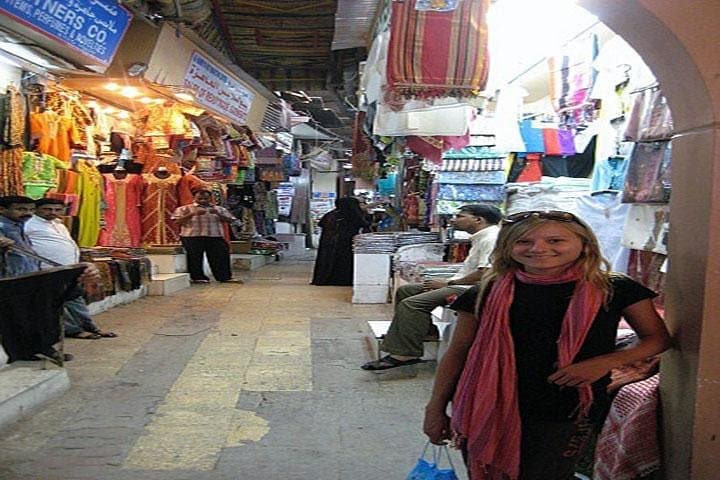
Muscat’s story is maritime and imperial: a port city shaped by monsoon trade, Portuguese forts from the 16th century, and Omani rule centered on the Al Alam Palace. Geologically, the coast sits where narrow coastal plains meet rugged Hajjar foothills; expect paved roads, stepped fort approaches and narrow market alleys. Culture is visible—bright kumma caps, frankincense smoke at doorways, and the rhythm of bargaining in Mutrah Souq.
On a four-hour loop you’ll typically visit Sultan Qaboos Grand Mosque (morning entry windows apply), browse Mutrah’s fish and vegetable souqs and the larger traditional souq, snap photos of Al Alam Palace and the twin forts, then spend time at Bait Al Zubair Museum for a concise cultural primer.
Practicalities: dress conservatively at religious sites (women cover arms, legs and head), carry small-denomination Omani rial for mosque entry and souq purchases, and bring a reusable water bottle—the city is hot by midday. Footwear should be comfortable for short walks and steps. Morning tours avoid the worst heat; afternoons are best for photographers catching golden light on the harbor. This half-day tour is accessible to most travelers and gives a compact, informative introduction to the capital’s landmarks and living culture.
easy.
4–5 hours.
Suitable for most fitness levels; involves short walks, stairs at forts and museum visits.
Yes—there is typically a modest entry fee (about 8 OMR) for non-residents during visitor hours; check current rates before travel.
Round-trip private transfer and hotel pickup/drop-off are included in this private half-day tour.
Children are welcome but must be accompanied by an adult; infant seats are available upon request.
Many tours operate with English-speaking guides; multi-lingual guides may be available for an extra charge—confirm at booking.
Muscat grew as a strategic port on Arabian Sea trade routes; Portuguese forts from the 16th century and the Al Alam Palace reflect its maritime and royal past.
Tourism in Muscat focuses on low-impact visits to cultural sites; support local crafts and avoid single-use plastics to reduce waste in sensitive coastal areas.
Oman Day Tours operates guided outdoor trips and adventures with an emphasis on safety, stewardship, and memorable experiences.



You step out of the car onto warm tarmac and the Grand Mosque rises ahead, its pale stone catching morning light like a quiet promise. The driver guides you through Muscat’s low-slung neighborhoods, the sea daring you toward the Mutrah Corniche while the twin forts of Jalali and Mirani loom over the harbor, stern and watchful.
You step out of the car onto warm tarmac and the Grand Mosque rises ahead, its pale stone catching morning light like a quiet promise. The driver guides you through Muscat’s low-slung neighborhoods, the sea daring you toward the Mutrah Corniche while the twin forts of Jalali and Mirani loom over the harbor, stern and watchful.
Muscat’s story is maritime and imperial: a port city shaped by monsoon trade, Portuguese forts from the 16th century, and Omani rule centered on the Al Alam Palace. Geologically, the coast sits where narrow coastal plains meet rugged Hajjar foothills; expect paved roads, stepped fort approaches and narrow market alleys. Culture is visible—bright kumma caps, frankincense smoke at doorways, and the rhythm of bargaining in Mutrah Souq.
On a four-hour loop you’ll typically visit Sultan Qaboos Grand Mosque (morning entry windows apply), browse Mutrah’s fish and vegetable souqs and the larger traditional souq, snap photos of Al Alam Palace and the twin forts, then spend time at Bait Al Zubair Museum for a concise cultural primer.
Practicalities: dress conservatively at religious sites (women cover arms, legs and head), carry small-denomination Omani rial for mosque entry and souq purchases, and bring a reusable water bottle—the city is hot by midday. Footwear should be comfortable for short walks and steps. Morning tours avoid the worst heat; afternoons are best for photographers catching golden light on the harbor. This half-day tour is accessible to most travelers and gives a compact, informative introduction to the capital’s landmarks and living culture.