THE ADVENTURE COLLECTIVE® · Independent discovery and booking for outdoor travel

See Muscat’s essentials in a focused four-hour loop: the Sultan Qaboos Grand Mosque, Royal Opera House, Mutrah Fish Market, Bait Al Zubair and Al Alam Palace. Ideal for first-time visitors who want cultural highlights without a full day commitment.
See Muscat’s essentials in a focused four-hour loop: the Sultan Qaboos Grand Mosque, Royal Opera House, Mutrah Fish Market, Bait Al Zubair and Al Alam Palace. Ideal for first-time visitors who want cultural highlights without a full day commitment.
You arrive on the corniche where the Gulf of Oman pushes against stone walls and the city hums in a low, sunlit cadence. The sea dares you to look farther; the Hajar foothills stand watch behind whitewashed houses. This half-day loop stitches together Muscat’s modern landmarks and inherited past — the polished marble of the Sultan Qaboos Grand Mosque, the carved screens of Bait Al Zubair, the ritual bustle of Mutrah Fish Market and the ceremonial façade of Al Alam Palace.
Verified experiences and guided adventures in the surrounding area.
Operated by WikiTours Adventures · Muscat, Muscat
You arrive on the corniche where the Gulf of Oman pushes against stone walls and the city hums in a low, sunlit cadence. The sea dares you to look farther; the Hajar foothills stand watch behind whitewashed houses. This half-day loop stitches together Muscat’s modern landmarks and inherited past — the polished marble of the Sultan Qaboos Grand Mosque, the carved screens of Bait Al Zubair, the ritual bustle of Mutrah Fish Market and the ceremonial façade of Al Alam Palace.
Muscat grew as a port where dhows carried frankincense, dates and salt across the Arabian Sea; the city’s forts and palaces trace Oman’s maritime power and its late-19th to 20th-century modernization. Geology matters here: the short, rugged Hajar range funnels seasonal runoff to narrow wadis and shapes the coastal plain where the city sits. Cultural cues are visible — the opera house’s contemporary Omani motifs, market bargaining over the day’s catch, and the ornate silver and khanjar at heritage museums.
Practical guidance: start early to avoid midday heat, allow about four hours, and expect short walks and vehicle transfers between sites. Dress conservatively at the mosque (long sleeves and headscarf for women; long trousers for men). Photography is welcomed at many stops but restricted inside some religious or ceremonial spaces. Bring water, sun protection and modest footwear for uneven stone at souks and fort viewpoints. A local English-speaking guide will thread history with context and point out quieter viewpoints along the corniche — small moments that turn a city tour into a compact primer on Oman’s coastal identity.
easy.
4 hours.
Suitable for all fitness levels; involves short walks, stairs, and getting in/out of a vehicle.
Admission policies vary; the Grand Mosque is free for visitors but has strict dress and timing rules; Bait Al Zubair charges a small admission fee — confirm specifics with your operator.
Private tours commonly offer hotel pickup; booking questions ask for your pickup point so confirm location and time during booking.
Expect light to moderate walking at each stop (typically 10–20 minutes at markets and museums) with vehicle transfers between sites.
Photography is generally allowed around the Opera House gardens but restricted inside performance spaces; Al Alam Palace is for official functions, so photos are best taken from public viewpoints on the corniche.
Muscat developed as an important Indian Ocean port for centuries; its forts and palaces reflect centuries of maritime trade and 20th-century state-building under Sultan Qaboos.
Coastal development pressures and marine traffic affect shoreline habitats; follow local guidance, avoid single-use plastic, and respect protected areas and museum conservation rules.
WikiTours Adventures operates guided outdoor trips and adventures with an emphasis on safety, stewardship, and memorable experiences.
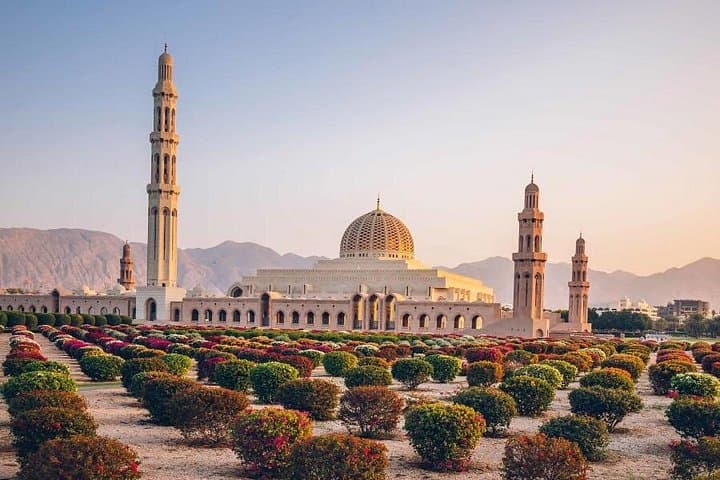
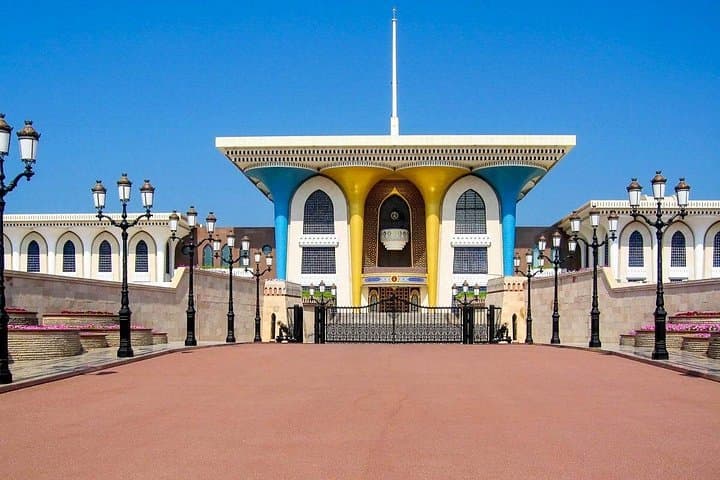
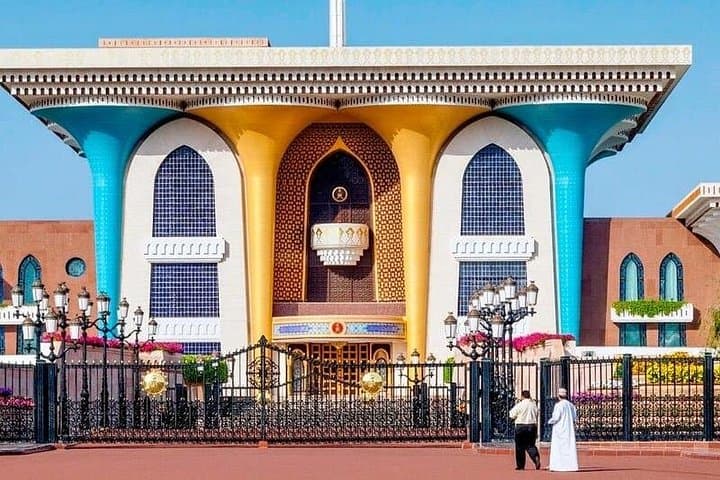
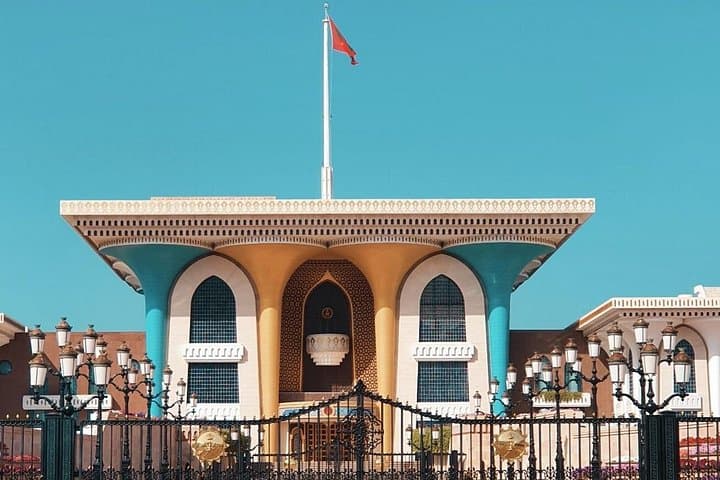
You arrive on the corniche where the Gulf of Oman pushes against stone walls and the city hums in a low, sunlit cadence. The sea dares you to look farther; the Hajar foothills stand watch behind whitewashed houses. This half-day loop stitches together Muscat’s modern landmarks and inherited past — the polished marble of the Sultan Qaboos Grand Mosque, the carved screens of Bait Al Zubair, the ritual bustle of Mutrah Fish Market and the ceremonial façade of Al Alam Palace.
You arrive on the corniche where the Gulf of Oman pushes against stone walls and the city hums in a low, sunlit cadence. The sea dares you to look farther; the Hajar foothills stand watch behind whitewashed houses. This half-day loop stitches together Muscat’s modern landmarks and inherited past — the polished marble of the Sultan Qaboos Grand Mosque, the carved screens of Bait Al Zubair, the ritual bustle of Mutrah Fish Market and the ceremonial façade of Al Alam Palace.
Muscat grew as a port where dhows carried frankincense, dates and salt across the Arabian Sea; the city’s forts and palaces trace Oman’s maritime power and its late-19th to 20th-century modernization. Geology matters here: the short, rugged Hajar range funnels seasonal runoff to narrow wadis and shapes the coastal plain where the city sits. Cultural cues are visible — the opera house’s contemporary Omani motifs, market bargaining over the day’s catch, and the ornate silver and khanjar at heritage museums.
Practical guidance: start early to avoid midday heat, allow about four hours, and expect short walks and vehicle transfers between sites. Dress conservatively at the mosque (long sleeves and headscarf for women; long trousers for men). Photography is welcomed at many stops but restricted inside some religious or ceremonial spaces. Bring water, sun protection and modest footwear for uneven stone at souks and fort viewpoints. A local English-speaking guide will thread history with context and point out quieter viewpoints along the corniche — small moments that turn a city tour into a compact primer on Oman’s coastal identity.