THE ADVENTURE COLLECTIVE® · Independent discovery and booking for outdoor travel

Drive high into Musandam’s limestone ridges for sweeping views over Khasab, short rocky walks and remarkable fossil fields near Jebel Harim. Ideal for photographers and travelers wanting accessible high-mountain scenery in a half-day.
Drive high into Musandam’s limestone ridges for sweeping views over Khasab, short rocky walks and remarkable fossil fields near Jebel Harim. Ideal for photographers and travelers wanting accessible high-mountain scenery in a half-day.
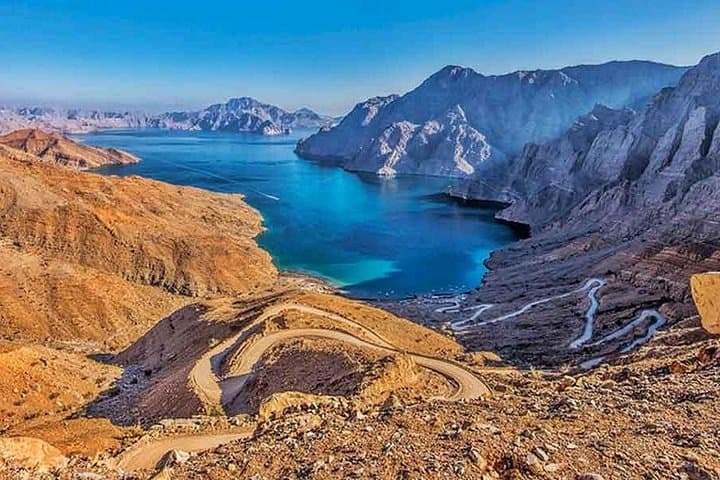
The road rises out of Khasab and the sea falls away — a ribbon of asphalt carving through stony ridges where wind and salt have stripped the hills to bone. In a half-day mountain safari to Jebel Harim, travelers ride an air-conditioned 4x4 up hairpin switchbacks to open viewpoints that look back over Khasab’s fjord-like khors and forward toward Dibba on the Iranian-Emirati horizon.
Verified experiences and guided adventures in the surrounding area.
Operated by Musandam Dhow Tours & Arab Expedition · Khasab, Musandam Governorate
The road rises out of Khasab and the sea falls away — a ribbon of asphalt carving through stony ridges where wind and salt have stripped the hills to bone. In a half-day mountain safari to Jebel Harim, travelers ride an air-conditioned 4x4 up hairpin switchbacks to open viewpoints that look back over Khasab’s fjord-like khors and forward toward Dibba on the Iranian-Emirati horizon.
Jebel Harim (the “mountain of women”) sits among jagged limestone folded by ancient tectonics; layers of once-submerged seabed now hold visible fossils of mollusks and trilobites high above the Straits of Hormuz. Local oral history recalls women retreating to caves here to avoid raiders while men were at sea — traces of a coastal trading and fishing culture that has long adapted to this arid, wind-carved landscape.
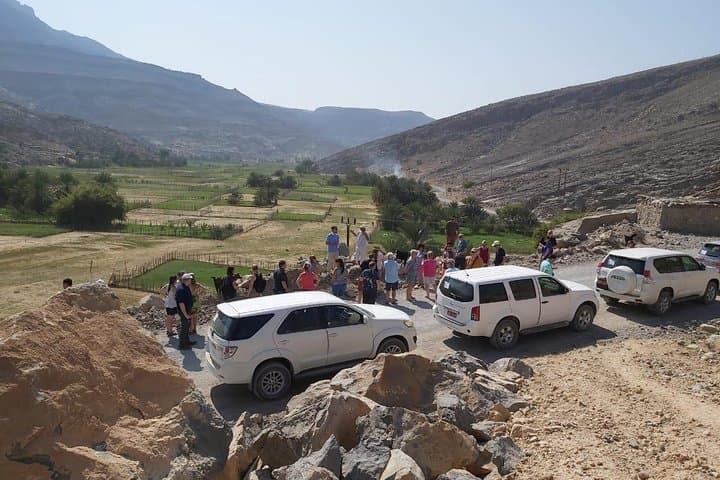
Expect short photo stops rather than long hikes: Khor Najd viewpoint (≈400 m), Saya farming plateau (≈1,200 m) and the fossil fields around 1,700 m. The summit radar is off-limits, so views are taken from roadside overlooks where the mountains push the sky like a slow current.
Practical guidance: bring sun protection and 1–2 liters of water, layers for wind and temperature swings, and sturdy shoes for short rocky walks. Respect fossil sites — they’re scientifically valuable and fragile; do not collect. Timing the trip for morning or late afternoon improves light and reduces heat. This tour suits travelers who want dramatic coastal panoramas, quick natural-history encounters and accessible high-mountain scenery without a full-day trek.
easy.
3–4 hours.
Light—suitable for people who can walk short distances on rocky ground and handle brief elevation changes
The drive takes roughly 45–75 minutes depending on road conditions and how many stops the tour makes; expect multiple short photo breaks.
Fossils are visible in the rock but collecting is discouraged and often illegal; please leave fossils in place for conservation and study.
The tour is by vehicle with brief on-foot stops; it’s generally suitable for families and those with moderate mobility, but guests with serious spinal or cardiovascular conditions should avoid it.
No—the summit area with the radar installation is restricted; viewing and photography are from roadside overlooks and designated stops.
The name 'Jebel Harim' refers to a time when women sheltered in high caves during long fishing and trading voyages; the route reflects Musandam’s coastal maritime culture.
Fossil beds and fragile soils are sensitive—stay on roads and marked stops, avoid collecting geological specimens and pack out all litter.
Musandam Dhow Tours & Arab Expedition operates guided outdoor trips and adventures with an emphasis on safety, stewardship, and memorable experiences.


The road rises out of Khasab and the sea falls away — a ribbon of asphalt carving through stony ridges where wind and salt have stripped the hills to bone. In a half-day mountain safari to Jebel Harim, travelers ride an air-conditioned 4x4 up hairpin switchbacks to open viewpoints that look back over Khasab’s fjord-like khors and forward toward Dibba on the Iranian-Emirati horizon.
The road rises out of Khasab and the sea falls away — a ribbon of asphalt carving through stony ridges where wind and salt have stripped the hills to bone. In a half-day mountain safari to Jebel Harim, travelers ride an air-conditioned 4x4 up hairpin switchbacks to open viewpoints that look back over Khasab’s fjord-like khors and forward toward Dibba on the Iranian-Emirati horizon.
Jebel Harim (the “mountain of women”) sits among jagged limestone folded by ancient tectonics; layers of once-submerged seabed now hold visible fossils of mollusks and trilobites high above the Straits of Hormuz. Local oral history recalls women retreating to caves here to avoid raiders while men were at sea — traces of a coastal trading and fishing culture that has long adapted to this arid, wind-carved landscape.
Expect short photo stops rather than long hikes: Khor Najd viewpoint (≈400 m), Saya farming plateau (≈1,200 m) and the fossil fields around 1,700 m. The summit radar is off-limits, so views are taken from roadside overlooks where the mountains push the sky like a slow current.
Practical guidance: bring sun protection and 1–2 liters of water, layers for wind and temperature swings, and sturdy shoes for short rocky walks. Respect fossil sites — they’re scientifically valuable and fragile; do not collect. Timing the trip for morning or late afternoon improves light and reduces heat. This tour suits travelers who want dramatic coastal panoramas, quick natural-history encounters and accessible high-mountain scenery without a full-day trek.