THE ADVENTURE COLLECTIVE® · Independent discovery and booking for outdoor travel

Drive from Tozeur into the Atlas foothills to visit three dramatic mountain oases — Chebika, Tamerza and Mides. This half-day tour mixes easy canyon walks, Roman-era ruins and palm-lined springs for a compact taste of Tunisia’s desert green pockets.
Drive from Tozeur into the Atlas foothills to visit three dramatic mountain oases — Chebika, Tamerza and Mides. This half-day tour mixes easy canyon walks, Roman-era ruins and palm-lined springs for a compact taste of Tunisia’s desert green pockets.
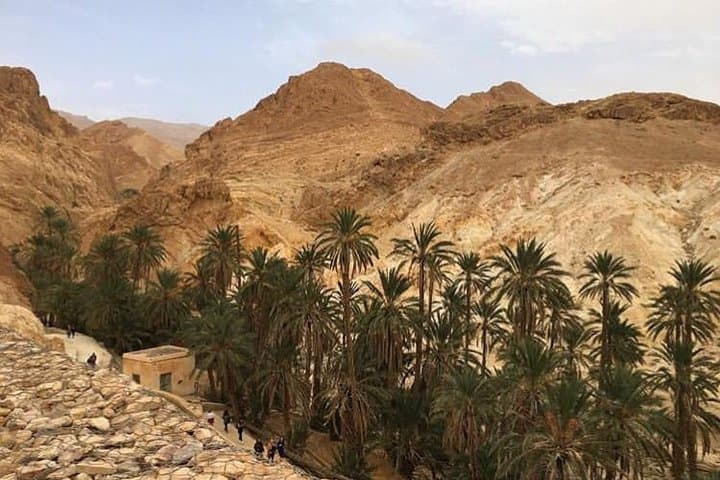
The morning light hits the ochre cliffs and the smell of wet earth rises from narrow streams as your vehicle leaves Tozeur behind. Within an hour the salt flats shrink and the road climbs into craggy folds of the Atlas foothills; palms and sudden pools appear like small, stubborn oases daring you to come closer.
Verified experiences and guided adventures in the surrounding area.
Operated by Tunisie Rêves Day Tours · Tozeur, Tozeur Governorate
The morning light hits the ochre cliffs and the smell of wet earth rises from narrow streams as your vehicle leaves Tozeur behind. Within an hour the salt flats shrink and the road climbs into craggy folds of the Atlas foothills; palms and sudden pools appear like small, stubborn oases daring you to come closer.
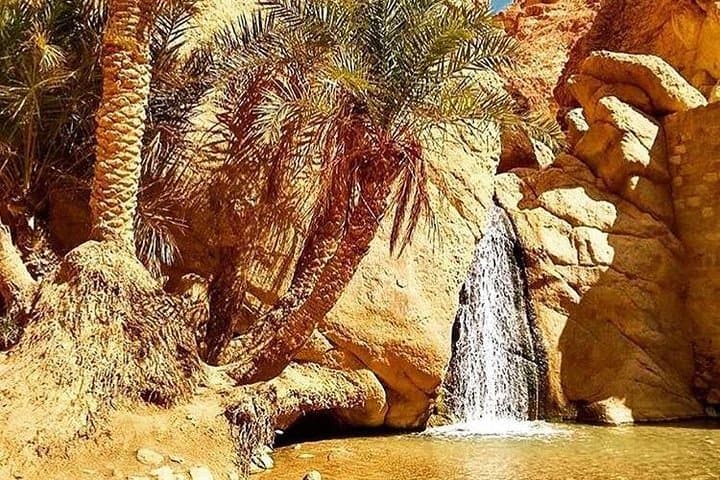
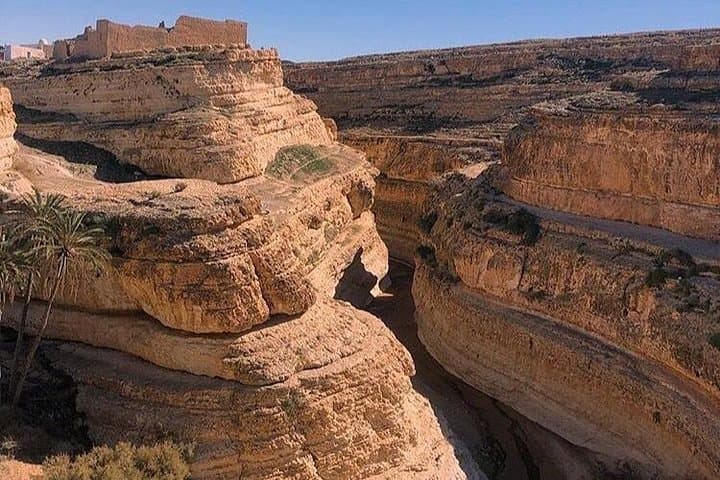
These mountain oases — Chebika, Tamerza and Mides — are deep canyons carved into Triassic and Jurassic limestone, where springs feed terraced palm groves against steep rock. Chebika was once the Roman outpost Ad Speculum; traces of ancient settlement sit beside running water and layered rock that records tectonic lift and erosion. Tamerza is the largest of the three, its waterfalls and cascades giving life to irrigated fields; Mides cuts a narrow gorge whose rimwalks offer fossil-strewn ledges and gamey desert birds.
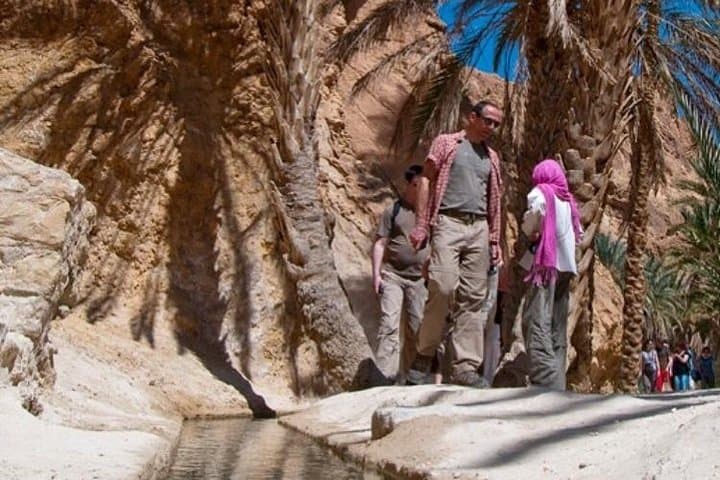
Expect largely vehicle-supported travel with short walks: each stop typically involves 30–60 minutes of exploring rough, rocky trails and shaded groves, with modest elevation gains (often under 200 m) and uneven footing. Bring sun protection, at least 1–2 liters of water, and sturdy shoes for loose gravel and stepped paths. Morning or late-afternoon visits deliver cooler temperatures and better light for photos; mid-day is hot and can blunt canyon contrast.
Local guides usually include hotel pickup in Tozeur and provide bottled water — but pack layers for wind at canyon rims and respect irrigation channels and private terraces. The trip balances simple walking with dramatic geology and human history, offering a compact introduction to Tunisia’s desert oases in a single half-day outing.
easy.
3–5 hours.
Suitable for most fitness levels — short, mostly gentle walks with some uneven footing and modest elevation changes up to ~200 m
The tour runs about 3–5 hours door-to-door from Tozeur, including drives between Chebika, Tamerza and Mides and roughly 30–60 minutes of exploration at each site.
Yes — the outings involve short, mostly easy walks; however, uneven ground and short climbs mean children and those with mobility issues should take care and may prefer to stay near the village areas.
Typical bookings include admission at the main oasis sites, but confirm with the operator; bottled water and hotel pickup are usually provided.
Early morning or late afternoon is best for cooler temperatures, softer light and more comfortable walking in summer. Midday can be hot and dusty.
Chebika was once the Roman outpost Ad Speculum; the oases have long served as vital spring-fed refuges for people and caravans crossing the salt flats.
These oases rely on fragile spring systems and traditional irrigation; stick to paths, avoid diverting water, and minimize plastic and waste to protect the local ecology.
Tunisie Rêves Day Tours operates guided outdoor trips and adventures with an emphasis on safety, stewardship, and memorable experiences.
The morning light hits the ochre cliffs and the smell of wet earth rises from narrow streams as your vehicle leaves Tozeur behind. Within an hour the salt flats shrink and the road climbs into craggy folds of the Atlas foothills; palms and sudden pools appear like small, stubborn oases daring you to come closer.
The morning light hits the ochre cliffs and the smell of wet earth rises from narrow streams as your vehicle leaves Tozeur behind. Within an hour the salt flats shrink and the road climbs into craggy folds of the Atlas foothills; palms and sudden pools appear like small, stubborn oases daring you to come closer.
These mountain oases — Chebika, Tamerza and Mides — are deep canyons carved into Triassic and Jurassic limestone, where springs feed terraced palm groves against steep rock. Chebika was once the Roman outpost Ad Speculum; traces of ancient settlement sit beside running water and layered rock that records tectonic lift and erosion. Tamerza is the largest of the three, its waterfalls and cascades giving life to irrigated fields; Mides cuts a narrow gorge whose rimwalks offer fossil-strewn ledges and gamey desert birds.
Expect largely vehicle-supported travel with short walks: each stop typically involves 30–60 minutes of exploring rough, rocky trails and shaded groves, with modest elevation gains (often under 200 m) and uneven footing. Bring sun protection, at least 1–2 liters of water, and sturdy shoes for loose gravel and stepped paths. Morning or late-afternoon visits deliver cooler temperatures and better light for photos; mid-day is hot and can blunt canyon contrast.
Local guides usually include hotel pickup in Tozeur and provide bottled water — but pack layers for wind at canyon rims and respect irrigation channels and private terraces. The trip balances simple walking with dramatic geology and human history, offering a compact introduction to Tunisia’s desert oases in a single half-day outing.