THE ADVENTURE COLLECTIVE® · Independent discovery and booking for outdoor travel

Ride high above the Sacred Valley on a half‑day loop that links Moray’s circular Inca terraces with the ancient Salineras salt pans. Expect thin air, gravel descents and close-up cultural landscapes with big views.
Ride high above the Sacred Valley on a half‑day loop that links Moray’s circular Inca terraces with the ancient Salineras salt pans. Expect thin air, gravel descents and close-up cultural landscapes with big views.
You push off at high altitude, pedal crunching over dusty Andean trails while terraces and salt pans unwrap beneath a cold blue sky.
Verified experiences and guided adventures in the surrounding area.
Operated by Andino Tours Peru · Maras, Cusco
You push off at high altitude, pedal crunching over dusty Andean trails while terraces and salt pans unwrap beneath a cold blue sky.
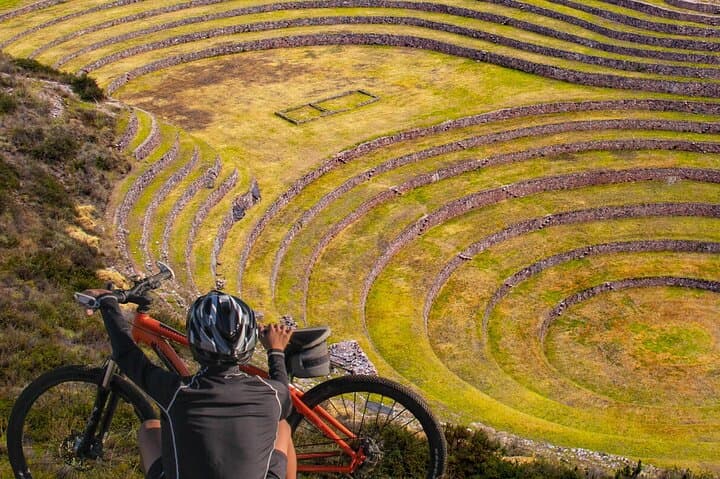
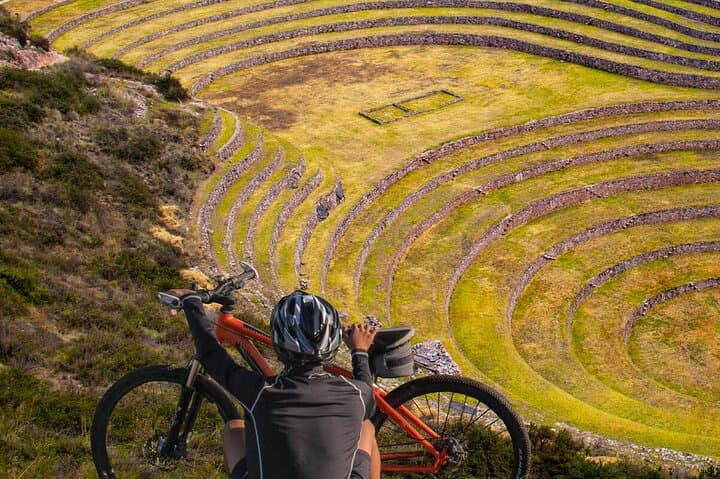
The route threads from the rim of Moray’s concentric agricultural amphitheater toward the stepped reservoirs of the Maras salt mines, moving between scrub, stone walls and occasional stands of queñua. Wind bites at 3,300–3,600 meters, and each climb rewards you with air so thin it makes effort feel sharp and immediate.
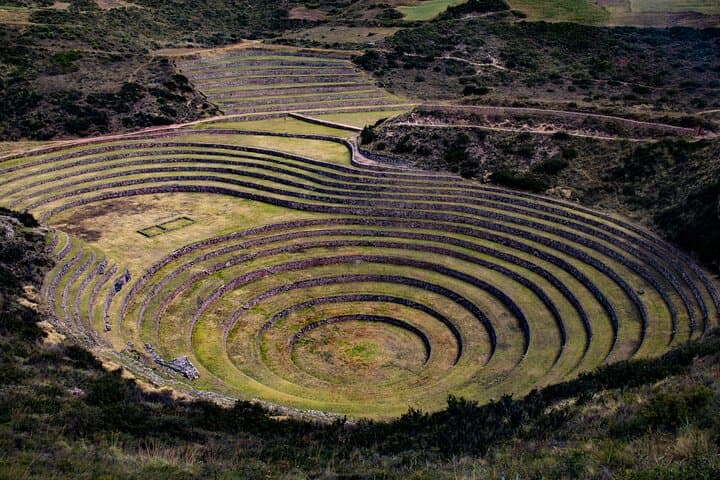
Moray’s circular terraces are an archaeological experiment — Inca engineers tuned microclimates there to test crops at different temperatures. The Salineras are older still in practice: thousands of shallow evaporation pools, fed by a salty spring, where local families and small producers harvest a mineral-rich salt using techniques that carry colonial and precolonial lineage. Geology here is simple and visible: uplifted sedimentary beds cut by erosion, salts staining terraces in ochre and white.
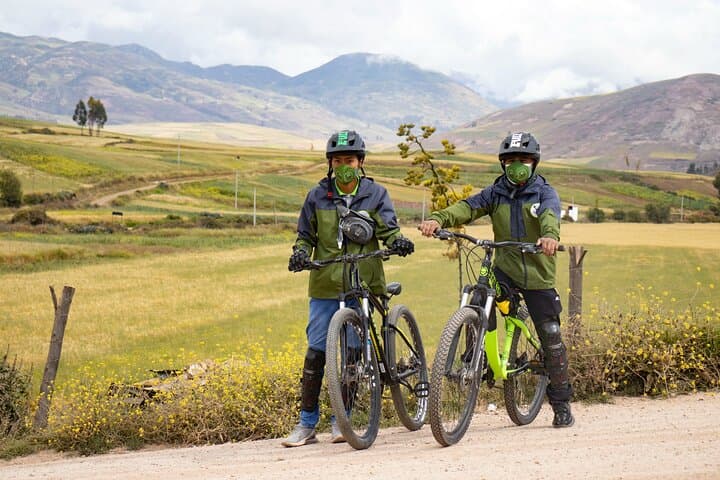
Practical riding: expect singletrack, unpaved farm roads and a few steep descents with loose gravel. Guides provide quality hardtail or front‑suspension bikes, helmets and a repair kit; you should bring layers for wind and sun, plus hydration for a half‑day outing. Ride conservatively on the steep switchbacks and respect working areas around the salt pans.
Timing matters — mornings offer cleaner air and crisper light for photos; afternoons can bring wind. This loop pairs cultural insight with physical challenge, making it a compact, high‑altitude ride that rewards steady pacing and attention to terrain.
moderate.
4–6 hours.
Moderate cardio fitness recommended — be comfortable with sustained climbs at high altitude.
The activity is a half‑day (about 4–6 hours) with sustained climbs and technical descents; it’s rated moderate and requires basic mountain biking experience.
Yes — being at altitude (around 3,300–3,600 m) means you should spend 24–48 hours acclimatizing in Cusco or the Sacred Valley to reduce the risk of altitude sickness.
The salt pans are active production sites; you may get close for photos but stay on paths and follow your guide’s directions to avoid disrupting the pools.
Guides typically speak Spanish and English; the tour provides mountain bikes with front suspension, helmets, a repair kit and a printed map.
Moray’s concentric terraces functioned as an Inca agricultural laboratory to experiment with microclimates; the Salineras have been salt‑harvesting sites since pre‑Inca times.
Stay on established trails to avoid damaging fragile high‑Andean soils and respect the salt pans’ community‑run production areas to support local livelihoods.
Andino Tours Peru operates guided outdoor trips and adventures with an emphasis on safety, stewardship, and memorable experiences.
You push off at high altitude, pedal crunching over dusty Andean trails while terraces and salt pans unwrap beneath a cold blue sky.
You push off at high altitude, pedal crunching over dusty Andean trails while terraces and salt pans unwrap beneath a cold blue sky.
The route threads from the rim of Moray’s concentric agricultural amphitheater toward the stepped reservoirs of the Maras salt mines, moving between scrub, stone walls and occasional stands of queñua. Wind bites at 3,300–3,600 meters, and each climb rewards you with air so thin it makes effort feel sharp and immediate.
Moray’s circular terraces are an archaeological experiment — Inca engineers tuned microclimates there to test crops at different temperatures. The Salineras are older still in practice: thousands of shallow evaporation pools, fed by a salty spring, where local families and small producers harvest a mineral-rich salt using techniques that carry colonial and precolonial lineage. Geology here is simple and visible: uplifted sedimentary beds cut by erosion, salts staining terraces in ochre and white.
Practical riding: expect singletrack, unpaved farm roads and a few steep descents with loose gravel. Guides provide quality hardtail or front‑suspension bikes, helmets and a repair kit; you should bring layers for wind and sun, plus hydration for a half‑day outing. Ride conservatively on the steep switchbacks and respect working areas around the salt pans.
Timing matters — mornings offer cleaner air and crisper light for photos; afternoons can bring wind. This loop pairs cultural insight with physical challenge, making it a compact, high‑altitude ride that rewards steady pacing and attention to terrain.