THE ADVENTURE COLLECTIVE® · Independent discovery and booking for outdoor travel

Spend a morning above Oaxaca exploring Monte Albán’s pyramids, ball court and ancient tombs on a guided half-day tour. Early departures dodge crowds and offer the best light for sweeping valley views and detailed stone reliefs.
Spend a morning above Oaxaca exploring Monte Albán’s pyramids, ball court and ancient tombs on a guided half-day tour. Early departures dodge crowds and offer the best light for sweeping valley views and detailed stone reliefs.
You step off the coach into cold morning air and the valley opens beneath you — terraced stone platforms, stepped pyramids and a broad plaza that once held markets and ceremonies. Wind moves through carved stones and the city’s geometry makes the landscape feel deliberate: axes, courts and alleys laid out for centuries of ritual and governance.
Verified experiences and guided adventures in the surrounding area.
Operated by Oaxacatours · Oaxaca de Juárez, Oaxaca
You step off the coach into cold morning air and the valley opens beneath you — terraced stone platforms, stepped pyramids and a broad plaza that once held markets and ceremonies. Wind moves through carved stones and the city’s geometry makes the landscape feel deliberate: axes, courts and alleys laid out for centuries of ritual and governance.
Monte Albán sits on a raised plateau above Oaxaca City and was the political center of the Zapotec world from roughly 500 BCE through the Classic period. The site’s plazas, ball court and funerary tombs record a civilization skilled in stone carving, astronomy and centralized administration. Geologically, the site occupies a flattened hill where builders leveled bedrock and added fill to create broad platforms; that hard bedrock preserves the reliefs and carved stairways you’ll climb.
A guided half-day tour pairs a 30–40 minute transfer from central Oaxaca with about 2–2.5 hours on site — enough to visit the Great Plaza, the ball court and several excavated tombs. Expect uneven flagstones, steep steps and open exposure to sun and wind; mornings give the best light and fewer people. Admission may not be included on some packages, so carry local currency. Photographs are allowed, but touching carved surfaces and climbing closed areas is prohibited.
Practical: wear sturdy shoes, bring 1L+ water, sun protection and a light layer for cool mornings. If you have mobility or cardiovascular concerns, note that paths are unpaved and the tour asks for a moderate fitness level. The rewards are panoramic views across the Oaxaca Valley and direct encounters with Zapotec urban planning that still shapes the landscape.
moderate.
4 hours (including transport).
Moderate fitness for walking on uneven, stepped terrain and handling brief stair climbs at altitude.
Not always — some operators include entrance while others don’t; check your booking details and bring local currency for the fee if needed.
The archaeological zone has uneven paths and steps; portions are accessible by vehicle, but much of the core areas are not suitable for standard wheelchairs.
About 10–15 minutes by coach from central Oaxaca depending on traffic; expect a short transfer as part of the half-day tour.
Basic facilities are available near the visitor area; bring snacks and water as options are limited and can be crowded during peak times.
Monte Albán was the Zapotec political and ceremonial heart for centuries and was declared a UNESCO World Heritage Site in 1987 due to its archaeological and cultural value.
Follow marked paths, avoid touching carved surfaces, and respect site rules to preserve fragile tombs and reliefs; local authorities limit access during maintenance or conservation efforts.
Oaxacatours operates guided outdoor trips and adventures with an emphasis on safety, stewardship, and memorable experiences.
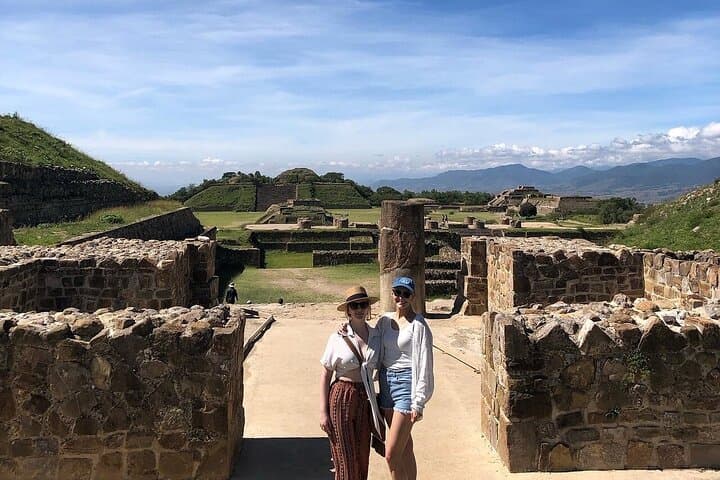
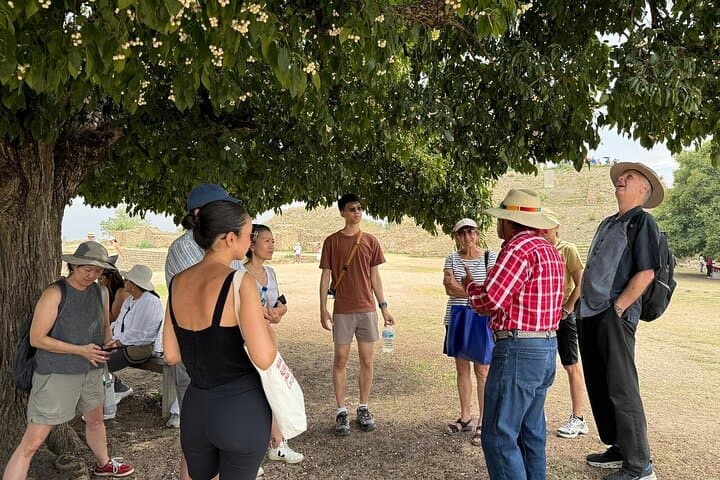
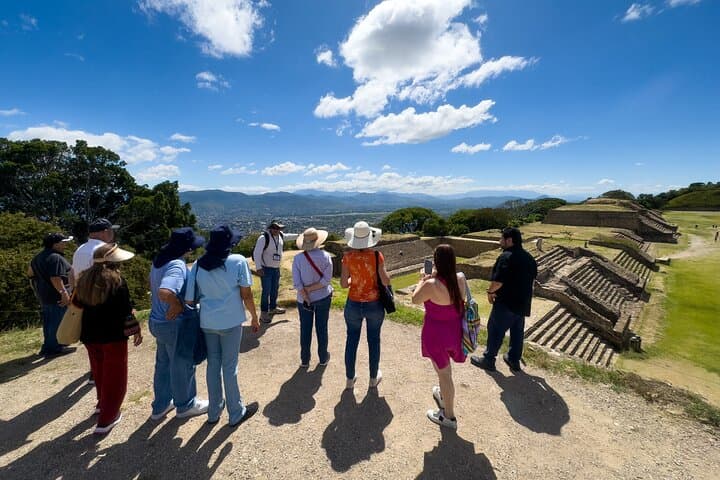
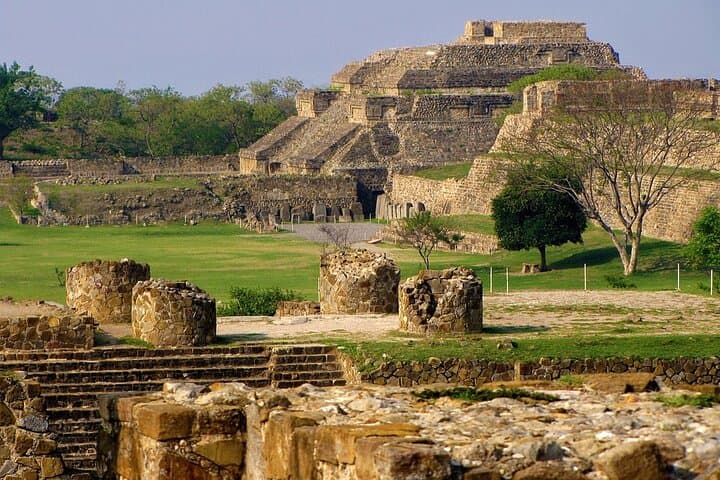
You step off the coach into cold morning air and the valley opens beneath you — terraced stone platforms, stepped pyramids and a broad plaza that once held markets and ceremonies. Wind moves through carved stones and the city’s geometry makes the landscape feel deliberate: axes, courts and alleys laid out for centuries of ritual and governance.
You step off the coach into cold morning air and the valley opens beneath you — terraced stone platforms, stepped pyramids and a broad plaza that once held markets and ceremonies. Wind moves through carved stones and the city’s geometry makes the landscape feel deliberate: axes, courts and alleys laid out for centuries of ritual and governance.
Monte Albán sits on a raised plateau above Oaxaca City and was the political center of the Zapotec world from roughly 500 BCE through the Classic period. The site’s plazas, ball court and funerary tombs record a civilization skilled in stone carving, astronomy and centralized administration. Geologically, the site occupies a flattened hill where builders leveled bedrock and added fill to create broad platforms; that hard bedrock preserves the reliefs and carved stairways you’ll climb.
A guided half-day tour pairs a 30–40 minute transfer from central Oaxaca with about 2–2.5 hours on site — enough to visit the Great Plaza, the ball court and several excavated tombs. Expect uneven flagstones, steep steps and open exposure to sun and wind; mornings give the best light and fewer people. Admission may not be included on some packages, so carry local currency. Photographs are allowed, but touching carved surfaces and climbing closed areas is prohibited.
Practical: wear sturdy shoes, bring 1L+ water, sun protection and a light layer for cool mornings. If you have mobility or cardiovascular concerns, note that paths are unpaved and the tour asks for a moderate fitness level. The rewards are panoramic views across the Oaxaca Valley and direct encounters with Zapotec urban planning that still shapes the landscape.