THE ADVENTURE COLLECTIVE® · Independent discovery and booking for outdoor travel

Spend a focused half-day in Medina exploring Al-Masjid an-Nabawi, Quba Mosque, and other foundational Islamic sites. This guided tour blends historical context with simple, accessible logistics for visitors of all backgrounds.
Spend a focused half-day in Medina exploring Al-Masjid an-Nabawi, Quba Mosque, and other foundational Islamic sites. This guided tour blends historical context with simple, accessible logistics for visitors of all backgrounds.
A morning in Medina opens with the low hum of the azan and air that carries the dry warmth of the Hijaz plains. You arrive at Al-Masjid an-Nabawi and step onto polished courtyards where columns catch sunlight and shadows move like slow metronomes. The mosque’s green dome and wide porticos anchor the visit; pilgrims and visitors circulate with purpose while guides point out architectural details and the Prophet’s burial enclosure just beyond the prayer halls.
Verified experiences and guided adventures in the surrounding area.
Operated by Madinah Tours · Medina, Al Madinah Province
A morning in Medina opens with the low hum of the azan and air that carries the dry warmth of the Hijaz plains. You arrive at Al-Masjid an-Nabawi and step onto polished courtyards where columns catch sunlight and shadows move like slow metronomes. The mosque’s green dome and wide porticos anchor the visit; pilgrims and visitors circulate with purpose while guides point out architectural details and the Prophet’s burial enclosure just beyond the prayer halls.
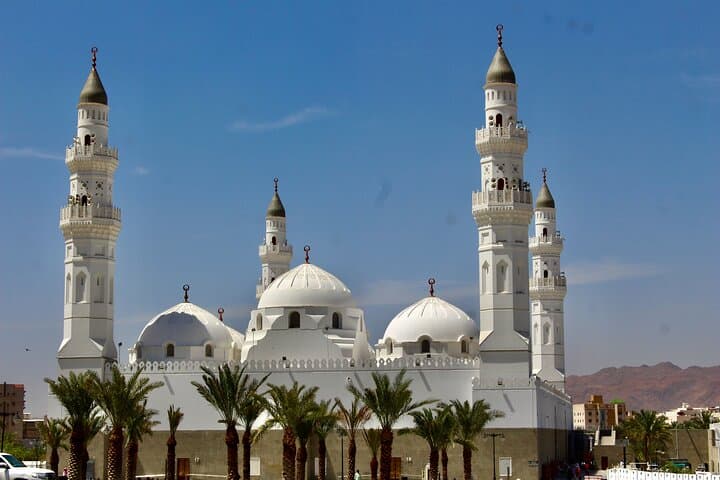
This half-day tour threads through landmarks that map early Islamic history: Quba Mosque, founded soon after the Hijra; the Qiblatain Mosque, where the prayer direction changed; and Al-Baqi cemetery, the resting place of many early companions. Geologically, Medina sits on the western edge of the Arabian Shield—rolling wadi beds and limestone ridges shape the city’s drainage and historic caravan routes. Culturally, Medina is quieter than Mecca, defined by daily devotion, market life, and the date palms that still shade narrow streets.
Expect close-up history: concise stories of the Battle of Uhud and the Prophet’s migrations, punctuated by visits to wells and palatial ruins. The pace is accessible—walking between sites with short pauses for explanation and photos.
Practical guidance: dress conservatively and be ready to remove shoes at mosque entrances; carry water and a small scarf for temperature shifts in covered spaces; check prayer times—access to some areas can be restricted during major services. The tour is wheelchair- and stroller-accessible, but modesty, respect for worship, and an awareness of crowding during peak prayer hours will make the experience smoother and more meaningful.
easy.
4–5 hours.
Suitable for most fitness levels; involves moderate walking on paved and sometimes uneven surfaces
Al-Masjid an-Nabawi is open only to Muslims; non-Muslims cannot enter the mosque complex.
Yes—infants and children can join, though infants must sit on laps during transport; notify the operator about ages when booking.
Visitors see the mosque’s prayer halls and surrounding courtyards; access to the enclosed Rawdah area is subject to crowd control and prayer schedules.
Yes—the itinerary notes wheelchair-accessible transportation and surfaces, but call ahead for assistance needs and to confirm ramp availability at specific sites.
Medina was the destination of the Prophet Muhammad’s Hijra in 622 CE and became the political and spiritual center of the early Islamic community.
Urban conservation focuses on preserving historic mosque precincts and managing visitor impact—follow marked paths and avoid touching fragile masonry to help protect these sites.
Madinah Tours operates guided outdoor trips and adventures with an emphasis on safety, stewardship, and memorable experiences.
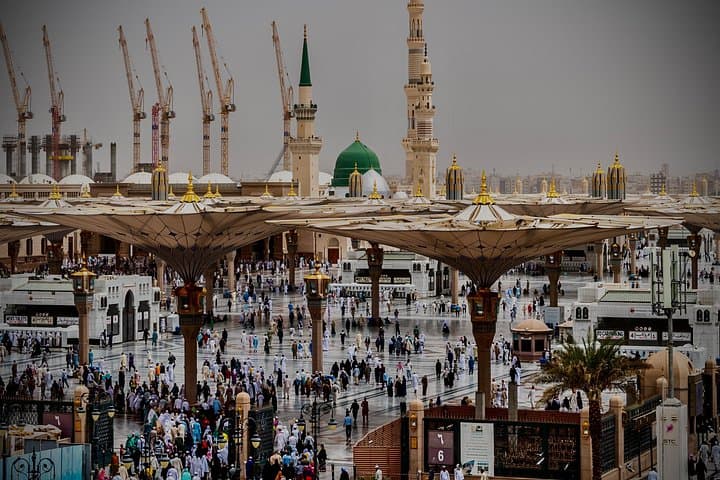
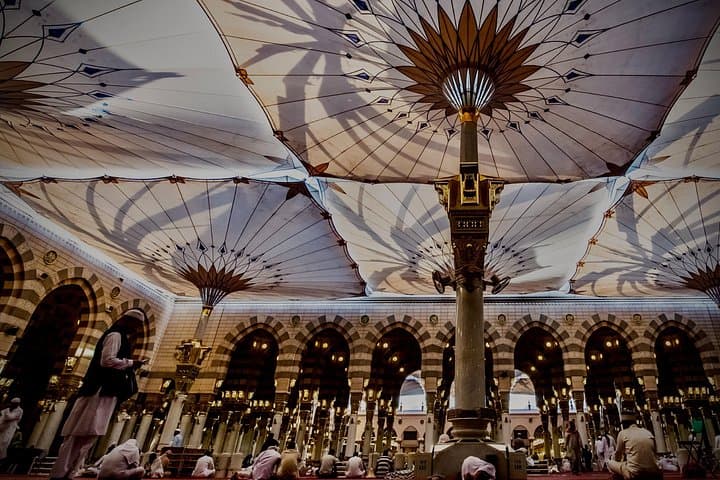
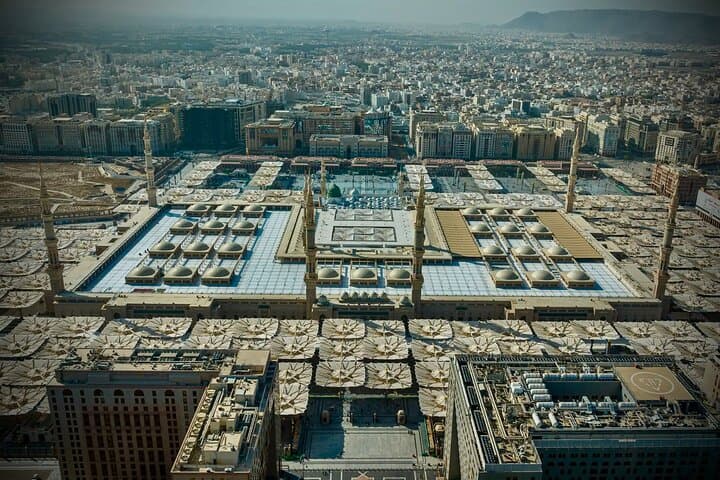
A morning in Medina opens with the low hum of the azan and air that carries the dry warmth of the Hijaz plains. You arrive at Al-Masjid an-Nabawi and step onto polished courtyards where columns catch sunlight and shadows move like slow metronomes. The mosque’s green dome and wide porticos anchor the visit; pilgrims and visitors circulate with purpose while guides point out architectural details and the Prophet’s burial enclosure just beyond the prayer halls.
A morning in Medina opens with the low hum of the azan and air that carries the dry warmth of the Hijaz plains. You arrive at Al-Masjid an-Nabawi and step onto polished courtyards where columns catch sunlight and shadows move like slow metronomes. The mosque’s green dome and wide porticos anchor the visit; pilgrims and visitors circulate with purpose while guides point out architectural details and the Prophet’s burial enclosure just beyond the prayer halls.
This half-day tour threads through landmarks that map early Islamic history: Quba Mosque, founded soon after the Hijra; the Qiblatain Mosque, where the prayer direction changed; and Al-Baqi cemetery, the resting place of many early companions. Geologically, Medina sits on the western edge of the Arabian Shield—rolling wadi beds and limestone ridges shape the city’s drainage and historic caravan routes. Culturally, Medina is quieter than Mecca, defined by daily devotion, market life, and the date palms that still shade narrow streets.
Expect close-up history: concise stories of the Battle of Uhud and the Prophet’s migrations, punctuated by visits to wells and palatial ruins. The pace is accessible—walking between sites with short pauses for explanation and photos.
Practical guidance: dress conservatively and be ready to remove shoes at mosque entrances; carry water and a small scarf for temperature shifts in covered spaces; check prayer times—access to some areas can be restricted during major services. The tour is wheelchair- and stroller-accessible, but modesty, respect for worship, and an awareness of crowding during peak prayer hours will make the experience smoother and more meaningful.