THE ADVENTURE COLLECTIVE® · Independent discovery and booking for outdoor travel

Walk the heart of Marrakech in three hours: from the bustle of Jemaa el-Fna to the ornamental calm of Bahia Palace and the winding souks. This guided half-day tour pairs history, craft demonstrations, and local tips to help you see the Red City like a local.
Walk the heart of Marrakech in three hours: from the bustle of Jemaa el-Fna to the ornamental calm of Bahia Palace and the winding souks. This guided half-day tour pairs history, craft demonstrations, and local tips to help you see the Red City like a local.
You step out from a shaded riad alley into a square that thrums: vendors calling, orange juice wheels spinning, and the minaret of the Koutoubia puncturing a sun-baked sky. The air is peppered with cumin and orange peel; the crowd pulls you through lanes where the city’s story is written in tile, timber, and trade.
Verified experiences and guided adventures in the surrounding area.
Operated by Hassan Boulahcen · Marrakech, Marrakech-Safi
You step out from a shaded riad alley into a square that thrums: vendors calling, orange juice wheels spinning, and the minaret of the Koutoubia puncturing a sun-baked sky. The air is peppered with cumin and orange peel; the crowd pulls you through lanes where the city’s story is written in tile, timber, and trade.
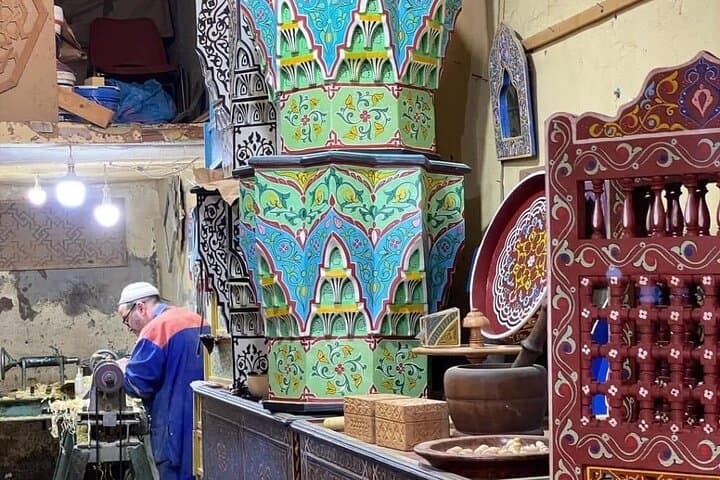
This half-day walking tour threads the core of Marrakech’s medina — Jemaa el-Fna, the ornate Bahia Palace, Saadian-era monuments, and the maze of souks. Geologically, you’re on a high plain at the edge of the Atlas foothills; urban layers date from Almoravid and Saadian periods to 19th-century palace building, reflected in carved cedar, zellij tile, and stucco plasterwork. Culturally, Marrakech is a living marketplace of crafts: leather tanners, metalworkers and zellige artisans maintain techniques passed down through generations.
Expect 2–3 kilometers of walking on packed stone alleys with occasional uneven thresholds and steps; elevation change is minimal but the pace is steady to cover sites in three hours. The guide’s role is practical — navigating crowds, flagging historical context, and pointing to authentic workshops where bargaining is a social art.
Practical guidance: start mid-morning or late afternoon to avoid peak heat, carry cash in small denominations for purchases, wear closed-toe shoes for cobbled streets, and bring a reusable water bottle. Modest dress is respectful in and around religious sites. If you want museum entry or longer stops, plan extra time. This tour delivers a compact, sensory primer on Marrakech — efficient for new arrivals and rich enough to spark deeper exploration later.
easy.
3 hours.
Suitable for most fitness levels — requires 2–3 km of walking on uneven city pavement.
Most half-day tours meet near Jemaa el-Fna or a central riad; confirm the exact meeting point with the operator before your tour.
Admissions are often not included; check the tour details and bring cash if you plan to enter paid sites or museums.
The route is stroller-accessible in many areas, but narrow alleys and crowds can make navigation challenging — lap-sitting for infants may be required in busy sections.
Yes — the guide can point you to reputable workshops, but carry cash, agree prices up front, and allow extra time if you plan significant shopping.
Marrakech rose to prominence in the 11th century under the Almoravids; the Medina’s layout and many surviving monuments reflect centuries of Islamic, Berber, and later Moroccan royal patronage.
The medina faces pressures from overtourism and urban wear; choose local craft shops over imported souvenirs and follow guide advice to reduce strain on fragile historic sites.
Hassan Boulahcen operates guided outdoor trips and adventures with an emphasis on safety, stewardship, and memorable experiences.
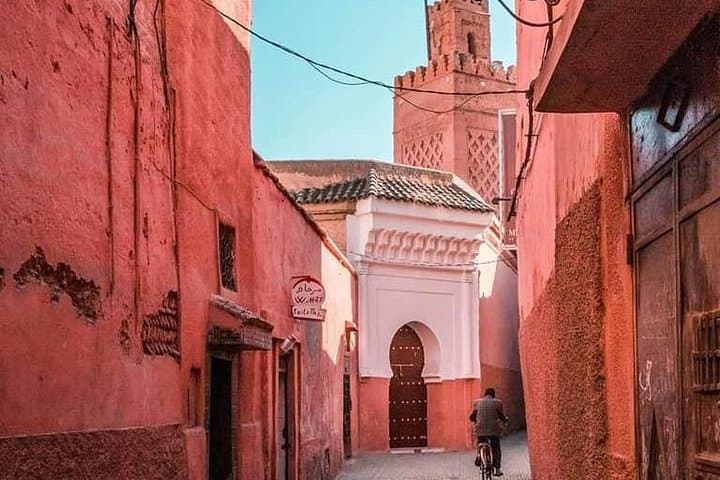
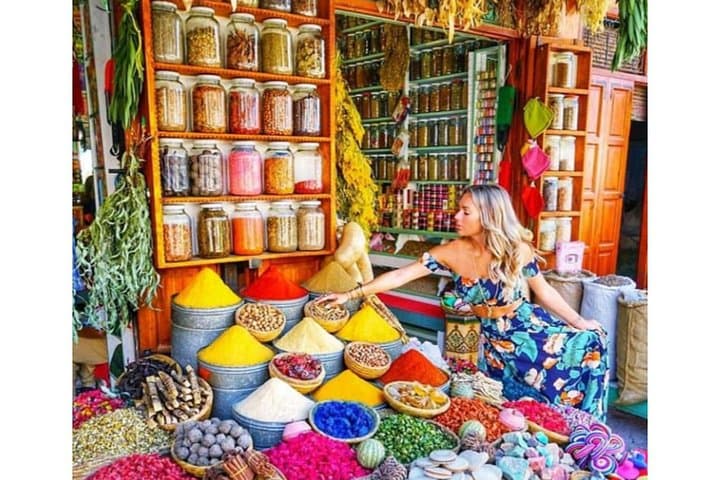
You step out from a shaded riad alley into a square that thrums: vendors calling, orange juice wheels spinning, and the minaret of the Koutoubia puncturing a sun-baked sky. The air is peppered with cumin and orange peel; the crowd pulls you through lanes where the city’s story is written in tile, timber, and trade.
You step out from a shaded riad alley into a square that thrums: vendors calling, orange juice wheels spinning, and the minaret of the Koutoubia puncturing a sun-baked sky. The air is peppered with cumin and orange peel; the crowd pulls you through lanes where the city’s story is written in tile, timber, and trade.
This half-day walking tour threads the core of Marrakech’s medina — Jemaa el-Fna, the ornate Bahia Palace, Saadian-era monuments, and the maze of souks. Geologically, you’re on a high plain at the edge of the Atlas foothills; urban layers date from Almoravid and Saadian periods to 19th-century palace building, reflected in carved cedar, zellij tile, and stucco plasterwork. Culturally, Marrakech is a living marketplace of crafts: leather tanners, metalworkers and zellige artisans maintain techniques passed down through generations.
Expect 2–3 kilometers of walking on packed stone alleys with occasional uneven thresholds and steps; elevation change is minimal but the pace is steady to cover sites in three hours. The guide’s role is practical — navigating crowds, flagging historical context, and pointing to authentic workshops where bargaining is a social art.
Practical guidance: start mid-morning or late afternoon to avoid peak heat, carry cash in small denominations for purchases, wear closed-toe shoes for cobbled streets, and bring a reusable water bottle. Modest dress is respectful in and around religious sites. If you want museum entry or longer stops, plan extra time. This tour delivers a compact, sensory primer on Marrakech — efficient for new arrivals and rich enough to spark deeper exploration later.