THE ADVENTURE COLLECTIVE® · Independent discovery and booking for outdoor travel

Move quickly through Marrakech’s essential sights in a private half-day: olive gardens at Menara, the cobalt calm of Majorelle, and the carved courtyards of Bahia Palace. Practical tips on timing, entry fees, and what to wear help you make the most of a compact city visit.
Move quickly through Marrakech’s essential sights in a private half-day: olive gardens at Menara, the cobalt calm of Majorelle, and the carved courtyards of Bahia Palace. Practical tips on timing, entry fees, and what to wear help you make the most of a compact city visit.
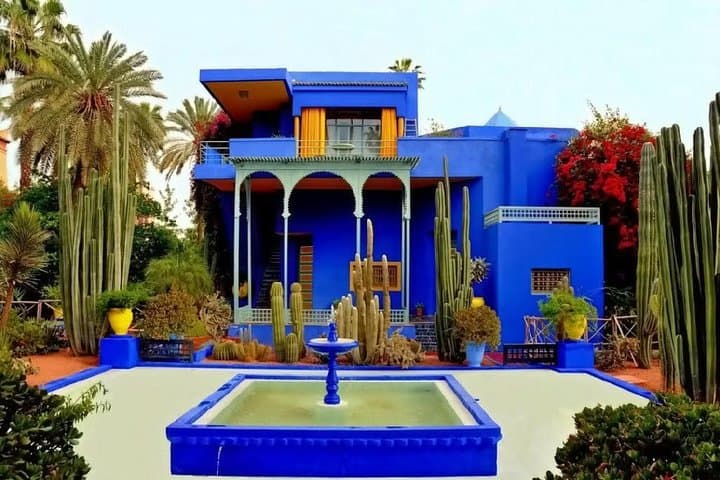
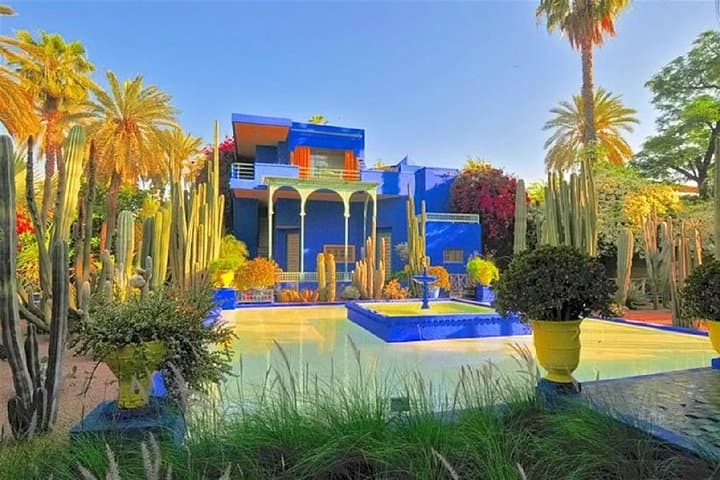
You step out of an air-conditioned minivan and the ochre city presses in on all sides—the scent of orange blossom, a distant call to prayer, and the sudden cool of shaded courtyards. Over four hours the private tour moves with purpose: Menara’s olive groves, the calm water basin, the jewel-like blue of Majorelle, then the ornate courtyards of Bahia Palace.
Verified experiences and guided adventures in the surrounding area.
Operated by Safari Desert Tours · Marrakech, Marrakech-Safi
You step out of an air-conditioned minivan and the ochre city presses in on all sides—the scent of orange blossom, a distant call to prayer, and the sudden cool of shaded courtyards. Over four hours the private tour moves with purpose: Menara’s olive groves, the calm water basin, the jewel-like blue of Majorelle, then the ornate courtyards of Bahia Palace.
Marrakech is a city shaped by trade routes and Andalusian influence; Bahia Palace (late 19th century) shows the craftsmen’s woodwork and zellij tiles, while Majorelle reflects a 20th-century painter’s obsession with light and exotic plants and later the imprint of Yves Saint Laurent. Geologically, the city sits on alluvial plains below the High Atlas—gardens here rely on historic irrigation practices to keep palms and olives alive in a warm, semi-arid climate.
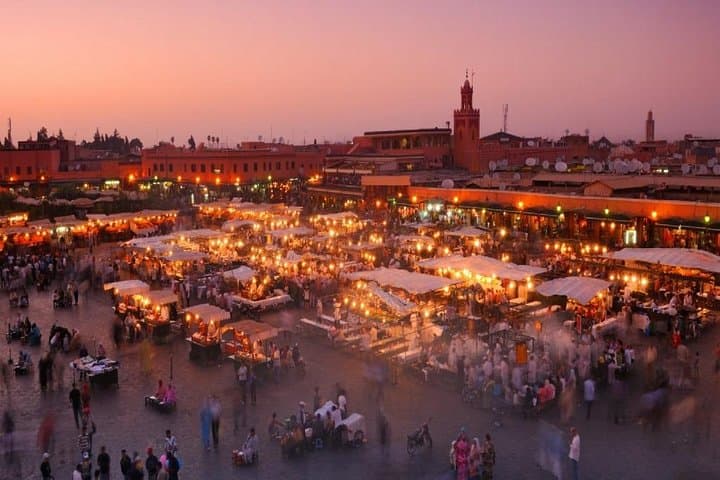
Culture moves at two speeds: the formal geometry of palaces and the improvisational bustle of souks nearby. Expect paved paths, shaded garden lanes, and a few courtyard steps—easy walking but with sun exposure between sites.
Practical guidance: the tour lasts about four hours with door-to-door pickup in Marrakech; admission fees are typically not included, so bring cash or a card. Morning or late-afternoon departures avoid peak heat; comfortable closed-toe shoes and a brimmed hat make the short strolls more pleasant. Bring modest clothing for palace entry and a reusable water bottle—bottled water is provided, but hydration is your responsibility. If you want photos without crowds, plan for the earliest slot. The private driver can pause for quick photo stops, but longer detours may require prior arrangement.
easy.
3–4 hours.
Light walking ability; suitable for most fitness levels with short periods of standing and stair steps.
Admission is usually not included in the tour price—bring payment or confirm entry fees with the operator before departure.
Yes, the tour includes pickup and drop-off from accommodations within Marrakech—provide your location when booking.
The tour vehicle can accommodate passengers, but some palace courtyards and garden paths have steps or uneven surfaces; check with the operator for specific accessibility needs.
The listing indicates an English-speaking driver; confirm if you need another language when booking.
Bahia Palace was built in the late 19th century by Ahmed ben Musa; Majorelle Garden was created by Jacques Majorelle and later restored by Yves Saint Laurent and Pierre Bergé.
Gardens in Marrakech depend on careful irrigation—stay on paths, avoid wasting water, and use refillable bottles to reduce plastic waste.
Safari Desert Tours operates guided outdoor trips and adventures with an emphasis on safety, stewardship, and memorable experiences.
You step out of an air-conditioned minivan and the ochre city presses in on all sides—the scent of orange blossom, a distant call to prayer, and the sudden cool of shaded courtyards. Over four hours the private tour moves with purpose: Menara’s olive groves, the calm water basin, the jewel-like blue of Majorelle, then the ornate courtyards of Bahia Palace.
You step out of an air-conditioned minivan and the ochre city presses in on all sides—the scent of orange blossom, a distant call to prayer, and the sudden cool of shaded courtyards. Over four hours the private tour moves with purpose: Menara’s olive groves, the calm water basin, the jewel-like blue of Majorelle, then the ornate courtyards of Bahia Palace.
Marrakech is a city shaped by trade routes and Andalusian influence; Bahia Palace (late 19th century) shows the craftsmen’s woodwork and zellij tiles, while Majorelle reflects a 20th-century painter’s obsession with light and exotic plants and later the imprint of Yves Saint Laurent. Geologically, the city sits on alluvial plains below the High Atlas—gardens here rely on historic irrigation practices to keep palms and olives alive in a warm, semi-arid climate.
Culture moves at two speeds: the formal geometry of palaces and the improvisational bustle of souks nearby. Expect paved paths, shaded garden lanes, and a few courtyard steps—easy walking but with sun exposure between sites.
Practical guidance: the tour lasts about four hours with door-to-door pickup in Marrakech; admission fees are typically not included, so bring cash or a card. Morning or late-afternoon departures avoid peak heat; comfortable closed-toe shoes and a brimmed hat make the short strolls more pleasant. Bring modest clothing for palace entry and a reusable water bottle—bottled water is provided, but hydration is your responsibility. If you want photos without crowds, plan for the earliest slot. The private driver can pause for quick photo stops, but longer detours may require prior arrangement.