THE ADVENTURE COLLECTIVE® · Independent discovery and booking for outdoor travel

Spend a focused half-day walking Marrakech’s medina: from the Koutoubia minaret through the ornamental rooms of Bahia Palace and the Saadian Tombs, finishing amid the alive-forces of Jemaa el-Fnaa. This guide breaks down what to expect and how to prepare.
Spend a focused half-day walking Marrakech’s medina: from the Koutoubia minaret through the ornamental rooms of Bahia Palace and the Saadian Tombs, finishing amid the alive-forces of Jemaa el-Fnaa. This guide breaks down what to expect and how to prepare.
Morning light slices across the ochre walls as a guide steers a small group through the maze of Marrakech’s medina. The Koutoubia’s minaret rises like a patient watchman over the city, calling attention to centuries of stone and prayer, while the first alleys open to merchants arranging brass lamps and bundles of spices. This half-day route moves from the mosque’s garden to the ornamented rooms of Bahia Palace and the quieter corridors of the Saadian Tombs, ending in the beating heart of Jemaa el-Fnaa.
Verified experiences and guided adventures in the surrounding area.
Operated by Face Tours · Marrakech, Marrakech-Safi
Morning light slices across the ochre walls as a guide steers a small group through the maze of Marrakech’s medina. The Koutoubia’s minaret rises like a patient watchman over the city, calling attention to centuries of stone and prayer, while the first alleys open to merchants arranging brass lamps and bundles of spices. This half-day route moves from the mosque’s garden to the ornamented rooms of Bahia Palace and the quieter corridors of the Saadian Tombs, ending in the beating heart of Jemaa el-Fnaa.
Marrakech’s core is a living record: the minaret dates to the Almohad 12th century, Bahia demonstrates 19th-century royal design, and the Saadian tombs preserve late 16th–17th century funerary architecture. The city sits on an inland plain at the foot of the High Atlas; wind and sun have weathered façades into the warm hues that give Marrakech its reputation as the “Red City.” Culturally, the medina is multifunctional—marketplace, performance stage, and workshop—where artisans and street performers shape everyday life.
Practical guidance: expect 4–5 hours of mostly walking on cobbles and narrow alleys with some staircases at historic sites. Wear broken-in walking shoes and sun protection, and leave bulky bags at your accommodation—space in narrow passages is limited. Bring small bills for entrances and tipping; preserve the rhythm of the route by arriving hydrated and ready to move between stops. The guide handles logistics and local context—follow their lead for respectful behavior inside religious sites and in crowded squares.
moderate.
4–5 hours.
Suitable for travelers who can walk several miles on uneven surfaces and climb stairs at a steady pace.
Admissions for the Bahia Palace and Saadian Tombs are included on this itinerary; the Koutoubia is an active mosque—non-Muslim access inside is generally restricted.
Yes—the tour includes private, air-conditioned transportation and arranged pickup as specified at booking.
No—many alleys are narrow, uneven, and stepped; accessibility is limited and not recommended for wheelchairs or bulky strollers.
Bargaining is expected in many stalls—start around half the vendor’s price, stay friendly, and have small notes for purchases; leave larger shopping trips for afternoons if you want more time.
The Koutoubia minaret was completed under the 12th-century Almohads; the Saadian Tombs and Bahia Palace reflect later royal patronage and craftsmanship from the 16th–19th centuries.
Heavy foot traffic strains narrow medina streets—support local artisans, avoid single-use plastics, and follow posted rules at historic sites to minimize impact.
Face Tours operates guided outdoor trips and adventures with an emphasis on safety, stewardship, and memorable experiences.
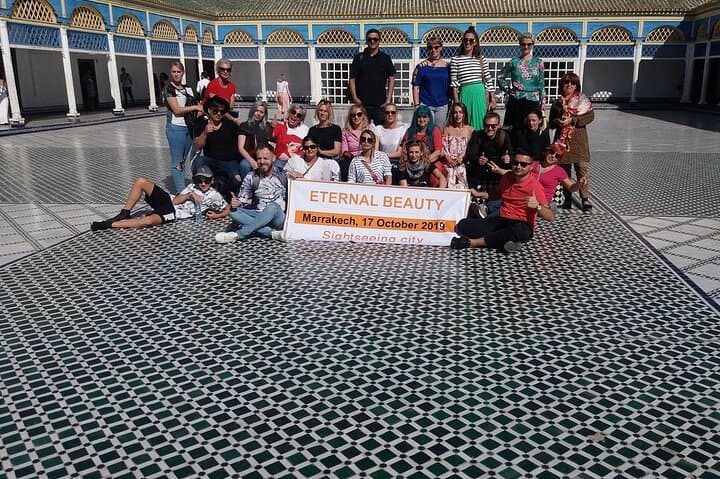
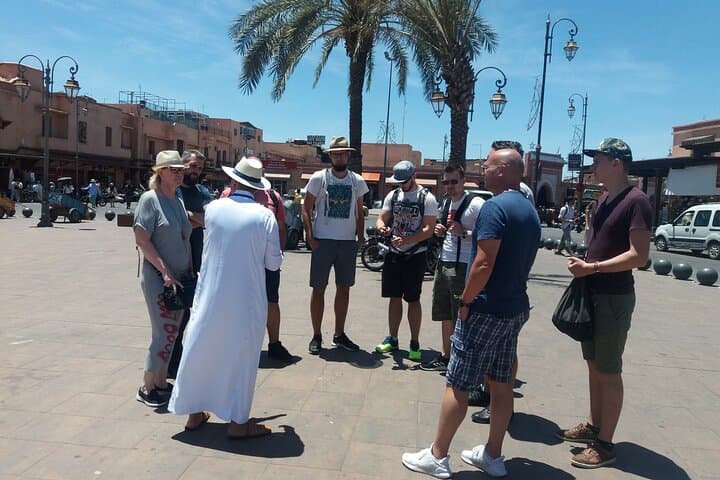
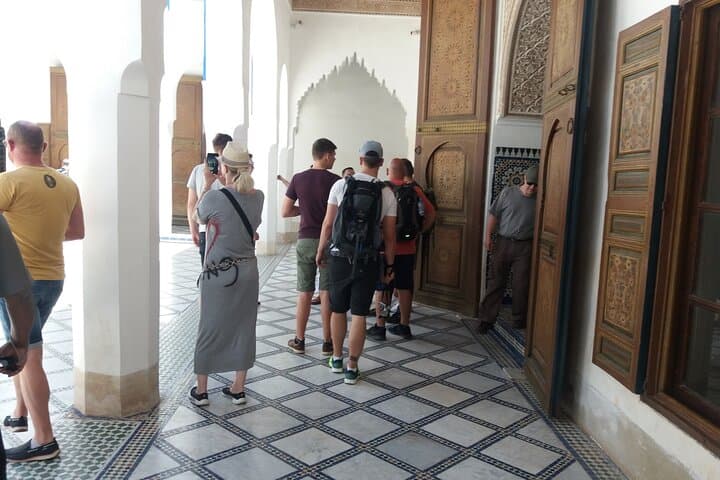
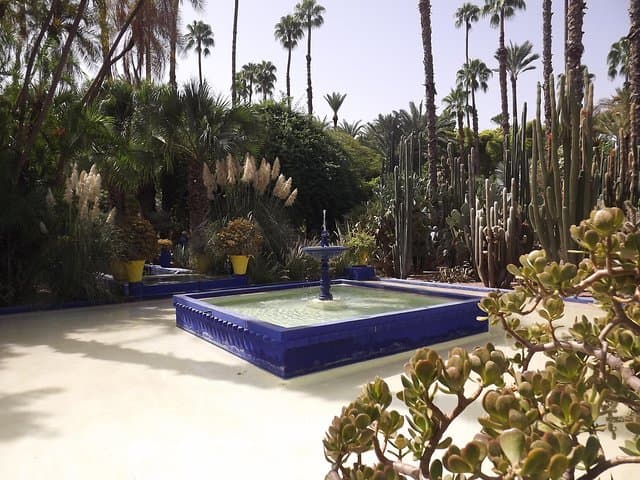
Morning light slices across the ochre walls as a guide steers a small group through the maze of Marrakech’s medina. The Koutoubia’s minaret rises like a patient watchman over the city, calling attention to centuries of stone and prayer, while the first alleys open to merchants arranging brass lamps and bundles of spices. This half-day route moves from the mosque’s garden to the ornamented rooms of Bahia Palace and the quieter corridors of the Saadian Tombs, ending in the beating heart of Jemaa el-Fnaa.
Morning light slices across the ochre walls as a guide steers a small group through the maze of Marrakech’s medina. The Koutoubia’s minaret rises like a patient watchman over the city, calling attention to centuries of stone and prayer, while the first alleys open to merchants arranging brass lamps and bundles of spices. This half-day route moves from the mosque’s garden to the ornamented rooms of Bahia Palace and the quieter corridors of the Saadian Tombs, ending in the beating heart of Jemaa el-Fnaa.
Marrakech’s core is a living record: the minaret dates to the Almohad 12th century, Bahia demonstrates 19th-century royal design, and the Saadian tombs preserve late 16th–17th century funerary architecture. The city sits on an inland plain at the foot of the High Atlas; wind and sun have weathered façades into the warm hues that give Marrakech its reputation as the “Red City.” Culturally, the medina is multifunctional—marketplace, performance stage, and workshop—where artisans and street performers shape everyday life.
Practical guidance: expect 4–5 hours of mostly walking on cobbles and narrow alleys with some staircases at historic sites. Wear broken-in walking shoes and sun protection, and leave bulky bags at your accommodation—space in narrow passages is limited. Bring small bills for entrances and tipping; preserve the rhythm of the route by arriving hydrated and ready to move between stops. The guide handles logistics and local context—follow their lead for respectful behavior inside religious sites and in crowded squares.