THE ADVENTURE COLLECTIVE® · Independent discovery and booking for outdoor travel

A brisk, curator-led walk through Marrakech’s medina, this half-day tour covers Koutoubia, key souks, and craft workshops. Perfect for travelers who want a compact, informative introduction to the city’s history and market life.
A brisk, curator-led walk through Marrakech’s medina, this half-day tour covers Koutoubia, key souks, and craft workshops. Perfect for travelers who want a compact, informative introduction to the city’s history and market life.
You step through a low stone entry and the medina opens like a living market — spices lift up sharp and sweet, leather goods hang in layered stalls, and the call to prayer threads the air from the Koutoubia minaret.
Verified experiences and guided adventures in the surrounding area.
Operated by Marrakesh Travel Services · Marrakech, Marrakech-Safi
You step through a low stone entry and the medina opens like a living market — spices lift up sharp and sweet, leather goods hang in layered stalls, and the call to prayer threads the air from the Koutoubia minaret.
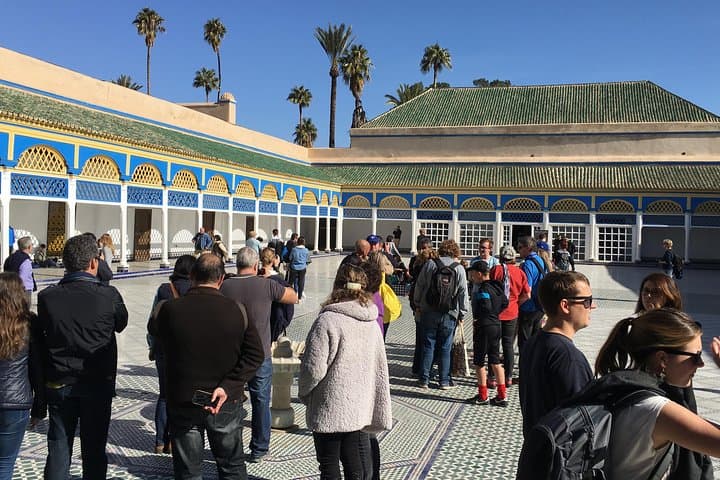
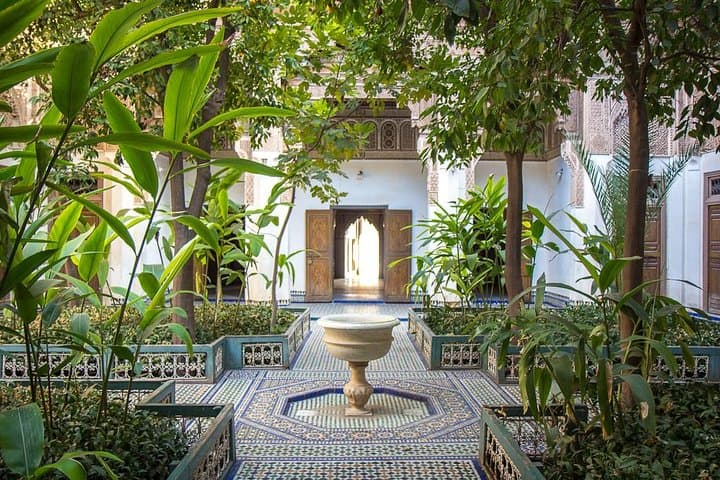
This half-day guided tour moves at a brisk, curious pace through Marrakech’s old city, led by a professional art-historian guide. Expect 3–4 hours of walking across compact alleys, mosaic-flecked riads, and the main souk arteries where bargaining is part craft, part ritual. The medina’s earthen walls — the city’s famed “red” tones from local clay — reflect centuries of Almoravid and Almohad rule; Koutoubia and the adjacent squares date to the 12th century, and the medina is a UNESCO World Heritage site.
Geology and geography arrive as texture: sandstone and adobe façades, narrow streets that channel the heat, and the High Atlas visible on clear days beyond the city’s ramparts. Cultural notes: artisans are often Berber or Andalusi-descended families working traditional tanning, metalwork, and textiles; a polite nod or a concise negotiation goes farther than raised voices.
Practical guidance: start early to avoid midday sun and the busiest crowds, wear closed-toe shoes for uneven cobbles, carry small-denomination Moroccan dirhams for purchases, and keep a refillable water bottle. Respect mosque rules — non-Muslims won’t enter active prayer halls — and agree prices before accepting services. A half-day gives a rich primer on Marrakech’s sensory life and craft economy without wearing you down: energy for the souks, history to carry home.
easy.
4 hours.
Suitable for most fitness levels; expect 2–3 miles of walking over uneven ground and stairs.
The tour runs approximately four hours and covers several key medina sites and souk sections with short stops.
Yes—infants and small children can be in strollers, but expect narrow alleys and occasional steps where a carrier is easier.
Non-Muslim visitors typically won’t enter active prayer areas; riad visits depend on specific stops and admission policies.
Guides are professional and often multilingual; check booking details for language availability and request your preference in advance.
Marrakech was founded in the 11th century by the Almoravids and later reshaped under the 12th-century Almohads; its medina is a UNESCO World Heritage site reflecting centuries of trade and craft.
Water scarcity and wear on historic structures are local concerns—support artisans directly, avoid single-use plastics, and follow guide instructions to lessen impact.
Marrakesh Travel Services operates guided outdoor trips and adventures with an emphasis on safety, stewardship, and memorable experiences.


You step through a low stone entry and the medina opens like a living market — spices lift up sharp and sweet, leather goods hang in layered stalls, and the call to prayer threads the air from the Koutoubia minaret.
You step through a low stone entry and the medina opens like a living market — spices lift up sharp and sweet, leather goods hang in layered stalls, and the call to prayer threads the air from the Koutoubia minaret.
This half-day guided tour moves at a brisk, curious pace through Marrakech’s old city, led by a professional art-historian guide. Expect 3–4 hours of walking across compact alleys, mosaic-flecked riads, and the main souk arteries where bargaining is part craft, part ritual. The medina’s earthen walls — the city’s famed “red” tones from local clay — reflect centuries of Almoravid and Almohad rule; Koutoubia and the adjacent squares date to the 12th century, and the medina is a UNESCO World Heritage site.
Geology and geography arrive as texture: sandstone and adobe façades, narrow streets that channel the heat, and the High Atlas visible on clear days beyond the city’s ramparts. Cultural notes: artisans are often Berber or Andalusi-descended families working traditional tanning, metalwork, and textiles; a polite nod or a concise negotiation goes farther than raised voices.
Practical guidance: start early to avoid midday sun and the busiest crowds, wear closed-toe shoes for uneven cobbles, carry small-denomination Moroccan dirhams for purchases, and keep a refillable water bottle. Respect mosque rules — non-Muslims won’t enter active prayer halls — and agree prices before accepting services. A half-day gives a rich primer on Marrakech’s sensory life and craft economy without wearing you down: energy for the souks, history to carry home.