THE ADVENTURE COLLECTIVE® · Independent discovery and booking for outdoor travel

See Marrakech’s icons in a single morning: Koutoubia’s minaret, the Medina’s alleys, Medersa Ben Youssef, Jardin Secret and the sensory hub of Jemaa el-Fna. This compact tour mixes history, architecture and local color with practical tips to move through the city confidently.
See Marrakech’s icons in a single morning: Koutoubia’s minaret, the Medina’s alleys, Medersa Ben Youssef, Jardin Secret and the sensory hub of Jemaa el-Fna. This compact tour mixes history, architecture and local color with practical tips to move through the city confidently.
A morning in Marrakech opens like a slow drumbeat — call to prayer, the snap of merchants’ shutters, and the warm stone of the city exhaling heat. The half-day tour moves through that rhythm: a close view of the Koutoubia minaret, the labyrinthine alleys of the Medina, the living chaos of Jemaa el-Fna and the cool courtyards of Medersa Ben Youssef and Jardin Secret.
Verified experiences and guided adventures in the surrounding area.
Operated by Morocco Best Attractions · Marrakech, Marrakesh-Safi
A morning in Marrakech opens like a slow drumbeat — call to prayer, the snap of merchants’ shutters, and the warm stone of the city exhaling heat. The half-day tour moves through that rhythm: a close view of the Koutoubia minaret, the labyrinthine alleys of the Medina, the living chaos of Jemaa el-Fna and the cool courtyards of Medersa Ben Youssef and Jardin Secret.
Marrakech began as an 11th-century imperial foundation and grew into a crossroads of Berber, Arab and Andalusian cultures; the city’s red-baked walls are built from local clay and tell a story of desert geology and centuries of trade. In the Medina, craftsmen still hammer metal and dye cloth in ways handed down through generations; Jemaa el-Fna remains a living UNESCO cultural square where stories, music and food vendors gather each evening.
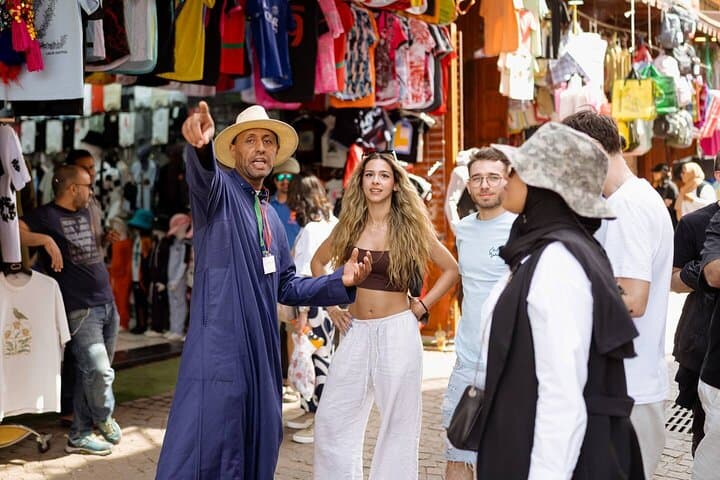
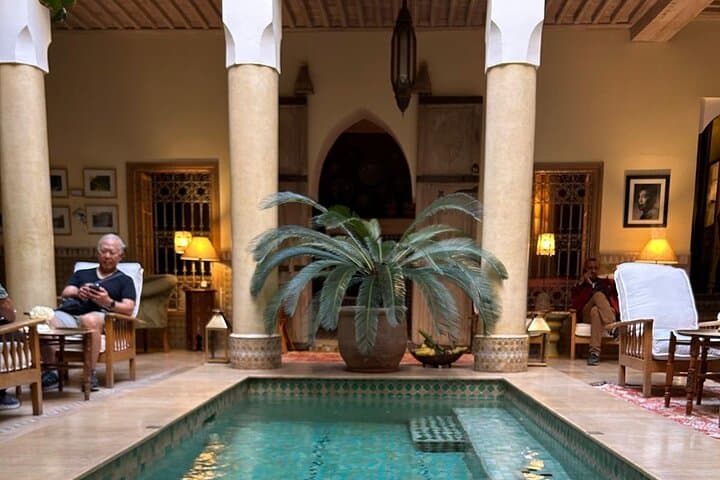
Expect short walks on uneven flagstone, narrow souk passages, and brief indoor stops in shaded riads. Guides interpret historic details — from Moorish architectural motifs to the function of madrasas — while pointing out practical rhythms of city life: spice stalls, tanneries off the main alleys, and tucked-away herb shops.
Plan logistics: start early to avoid mid-day heat, wear closed-toe shoes for walking, and carry a refillable bottle. Respect local dress codes when entering religious sites, bring small change for purchases and tipping, and allow a few extra minutes for photo stops or crowd delays. This half-day compresses Marrakech’s highlights into a compact, walkable introduction that leaves time to dig deeper afterward.
easy.
3–4 hours.
Suitable for most travelers with basic walking ability; expect repeated standing and short, uneven stretches.
The tour runs about 3–4 hours; common departure times are morning to avoid heat—confirm the exact start time when booking.
Some historic sites on the route (like Medersa Ben Youssef and Jardin Secret) are included per the itinerary; double-check your booking details for admission specifics.
Yes—this is rated easy; however, the tour includes narrow alleys and standing periods, so plan at a comfortable pace and notify the operator of mobility needs.
Tipping is customary in Morocco; a small gratuity at the end (adjusted for group size and quality of the experience) is appreciated by local guides.
Marrakech was founded in the 11th century by the Almoravids and served as a major imperial and trading center; the Medina is part of a UNESCO World Heritage site.
Water is a limited resource—carry a reusable bottle and favor local artisans over mass-produced souvenirs to support sustainable livelihoods.
Morocco Best Attractions operates guided outdoor trips and adventures with an emphasis on safety, stewardship, and memorable experiences.

A morning in Marrakech opens like a slow drumbeat — call to prayer, the snap of merchants’ shutters, and the warm stone of the city exhaling heat. The half-day tour moves through that rhythm: a close view of the Koutoubia minaret, the labyrinthine alleys of the Medina, the living chaos of Jemaa el-Fna and the cool courtyards of Medersa Ben Youssef and Jardin Secret.
A morning in Marrakech opens like a slow drumbeat — call to prayer, the snap of merchants’ shutters, and the warm stone of the city exhaling heat. The half-day tour moves through that rhythm: a close view of the Koutoubia minaret, the labyrinthine alleys of the Medina, the living chaos of Jemaa el-Fna and the cool courtyards of Medersa Ben Youssef and Jardin Secret.
Marrakech began as an 11th-century imperial foundation and grew into a crossroads of Berber, Arab and Andalusian cultures; the city’s red-baked walls are built from local clay and tell a story of desert geology and centuries of trade. In the Medina, craftsmen still hammer metal and dye cloth in ways handed down through generations; Jemaa el-Fna remains a living UNESCO cultural square where stories, music and food vendors gather each evening.
Expect short walks on uneven flagstone, narrow souk passages, and brief indoor stops in shaded riads. Guides interpret historic details — from Moorish architectural motifs to the function of madrasas — while pointing out practical rhythms of city life: spice stalls, tanneries off the main alleys, and tucked-away herb shops.
Plan logistics: start early to avoid mid-day heat, wear closed-toe shoes for walking, and carry a refillable bottle. Respect local dress codes when entering religious sites, bring small change for purchases and tipping, and allow a few extra minutes for photo stops or crowd delays. This half-day compresses Marrakech’s highlights into a compact, walkable introduction that leaves time to dig deeper afterward.