THE ADVENTURE COLLECTIVE® · Independent discovery and booking for outdoor travel

See the concentric Inca agricultural terraces of Moray and the salt pans of Maras in a focused half-day from Cusco. This easy cultural landscape tour pairs short walks with high-altitude views and hands-on history.
See the concentric Inca agricultural terraces of Moray and the salt pans of Maras in a focused half-day from Cusco. This easy cultural landscape tour pairs short walks with high-altitude views and hands-on history.
A thin Andean light breaks over high-altitude fields as the tour leaves Cusco, and the Veronica peak watches like a silent clocktower. Passengers settle into a tourist bus, windows framing villages, terraced slopes and the slow reveal of concentric amphitheaters at Moray. The site descends in a series of stacked rings; each level holds a different microclimate and a story of deliberate agricultural science.
Verified experiences and guided adventures in the surrounding area.
Operated by Aremika Expeditions · Maras, Cusco
A thin Andean light breaks over high-altitude fields as the tour leaves Cusco, and the Veronica peak watches like a silent clocktower. Passengers settle into a tourist bus, windows framing villages, terraced slopes and the slow reveal of concentric amphitheaters at Moray. The site descends in a series of stacked rings; each level holds a different microclimate and a story of deliberate agricultural science.
Moray’s circular platforms were an Inca experimental station—an open-air greenhouse where temperature shifts across rings were exploited to trial crops and acclimatize species. The geology here is volcanic and glacial, sculpting steep ravines and scattering mineral-rich soils that made these agricultural tests possible.
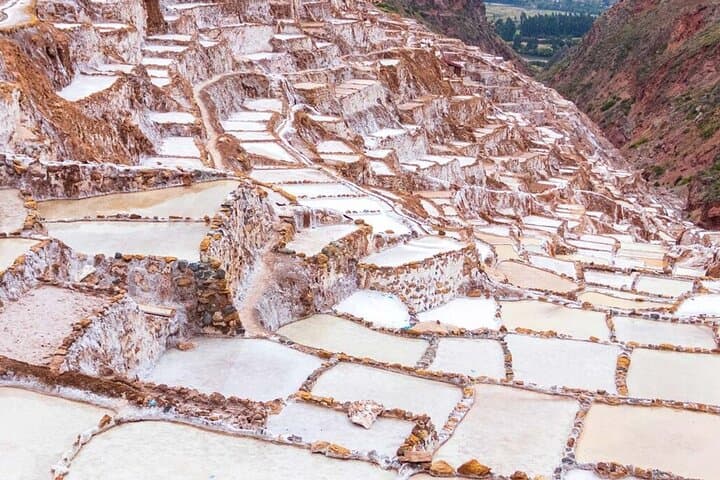
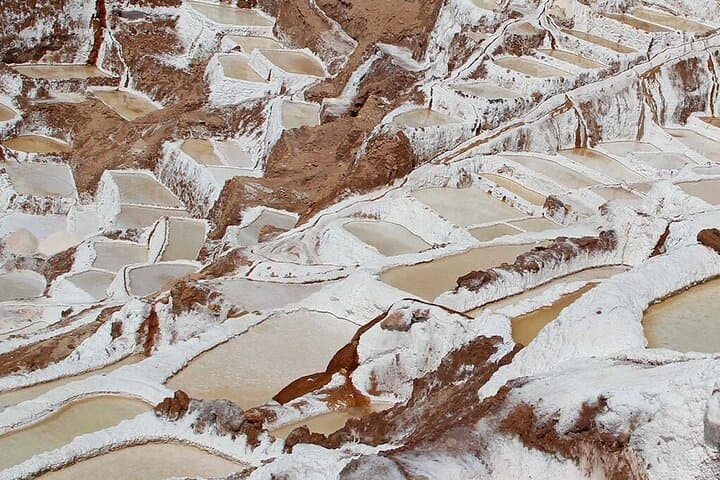
A short drive northwest brings the Salineras de Maras: thousands of shallow salt pans carved into a sun-baked slope and fed by a saline spring. The pans glitter like a patchwork of small mirrors and smell faintly of mineral earth; local families still harvest salt using methods passed down since Inca and Colonial times.
Practically, the half-day pace means limited hiking—mostly short walks, uneven ground and several stair-like terraces. Altitude is the main variable: sites sit around 3,500–3,800 meters, so acclimatization matters. Bring water, layered clothing for sharp sun and cool wind, and sturdy shoes for terraces and loose gravel. Morning departures capture clearer skies and softer light for photos; afternoons can be windier and cooler.
The tour blends cultural context with accessible outdoor movement—an efficient, sensory introduction to how ancient engineering met high-Andean ecology.
easy.
4 hours.
Light activity level; suitable for travelers comfortable with short walks and stair-like terrain but who are acclimatized to altitude
Expect roughly 1–1.5 hours each way depending on traffic and exact pickup point—the tour is organized as a half-day with hotel pickup.
Short walks are family-friendly but infants must sit on laps and anyone with serious health conditions should consult a doctor due to altitude.
Check the booking details—walking is light to moderate with short uneven sections; most time is spent viewing terraces and salt pans.
Acclimatize in Cusco for at least 24 hours, hydrate, avoid heavy meals and consider coca tea or professional advice for severe symptoms.
Moray’s terraces reflect Inca agricultural experimentation; the Salineras have been exploited since pre-Inca times and continued through the Colonial era by local families.
Visitor numbers can stress fragile terraces and salt pans—stay on marked paths and avoid disturbing salt pool walls; support local vendors to help sustain community stewardship.
Aremika Expeditions operates guided outdoor trips and adventures with an emphasis on safety, stewardship, and memorable experiences.
A thin Andean light breaks over high-altitude fields as the tour leaves Cusco, and the Veronica peak watches like a silent clocktower. Passengers settle into a tourist bus, windows framing villages, terraced slopes and the slow reveal of concentric amphitheaters at Moray. The site descends in a series of stacked rings; each level holds a different microclimate and a story of deliberate agricultural science.
A thin Andean light breaks over high-altitude fields as the tour leaves Cusco, and the Veronica peak watches like a silent clocktower. Passengers settle into a tourist bus, windows framing villages, terraced slopes and the slow reveal of concentric amphitheaters at Moray. The site descends in a series of stacked rings; each level holds a different microclimate and a story of deliberate agricultural science.
Moray’s circular platforms were an Inca experimental station—an open-air greenhouse where temperature shifts across rings were exploited to trial crops and acclimatize species. The geology here is volcanic and glacial, sculpting steep ravines and scattering mineral-rich soils that made these agricultural tests possible.
A short drive northwest brings the Salineras de Maras: thousands of shallow salt pans carved into a sun-baked slope and fed by a saline spring. The pans glitter like a patchwork of small mirrors and smell faintly of mineral earth; local families still harvest salt using methods passed down since Inca and Colonial times.
Practically, the half-day pace means limited hiking—mostly short walks, uneven ground and several stair-like terraces. Altitude is the main variable: sites sit around 3,500–3,800 meters, so acclimatization matters. Bring water, layered clothing for sharp sun and cool wind, and sturdy shoes for terraces and loose gravel. Morning departures capture clearer skies and softer light for photos; afternoons can be windier and cooler.
The tour blends cultural context with accessible outdoor movement—an efficient, sensory introduction to how ancient engineering met high-Andean ecology.