THE ADVENTURE COLLECTIVE® · Independent discovery and booking for outdoor travel

Spend a concentrated half-day exploring Inca agricultural terraces, a lively Andean town, and the thousand-pool salt mines near Cusco. This private tour pairs cultural context with easy walking and strong photo opportunities at high altitude.
Spend a concentrated half-day exploring Inca agricultural terraces, a lively Andean town, and the thousand-pool salt mines near Cusco. This private tour pairs cultural context with easy walking and strong photo opportunities at high altitude.
A private minivan climbs out of Cusco and the window fills with hard light and step-cut slopes. In less than an hour the city’s red-tiled roofs give way to high puna grass, and the guide’s voice maps the route: first Chinchero, then the circular bowls of Moray, and finally the glittering salt pans of Maras.
Verified experiences and guided adventures in the surrounding area.
Operated by Ausangate trail · Cusco, Cusco
A private minivan climbs out of Cusco and the window fills with hard light and step-cut slopes. In less than an hour the city’s red-tiled roofs give way to high puna grass, and the guide’s voice maps the route: first Chinchero, then the circular bowls of Moray, and finally the glittering salt pans of Maras.
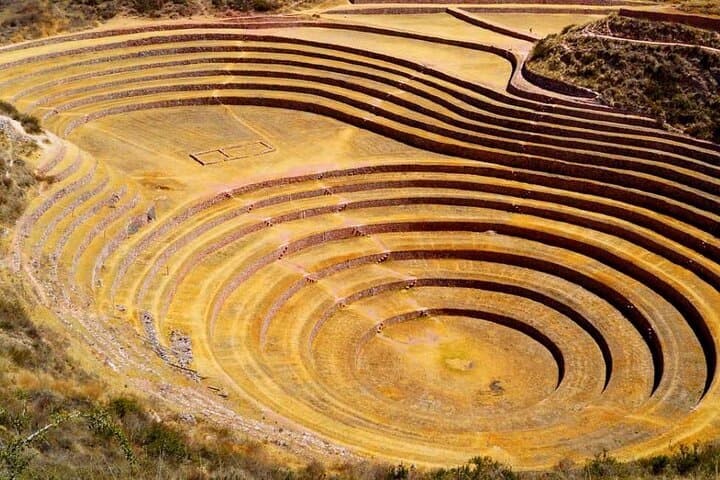
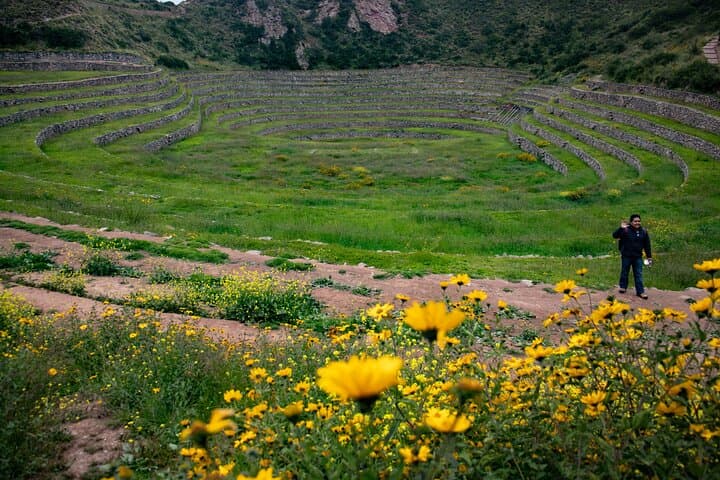
Moray’s concentric terraces read like an agricultural laboratory carved into volcanic soil — a stack of microclimates where the Incas tested crops at varying temperatures. The geology is simple and blunt: wind-scraped volcanic loam shaped into rings, each terrace catching sunlight and holding warmth. Maras, a traditional Andean town, shows colonial-era adobe and a market rhythm that still follows the sun.
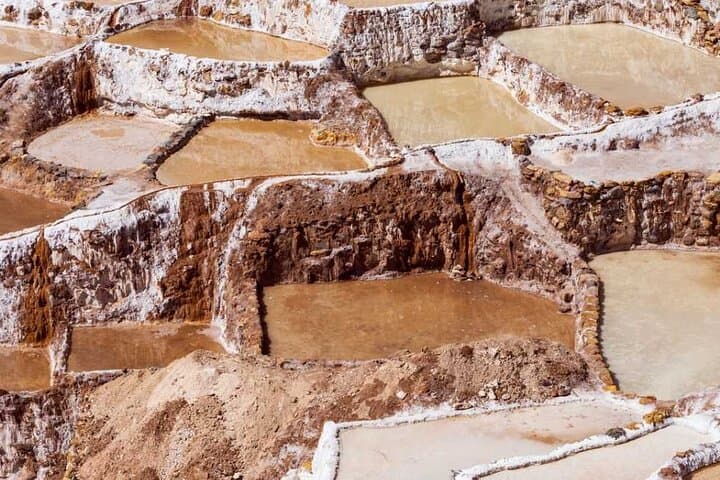
The Salineras are a human-made coast at 3,400 meters: thousands of shallow evaporation pools fed by a saline spring, their geometric patchwork changing from cream to pink as workers harvest with wooden tools and salt pans. The technique here has continuity back to pre-Columbian exchange networks; the place still smells faintly of mineral earth and labor.
Practical edge: this is a half-day, low-impact tour that involves short walks over uneven paths and high-elevation exposure. Bring sun protection and layered clothing, move slowly during photo stops, and allow time to acclimatize in Cusco beforehand. The best light for photography is late morning to early afternoon when pools reflect sky and stone, but mid-morning visits avoid the harshest sun and crowds.
Expect organized hotel pickup/drop-off, a bilingual guide, and roughly 4–5 hours on the road with walking periods at each site.
easy.
4–5 hours.
Suitable for travelers in basic physical shape; involves short, gentle walks on uneven terrain at 3,200–3,500 m so some stamina and altitude readiness help.
The tour is approximately 4–5 hours (270 minutes) with hotel pickup around 8:30–9:00 a.m. and returns mid-afternoon.
Short walks are involved; children and most travelers can participate, but those with limited mobility should note uneven ground and low railings at viewpoints.
Admission specifics vary by operator; confirm with your booking whether site fees are covered or paid locally.
Bring a wide-angle lens for Moray’s concentric terraces and a telephoto or zoom for detail shots of salt extraction; late morning light often produces the best reflections in the pools.
The terraces at Moray functioned as experimental plots for Inca agriculture, manipulating microclimates to adapt crops across altitudes; Maras’ salt pans have been exploited since pre-Inca times as a valuable trade resource.
The salt ponds are maintained by small local cooperatives; visitors should avoid walking on salt crusts and support local vendors to help sustain traditional extraction methods.
Ausangate trail operates guided outdoor trips and adventures with an emphasis on safety, stewardship, and memorable experiences.
A private minivan climbs out of Cusco and the window fills with hard light and step-cut slopes. In less than an hour the city’s red-tiled roofs give way to high puna grass, and the guide’s voice maps the route: first Chinchero, then the circular bowls of Moray, and finally the glittering salt pans of Maras.
A private minivan climbs out of Cusco and the window fills with hard light and step-cut slopes. In less than an hour the city’s red-tiled roofs give way to high puna grass, and the guide’s voice maps the route: first Chinchero, then the circular bowls of Moray, and finally the glittering salt pans of Maras.
Moray’s concentric terraces read like an agricultural laboratory carved into volcanic soil — a stack of microclimates where the Incas tested crops at varying temperatures. The geology is simple and blunt: wind-scraped volcanic loam shaped into rings, each terrace catching sunlight and holding warmth. Maras, a traditional Andean town, shows colonial-era adobe and a market rhythm that still follows the sun.
The Salineras are a human-made coast at 3,400 meters: thousands of shallow evaporation pools fed by a saline spring, their geometric patchwork changing from cream to pink as workers harvest with wooden tools and salt pans. The technique here has continuity back to pre-Columbian exchange networks; the place still smells faintly of mineral earth and labor.
Practical edge: this is a half-day, low-impact tour that involves short walks over uneven paths and high-elevation exposure. Bring sun protection and layered clothing, move slowly during photo stops, and allow time to acclimatize in Cusco beforehand. The best light for photography is late morning to early afternoon when pools reflect sky and stone, but mid-morning visits avoid the harshest sun and crowds.
Expect organized hotel pickup/drop-off, a bilingual guide, and roughly 4–5 hours on the road with walking periods at each site.