THE ADVENTURE COLLECTIVE® · Independent discovery and booking for outdoor travel

Discover the Inca agricultural terraces of Moray and the shimmering salt pans of Maras on a focused half-day from Cusco. This 4–5 hour outing mixes short walks, high-altitude views and hands-on cultural insight into historic farming and salt-harvesting techniques.
Discover the Inca agricultural terraces of Moray and the shimmering salt pans of Maras on a focused half-day from Cusco. This 4–5 hour outing mixes short walks, high-altitude views and hands-on cultural insight into historic farming and salt-harvesting techniques.
The road out of Cusco climbs into thin air and the valley opens — terraced bowls of earth cut into the mountain, and a patchwork of white salt pools sparkling below a stone amphitheater of Andes peaks. A 9 a.m. departure delivers you to Moray’s circular agricultural depressions first, where the wind sketches cool rings across the stepped soil. Later the route drops toward Maras, where thousands of shallow salt evaporating pans cling to a hillside and the smell of mineral-rich water hangs faintly in the air.
Verified experiences and guided adventures in the surrounding area.
Operated by Peru Andes Top · Cusco, Cusco
The road out of Cusco climbs into thin air and the valley opens — terraced bowls of earth cut into the mountain, and a patchwork of white salt pools sparkling below a stone amphitheater of Andes peaks. A 9 a.m. departure delivers you to Moray’s circular agricultural depressions first, where the wind sketches cool rings across the stepped soil. Later the route drops toward Maras, where thousands of shallow salt evaporating pans cling to a hillside and the smell of mineral-rich water hangs faintly in the air.
Moray’s concentric terraces are believed to have served as an experimental agronomy center for the Incas, exploiting microclimates created by depth and orientation. Maras sits above a saline spring: locals channel brine into small pans and harvest salt by evaporation — a landscape shaped by geology, technique and centuries of local practice.
The walk between viewpoints is short but uneven: cobbles, loose gravel and steps require steady footing, and the sites sit between roughly 3,300–3,500 m elevation, so pace matters. Expect brief interpretive stops, photo breaks and a 4–5 hour round-trip that returns to Cusco’s Plaza de Armas in the early afternoon.
Practical tips: bring layers for cold mornings, sunscreen and a hat for intense high-altitude sun, and cash for the required tourist ticket and small purchases in Maras. A waterproof layer helps in the rainy months (Dec–Mar). Respect local workers and pathways — these are living landscapes as much as they are photo locations.
easy.
4–5 hours.
Suitable for most people in fair health, but expect short uphill/downhill walking at high altitude; light cardio fitness helps.
The excursion runs about 4–5 hours; departures around 9:00 a.m. typically return to Plaza de Armas in Cusco by roughly 14:30.
No—the Boleto Turístico is normally not included; bring cash or obtain the ticket in Cusco before departure.
Walks are short but on uneven terrain with stone steps; most visitors can manage with steady shoes and moderate mobility.
Drone rules vary; many archaeological sites restrict drones—check local regulations and ask the guide before flying.
Moray’s concentric terraces are interpreted as an Inca agricultural laboratory used to test crops at varied microclimates; Maras salt pans predate the Incas and remain a community-managed resource.
Both sites are living cultural landscapes; stick to marked paths, avoid collecting salt without permission, and support local vendors to keep traditional stewardship viable.
Peru Andes Top operates guided outdoor trips and adventures with an emphasis on safety, stewardship, and memorable experiences.
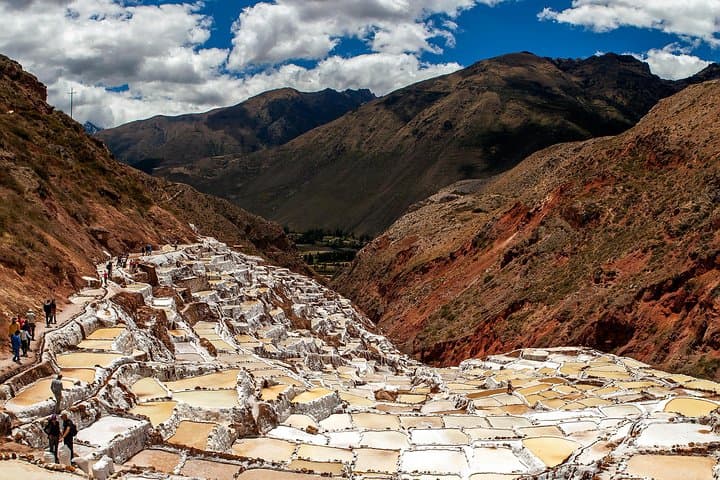
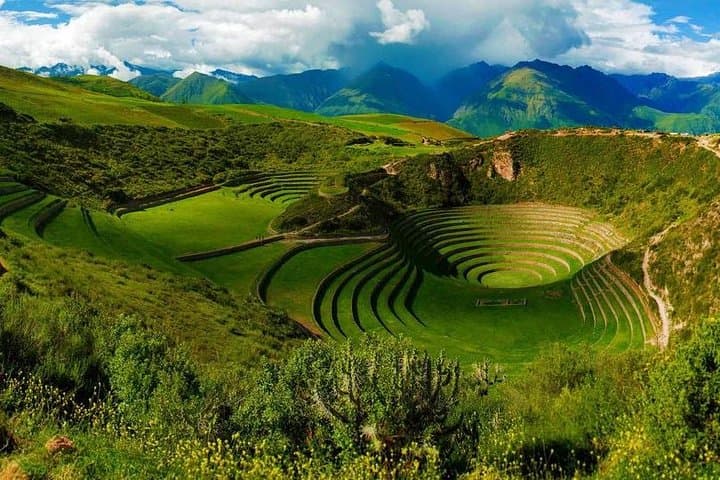
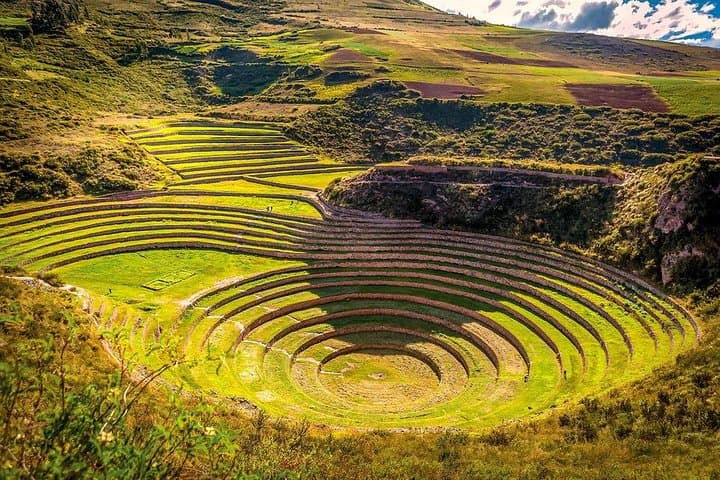
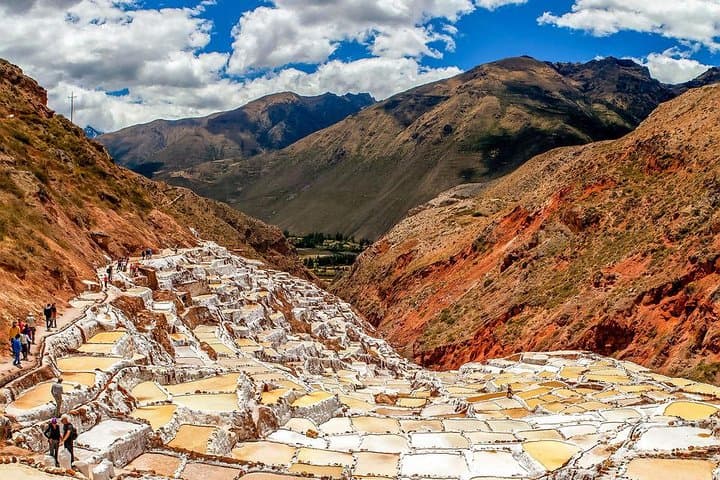
The road out of Cusco climbs into thin air and the valley opens — terraced bowls of earth cut into the mountain, and a patchwork of white salt pools sparkling below a stone amphitheater of Andes peaks. A 9 a.m. departure delivers you to Moray’s circular agricultural depressions first, where the wind sketches cool rings across the stepped soil. Later the route drops toward Maras, where thousands of shallow salt evaporating pans cling to a hillside and the smell of mineral-rich water hangs faintly in the air.
The road out of Cusco climbs into thin air and the valley opens — terraced bowls of earth cut into the mountain, and a patchwork of white salt pools sparkling below a stone amphitheater of Andes peaks. A 9 a.m. departure delivers you to Moray’s circular agricultural depressions first, where the wind sketches cool rings across the stepped soil. Later the route drops toward Maras, where thousands of shallow salt evaporating pans cling to a hillside and the smell of mineral-rich water hangs faintly in the air.
Moray’s concentric terraces are believed to have served as an experimental agronomy center for the Incas, exploiting microclimates created by depth and orientation. Maras sits above a saline spring: locals channel brine into small pans and harvest salt by evaporation — a landscape shaped by geology, technique and centuries of local practice.
The walk between viewpoints is short but uneven: cobbles, loose gravel and steps require steady footing, and the sites sit between roughly 3,300–3,500 m elevation, so pace matters. Expect brief interpretive stops, photo breaks and a 4–5 hour round-trip that returns to Cusco’s Plaza de Armas in the early afternoon.
Practical tips: bring layers for cold mornings, sunscreen and a hat for intense high-altitude sun, and cash for the required tourist ticket and small purchases in Maras. A waterproof layer helps in the rainy months (Dec–Mar). Respect local workers and pathways — these are living landscapes as much as they are photo locations.