THE ADVENTURE COLLECTIVE® · Independent discovery and booking for outdoor travel

Sample Manchester’s booming food scene on a 3.5–4 hour walking tour through the Northern Quarter and Medieval core. Expect bakery stops, Afflecks visits, and a guided lunch that traces the city’s industrial and immigrant food history.
Sample Manchester’s booming food scene on a 3.5–4 hour walking tour through the Northern Quarter and Medieval core. Expect bakery stops, Afflecks visits, and a guided lunch that traces the city’s industrial and immigrant food history.
The group steps off under a slate sky and into Manchester’s compact, working city centre — cobbled corners give way to redbrick former warehouses, street art, and the hum of trams. Over the next three to four hours the tour threads through the Medieval quarter past Manchester Cathedral, pauses at an old Cantonese bakery, slips into Afflecks in the Northern Quarter and samples a curated lunch that maps the city’s immigrant kitchens and industrial past.
Verified experiences and guided adventures in the surrounding area.
Operated by Scranchester Tours · Manchester, Greater Manchester
The group steps off under a slate sky and into Manchester’s compact, working city centre — cobbled corners give way to redbrick former warehouses, street art, and the hum of trams. Over the next three to four hours the tour threads through the Medieval quarter past Manchester Cathedral, pauses at an old Cantonese bakery, slips into Afflecks in the Northern Quarter and samples a curated lunch that maps the city’s immigrant kitchens and industrial past.
Manchester’s story is visible in its streets: canals and mills born of the Industrial Revolution, cheap coal-fired steam and the cotton trade reshaped into modern cafés and independent grocers. Geology is less dramatic here than up in the nearby Pennines, but the city sits on the Cheshire Plain where rivers and canals once powered industry, now framing market squares and delivery routes for tiny eateries.
Culturally the tour highlights Manchester’s layered food scene — South Asian curries, Chinese bakeries, artisan coffee, and Northern comfort food — and how each wave of migration left culinary markers. Local guides typically cover 3–4 kilometres on mostly flat, paved streets with minimal elevation gain, stopping for tastings at several small venues; group sizes are capped (around 10) to keep lines short and conversation easy.
Practical prep: wear comfortable city walking shoes and a lightweight waterproof, tell the operator about dietaries in advance, and bring a small bag for purchases. Timing midday avoids peak crowds and lets you turn tastings into a full lunch. Public transport (Metrolink, rail) brings you close to starting points; expect urban smells, quick pace between stops, and lively local banter that makes the food feel like a guided neighborhood exploration.
moderate.
3.5–4 hours.
Moderate — ability to walk 3–4 km and stand for tastings; suitable for most reasonably active travellers
The tour runs about 3.5–4 hours and covers roughly 3–4 kilometres across primarily flat, paved city streets with frequent tasting stops.
Yes — the operator asks you to disclose dietary requirements when booking and will adjust tastings where possible; always confirm in advance.
Yes — Manchester’s Metrolink trams and central rail stations put you within a short walk of typical tour start points in the city centre.
Infants and small children can use strollers, but tastings are designed for adults; children should be accompanied by an adult and group size is small.
Manchester’s foodscape grew alongside its 18th–19th century industrial boom; canals and mills concentrated labour and created demand for diverse foodstuffs that arrivals supplied.
Many small vendors prioritize local sourcing and seasonal produce; reduce waste by bringing a reusable bottle and saying no to disposable cutlery.
Scranchester Tours operates guided outdoor trips and adventures with an emphasis on safety, stewardship, and memorable experiences.
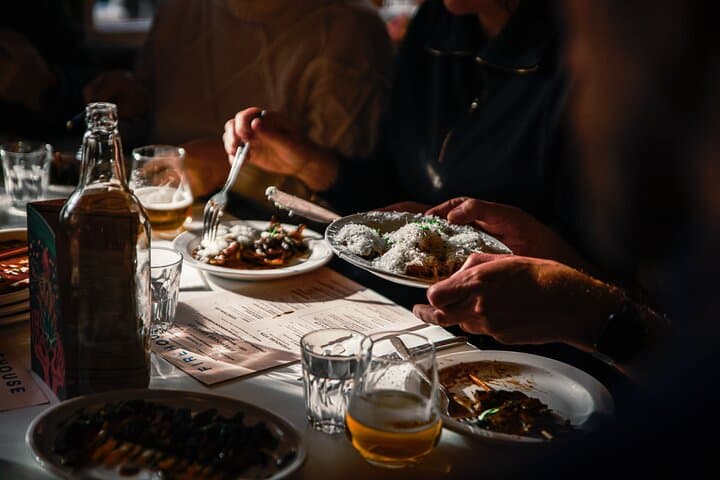
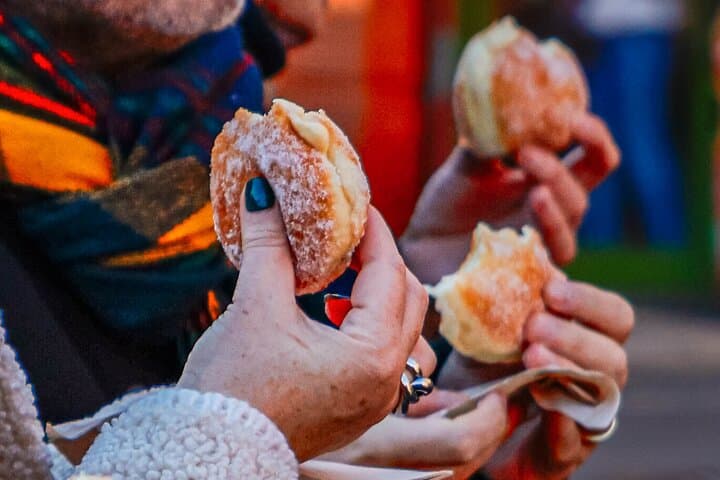
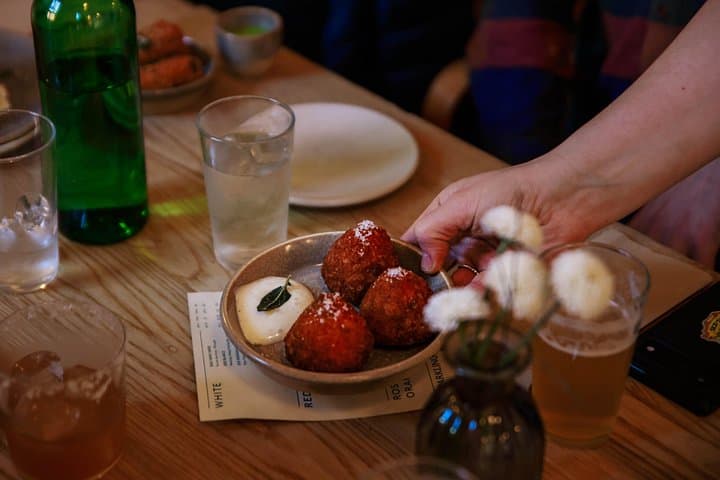
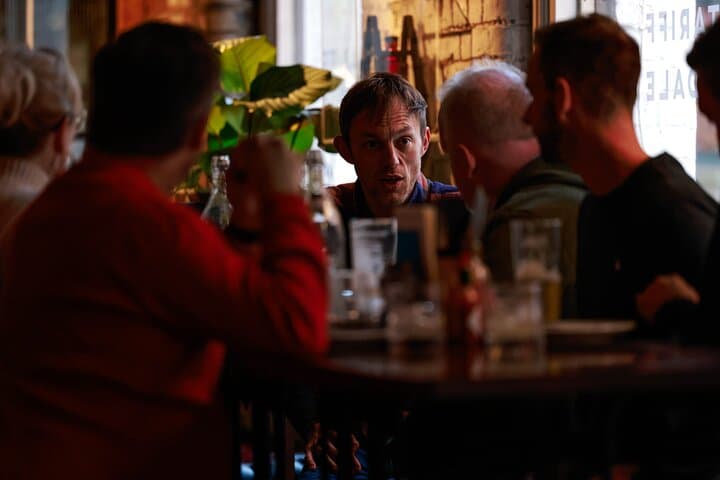
The group steps off under a slate sky and into Manchester’s compact, working city centre — cobbled corners give way to redbrick former warehouses, street art, and the hum of trams. Over the next three to four hours the tour threads through the Medieval quarter past Manchester Cathedral, pauses at an old Cantonese bakery, slips into Afflecks in the Northern Quarter and samples a curated lunch that maps the city’s immigrant kitchens and industrial past.
The group steps off under a slate sky and into Manchester’s compact, working city centre — cobbled corners give way to redbrick former warehouses, street art, and the hum of trams. Over the next three to four hours the tour threads through the Medieval quarter past Manchester Cathedral, pauses at an old Cantonese bakery, slips into Afflecks in the Northern Quarter and samples a curated lunch that maps the city’s immigrant kitchens and industrial past.
Manchester’s story is visible in its streets: canals and mills born of the Industrial Revolution, cheap coal-fired steam and the cotton trade reshaped into modern cafés and independent grocers. Geology is less dramatic here than up in the nearby Pennines, but the city sits on the Cheshire Plain where rivers and canals once powered industry, now framing market squares and delivery routes for tiny eateries.
Culturally the tour highlights Manchester’s layered food scene — South Asian curries, Chinese bakeries, artisan coffee, and Northern comfort food — and how each wave of migration left culinary markers. Local guides typically cover 3–4 kilometres on mostly flat, paved streets with minimal elevation gain, stopping for tastings at several small venues; group sizes are capped (around 10) to keep lines short and conversation easy.
Practical prep: wear comfortable city walking shoes and a lightweight waterproof, tell the operator about dietaries in advance, and bring a small bag for purchases. Timing midday avoids peak crowds and lets you turn tastings into a full lunch. Public transport (Metrolink, rail) brings you close to starting points; expect urban smells, quick pace between stops, and lively local banter that makes the food feel like a guided neighborhood exploration.