THE ADVENTURE COLLECTIVE® · Independent discovery and booking for outdoor travel

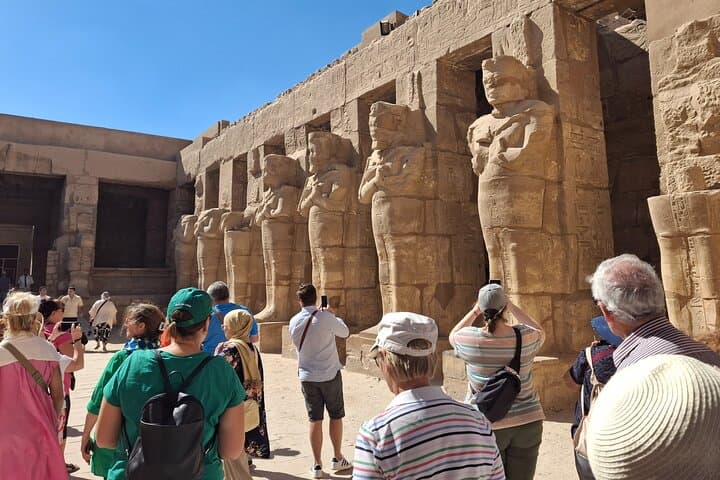
Cover Luxor’s headline monuments in a single half-day: descend into royal tombs at the Valley of the Kings, visit Hatshepsut’s terraces, snap the Colossi of Memnon, and walk Karnak’s Hypostyle Hall. This guided tour is efficient, shaded where it matters, and designed for visitors short on time.
Cover Luxor’s headline monuments in a single half-day: descend into royal tombs at the Valley of the Kings, visit Hatshepsut’s terraces, snap the Colossi of Memnon, and walk Karnak’s Hypostyle Hall. This guided tour is efficient, shaded where it matters, and designed for visitors short on time.
You step off the air-conditioned minivan into a dry, sun-scrubbed valley where limestone ribs rise like folded pages of history. The heat presses briefly, then the shade of a tomb entrance offers cool relief; inside, painted reliefs lean toward you as if whispering royal rituals. On the west bank, the Valley of the Kings feels both intimate and immense — corridors carved into rock leading to chambers designed for an afterlife.
Verified experiences and guided adventures in the surrounding area.
Operated by tour guide in luxor samer · Luxor, Luxor Governorate
You step off the air-conditioned minivan into a dry, sun-scrubbed valley where limestone ribs rise like folded pages of history. The heat presses briefly, then the shade of a tomb entrance offers cool relief; inside, painted reliefs lean toward you as if whispering royal rituals. On the west bank, the Valley of the Kings feels both intimate and immense — corridors carved into rock leading to chambers designed for an afterlife.
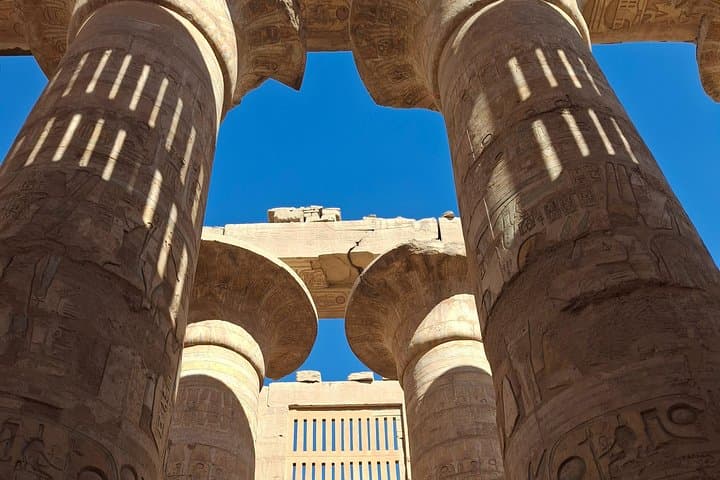
This half-day tour stitches together the New Kingdom’s greatest sites: royal tombs from the fifteenth–eleventh centuries BCE, Hatshepsut’s terraced mortuary temple at Deir el-Bahari, the silent Colossi of Memnon, and the sprawling Karnak complex dominated by the Hypostyle Hall. Geologically, the Theban Hills are eroded limestone and marl that made deep, defensible tombs possible; culturally, these sites map a ritual landscape where the Nile’s life-giving flow met funerary architecture on the west.
Expect focused, guided visits rather than a casual wander. You’ll learn how festivals like Opet tied Karnak to Luxor Temple and why tomb orientation mattered for solar rebirth imagery. Practicalities matter here: heat, uneven steps, and restricted photography rules inside select tombs.
Plan to start early, bring layered sun protection, and carry a refillable bottle — the tour includes water and snacks, but shade is sparse between sites. If your time is short, this itinerary delivers Luxor’s essentials with context and comfort: history made walkable, geography explained, and logistics managed so you can concentrate on what endures on these stone faces.
moderate.
5–6 hours.
Light-to-moderate fitness for walking on uneven ground, short staircases, and standing during explanations.
Yes — the tour includes standard entry tickets to the Valley of the Kings, Hatshepsut’s Temple, and Karnak as noted in the itinerary.
Transportation and many sites offer wheelchair-accessible options, but individual tombs have narrow, stepped entrances and uneven floors that may limit full access.
Early morning departures are recommended to avoid peak heat and crowds; late afternoon can be pleasant but may be tighter on daylight for West Bank sites.
Rules vary by tomb — many restrict flash or any photography to protect fragile pigments; follow your guide’s instructions at each site.
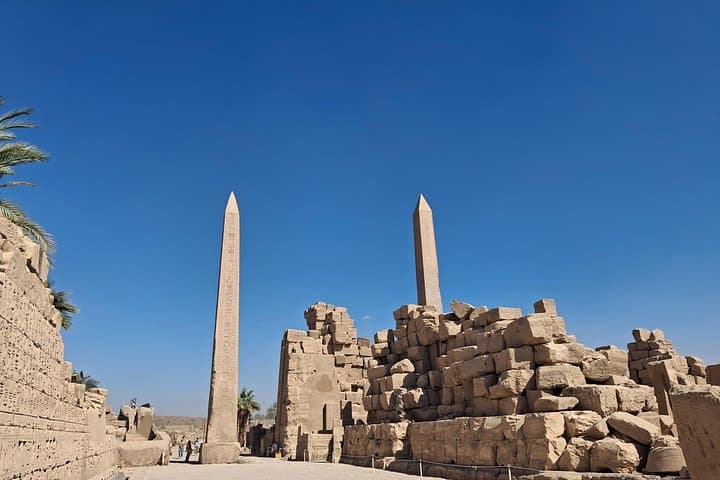
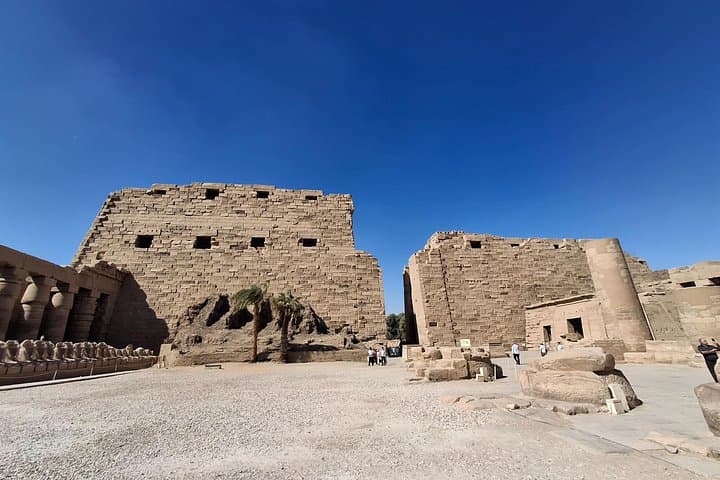
These sites are core to Thebes’ role as Egypt’s New Kingdom capital (c. 1550–1070 BCE); Karnak grew over millennia as pharaohs added pylons, obelisks and statues.
Visitor pressure and desert salts threaten pigments and stone; follow paths, avoid touching reliefs, and use only allowed cameras to reduce impact.
tour guide in luxor samer operates guided outdoor trips and adventures with an emphasis on safety, stewardship, and memorable experiences.
You step off the air-conditioned minivan into a dry, sun-scrubbed valley where limestone ribs rise like folded pages of history. The heat presses briefly, then the shade of a tomb entrance offers cool relief; inside, painted reliefs lean toward you as if whispering royal rituals. On the west bank, the Valley of the Kings feels both intimate and immense — corridors carved into rock leading to chambers designed for an afterlife.
You step off the air-conditioned minivan into a dry, sun-scrubbed valley where limestone ribs rise like folded pages of history. The heat presses briefly, then the shade of a tomb entrance offers cool relief; inside, painted reliefs lean toward you as if whispering royal rituals. On the west bank, the Valley of the Kings feels both intimate and immense — corridors carved into rock leading to chambers designed for an afterlife.
This half-day tour stitches together the New Kingdom’s greatest sites: royal tombs from the fifteenth–eleventh centuries BCE, Hatshepsut’s terraced mortuary temple at Deir el-Bahari, the silent Colossi of Memnon, and the sprawling Karnak complex dominated by the Hypostyle Hall. Geologically, the Theban Hills are eroded limestone and marl that made deep, defensible tombs possible; culturally, these sites map a ritual landscape where the Nile’s life-giving flow met funerary architecture on the west.
Expect focused, guided visits rather than a casual wander. You’ll learn how festivals like Opet tied Karnak to Luxor Temple and why tomb orientation mattered for solar rebirth imagery. Practicalities matter here: heat, uneven steps, and restricted photography rules inside select tombs.
Plan to start early, bring layered sun protection, and carry a refillable bottle — the tour includes water and snacks, but shade is sparse between sites. If your time is short, this itinerary delivers Luxor’s essentials with context and comfort: history made walkable, geography explained, and logistics managed so you can concentrate on what endures on these stone faces.