THE ADVENTURE COLLECTIVE® · Independent discovery and booking for outdoor travel

Walk the grand avenues and vast colonnades of Karnak and Luxor on a focused half-day private tour. Expect ancient stone, guided interpretation, and practical tips for beating the heat and crowds.
Walk the grand avenues and vast colonnades of Karnak and Luxor on a focused half-day private tour. Expect ancient stone, guided interpretation, and practical tips for beating the heat and crowds.
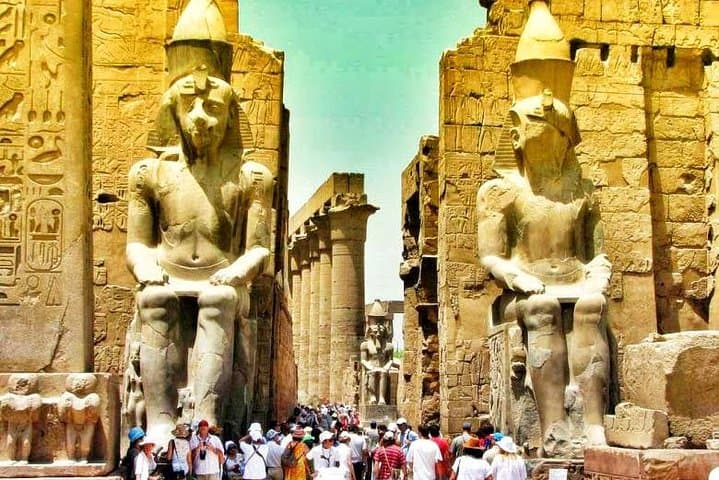
Early light on the East Bank paints the sandstone columns of Karnak in pale gold while the Nile murmurs nearby — you step from an air-conditioned vehicle into a place that grew city by city over millennia.
Verified experiences and guided adventures in the surrounding area.
Operated by Real Life Egypt · Luxor, Luxor Governorate
Early light on the East Bank paints the sandstone columns of Karnak in pale gold while the Nile murmurs nearby — you step from an air-conditioned vehicle into a place that grew city by city over millennia.
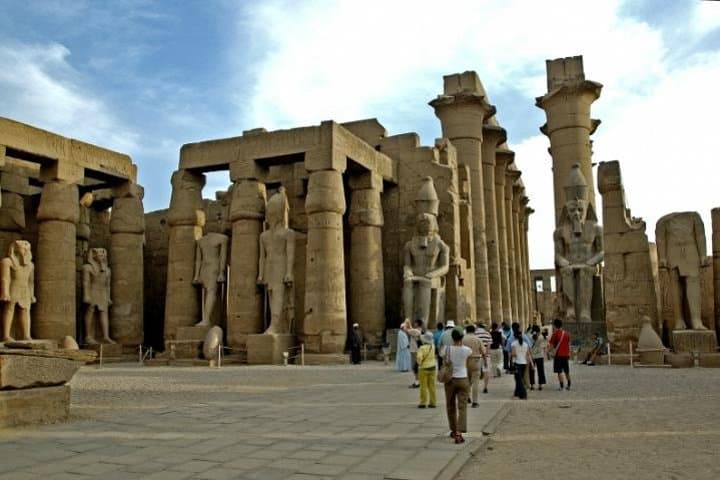
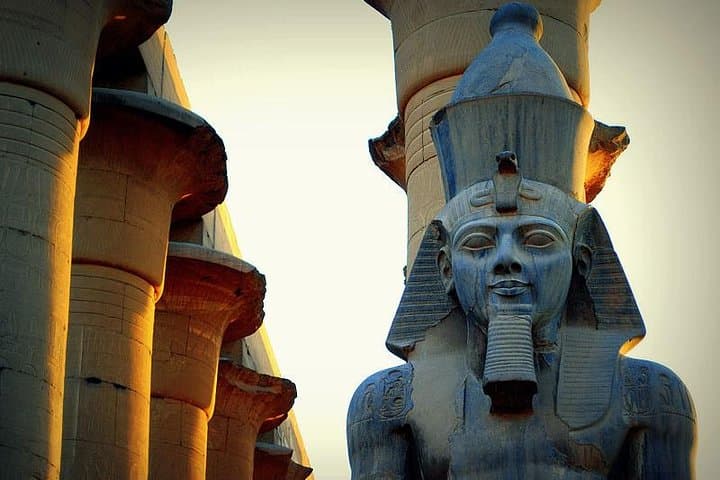
Karnak and Luxor are the heart of ancient Thebes. Karnak began as a collection of shrines and rose into a vast precinct focused on Amun-Re; its Hypostyle Hall alone contains 134 massive columns that bear carved stories of New Kingdom pharaohs. Luxor Temple, rebuilt and added to around 1392 BCE, served as a ritual center for coronations and the annual Opet Festival that linked living kings to the god Amun.
Geology is part of the story: soft Nile silt and local sandstone made large freestanding columns and obelisks possible, while seasonal Nile floods shaped settlement patterns and agriculture that funded temple building. Nearby, the Avenue of Sphinxes and the compact Luxor Museum give cultural context; local guides often point out reused blocks and later Roman and Coptic modifications.
Practically, this private half-day tour covers both sites in roughly three hours with hotel pickup, a professional guide, and transport. Expect flat, paved approaches but uneven carved stone underfoot in the precincts; shade is limited between colonnades. Bring water, sun protection, comfortable closed-toe shoes, and time your visit for morning or late afternoon to avoid peak heat and crowds. Photography is permitted with respect to signage and artifacts; modest dress is required at all times.
The experience is a concentrated lesson in power, faith, and engineering — immediate, walkable, and surprisingly human in its scale and detail.
easy.
3 hours.
Suitable for most fitness levels; involves walking on uneven stone for several hours.
The private East Bank tour typically lasts about three hours, covering Luxor and Karnak Temples with hotel pickup and return.
On many private tours entrance is included; confirm with the operator at booking to avoid surprises.
There are paved approaches and some accessible routes, but ancient precincts have uneven stone; confirm specific accessibility needs in advance.
Photography for personal use is generally allowed, though some areas may have restrictions—follow posted signs and guide instructions.
These temples form the ceremonial and religious core of ancient Thebes; Karnak was expanded over roughly 2,000 years while Luxor served ritual roles tied to royal legitimacy.
Heavy visitor numbers, pollution and groundwater have stressed monuments; conservation efforts focus on controlled access, restoration of dressed stones, and managing visitor pathways.
Real Life Egypt operates guided outdoor trips and adventures with an emphasis on safety, stewardship, and memorable experiences.
Early light on the East Bank paints the sandstone columns of Karnak in pale gold while the Nile murmurs nearby — you step from an air-conditioned vehicle into a place that grew city by city over millennia.
Early light on the East Bank paints the sandstone columns of Karnak in pale gold while the Nile murmurs nearby — you step from an air-conditioned vehicle into a place that grew city by city over millennia.
Karnak and Luxor are the heart of ancient Thebes. Karnak began as a collection of shrines and rose into a vast precinct focused on Amun-Re; its Hypostyle Hall alone contains 134 massive columns that bear carved stories of New Kingdom pharaohs. Luxor Temple, rebuilt and added to around 1392 BCE, served as a ritual center for coronations and the annual Opet Festival that linked living kings to the god Amun.
Geology is part of the story: soft Nile silt and local sandstone made large freestanding columns and obelisks possible, while seasonal Nile floods shaped settlement patterns and agriculture that funded temple building. Nearby, the Avenue of Sphinxes and the compact Luxor Museum give cultural context; local guides often point out reused blocks and later Roman and Coptic modifications.
Practically, this private half-day tour covers both sites in roughly three hours with hotel pickup, a professional guide, and transport. Expect flat, paved approaches but uneven carved stone underfoot in the precincts; shade is limited between colonnades. Bring water, sun protection, comfortable closed-toe shoes, and time your visit for morning or late afternoon to avoid peak heat and crowds. Photography is permitted with respect to signage and artifacts; modest dress is required at all times.
The experience is a concentrated lesson in power, faith, and engineering — immediate, walkable, and surprisingly human in its scale and detail.